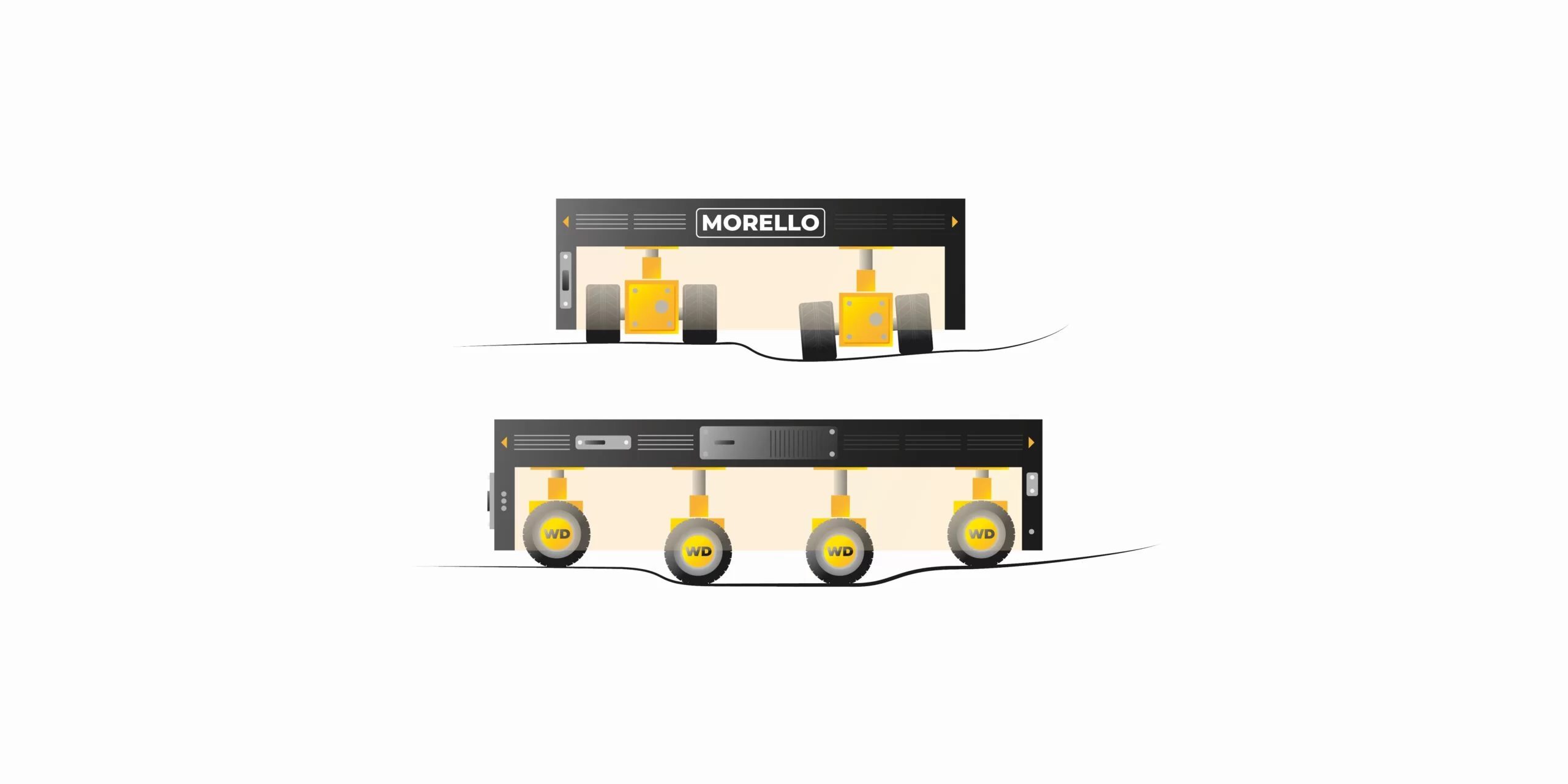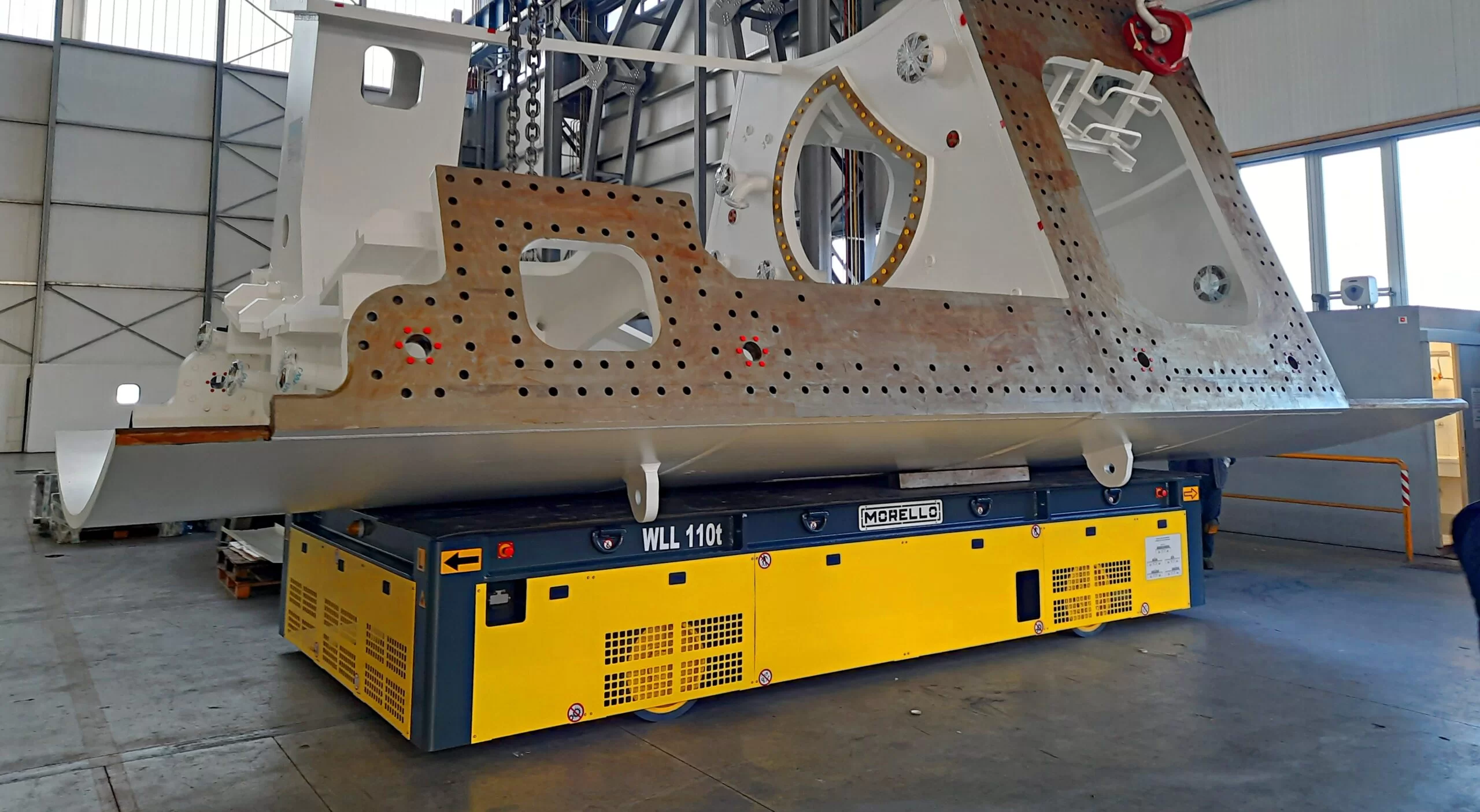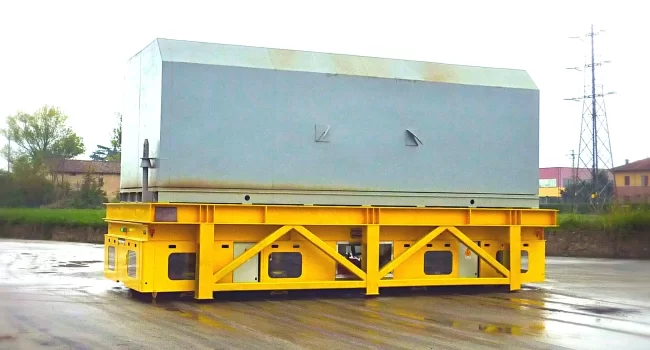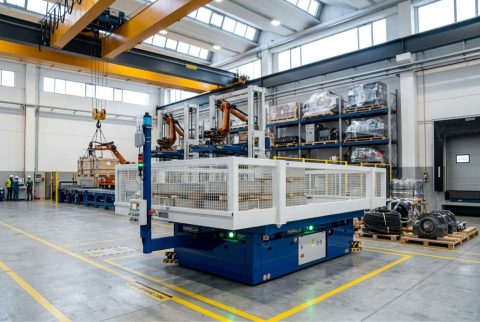
Automated material handling: from efficiency to ROI

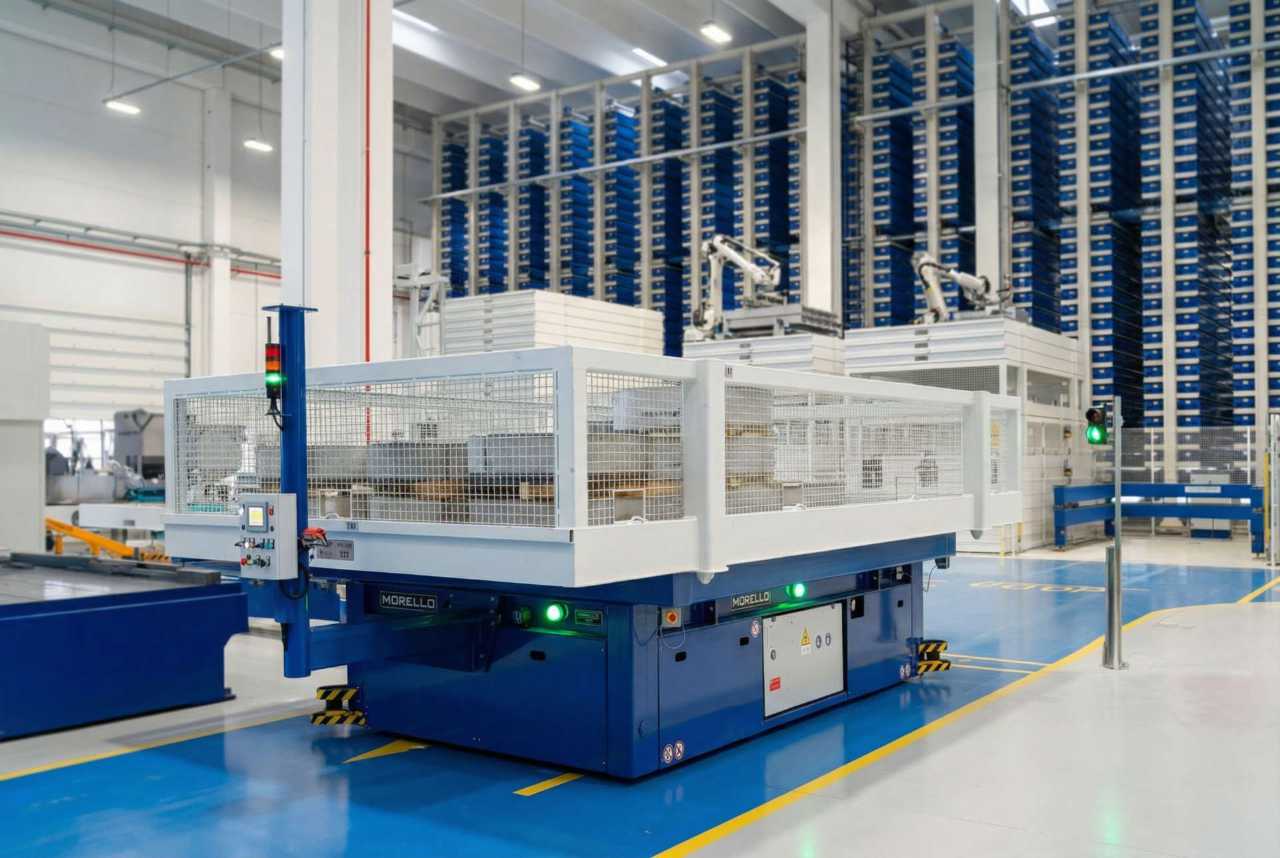
Integrating Automated Guided Vehicles (AGVs) into industrial operations is one of the most strategic decisions a facility manager can make when looking to maximize throughput and reduce operational costs. The AGV productivity benefits are tangible and measurable: fewer handling errors, optimized material flow, and a significant reduction in labor-intensive tasks that slow down production cycles. Yet, understanding the full return on investment goes beyond simply counting saved hours. It requires a broader look at how automation reshapes the entire workflow — from warehouse logistics to heavy-load transportation across demanding industrial environments.

Whether you operate in aerospace, military, wind energy, or any other high-capacity sector, AGVs represent a concrete step toward smarter, safer, and more efficient operations. Before diving into the numbers, it’s worth exploring exactly what drives these efficiency gains and how facilities can best prepare to unlock them.

How AGVs directly impact operational efficiency and throughput

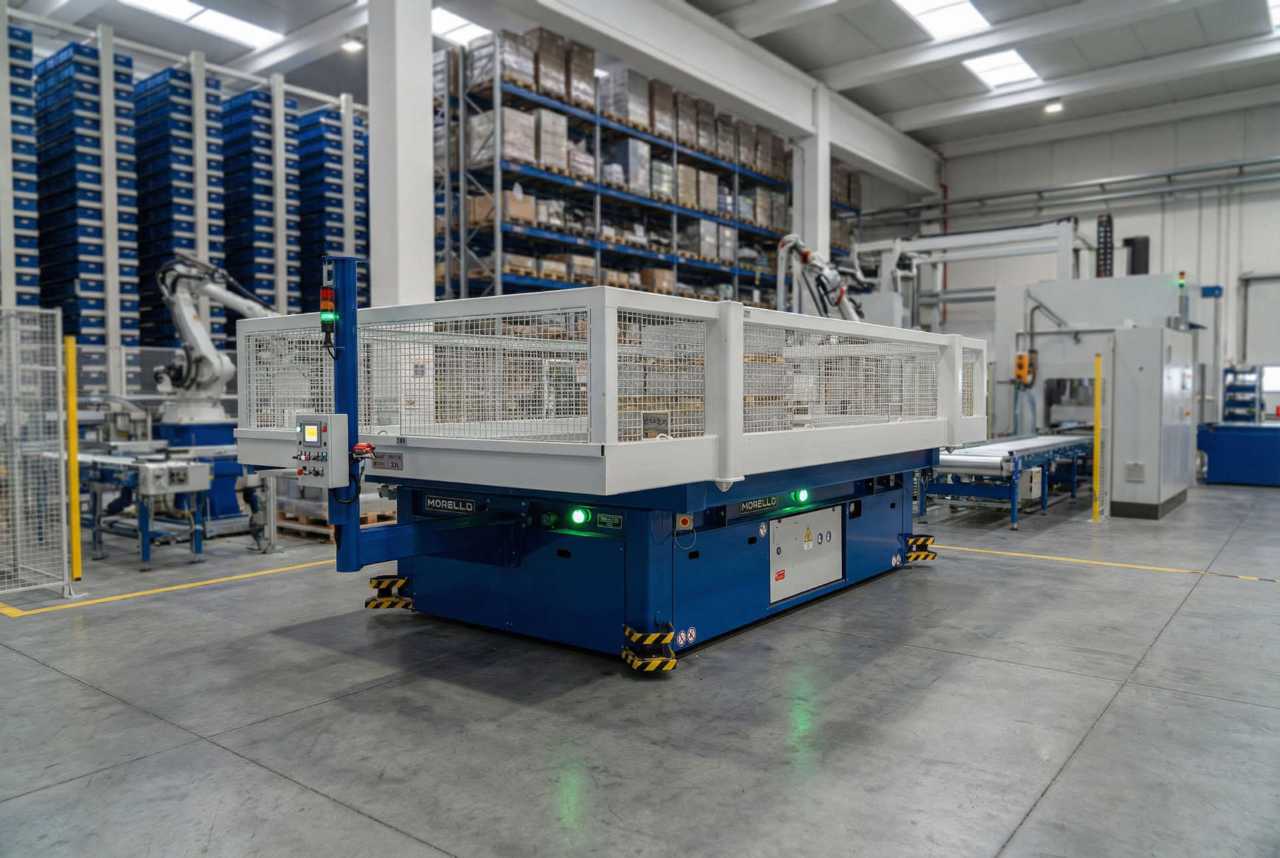
One of the most immediate effects of deploying Automated Guided Vehicles in an industrial facility is the measurable acceleration of material flow. Unlike manual handling, AGVs operate on predefined routes with consistent speed and precision, eliminating the variability that human operators inevitably introduce. This means fewer bottlenecks, more predictable cycle times, and a production rhythm that managers can actually rely on.

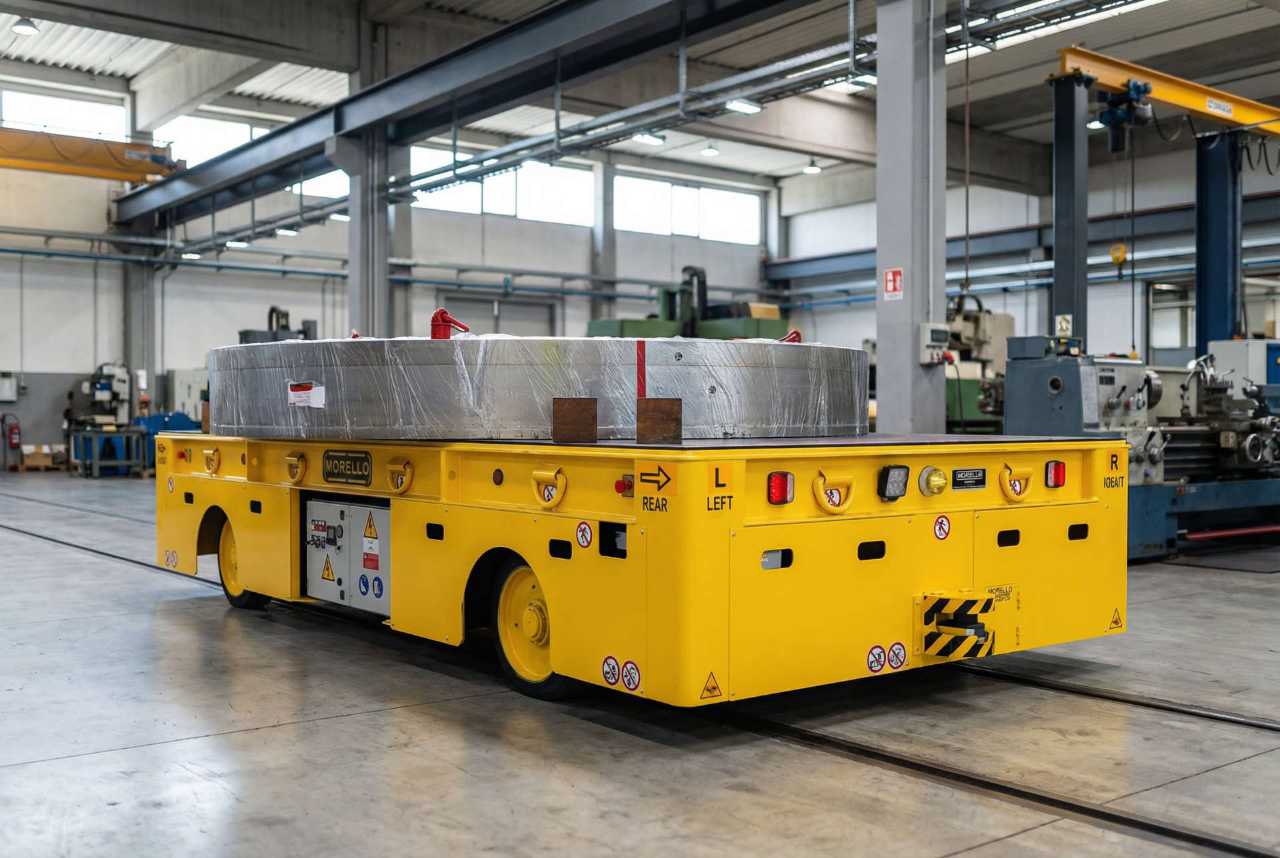
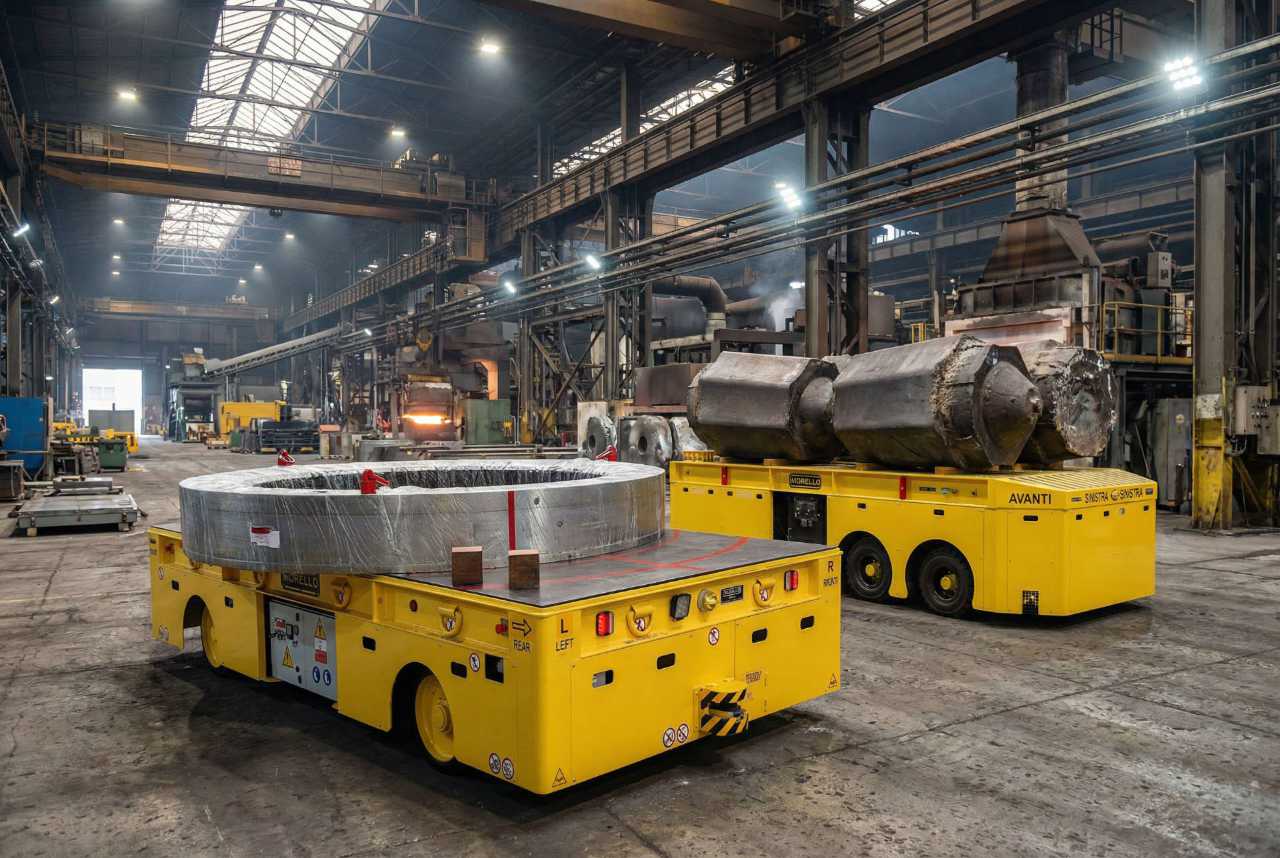
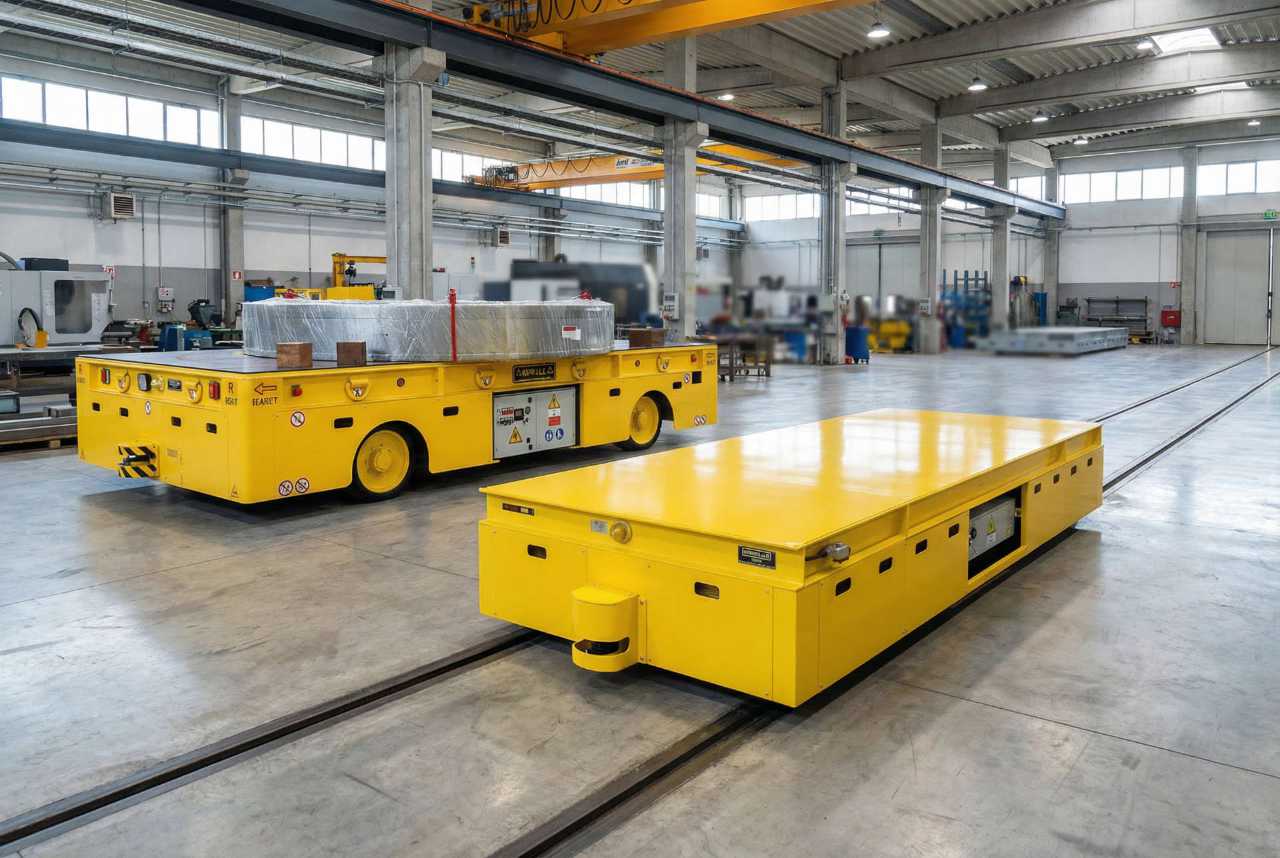
Consider a heavy-load manufacturing plant where components weighing several tons need to move between assembly stations multiple times per shift. A single AGV working continuously — without breaks, fatigue, or distraction — can outperform multiple manual transport cycles over the course of a full working day. The throughput gains become especially visible in facilities that run extended or overnight shifts, where human availability is naturally limited.

Beyond raw speed, AGVs contribute to efficiency by reducing idle time. When a vehicle is always ready, always on route, and always communicating with the broader logistics system, the entire material handling chain tightens up. Waiting times shrink, production lines stay fed, and downstream processes are no longer held hostage by upstream delays. This is the kind of systemic improvement that transforms an operation from reactive to genuinely proactive.

Key AGV productivity benefits across high-demand industrial sectors

The AGV productivity benefits are not confined to a single industry. Across sectors where precision, reliability, and load capacity are non-negotiable, automated guided vehicles have proven their value in concrete, repeatable ways.

In aerospace manufacturing, for example, AGVs are used to transport fuselage sections and engine components across large production floors, where even a minor handling error can compromise structural integrity. The ability to move oversized, extremely heavy loads with millimeter-level accuracy is a capability that manual equipment simply cannot match consistently.

In the wind energy sector, nacelles and rotor hubs — components that can exceed 10 tons — require careful, controlled movement during assembly. AGVs designed for high-capacity transport eliminate the risk of load instability while keeping production schedules on track.

Military and defense facilities benefit from AGVs in a different but equally important way: traceability. Every movement is logged, every route is documented, and every load is tracked — creating an audit trail that supports strict compliance requirements.

What these sectors share is a demand for equipment that performs under pressure, handles extreme weights, and integrates seamlessly into complex workflows. That is precisely where purpose-built AGV solutions deliver their strongest return.

Adapting your facility layout to support AGV integration

Introducing AGVs into an existing operation requires more than purchasing the vehicles themselves. The physical environment must be prepared to accommodate automated traffic alongside human activity, and this preparation is what determines whether the integration succeeds or struggles.

The starting point is always the floor layout. AGV travel routes need to be clearly defined and marked — using floor tape, embedded sensors, or painted lines — so that both the vehicles and the workforce understand where automated traffic flows. This is not merely a safety measure; it is the foundation of an efficient routing system.

Equally important is the concept of operational zones. Facilities should designate specific areas for AGV movement, loading, and parking, keeping these separate from high-footfall human zones wherever possible. When corridors are shared, they must be wide enough to allow both the vehicle and a worker to occupy the space safely, with room for the worker to step aside if needed.

Obstacle management is another critical factor. Pallets, containers, and loose equipment left along AGV paths are among the most common causes of operational disruption. Establishing clear protocols for keeping routes unobstructed protects both the equipment and the workflow it supports.

Safety, workforce training, and the human side of automation

Automation does not remove people from the equation — it changes their role within it. When AGVs enter a facility, the workforce must be equipped to work alongside them confidently and safely. This is not a one-time briefing; it is an ongoing commitment to training and awareness.

Every employee who shares a workspace with AGVs needs to understand how these vehicles navigate, how they respond to obstacles, and what to do in the event of an unexpected stop or route deviation. Clear signage, visible vehicle lighting, and audible alerts all contribute to a safer shared environment, but they only work when people know what to look for.

There is also a psychological dimension worth acknowledging. Workers who feel that automation threatens their role may resist the transition, consciously or not. Facilities that communicate openly about how AGVs complement human tasks — rather than replace them — tend to achieve smoother integrations and faster productivity gains. When employees understand that AGVs take on the most physically demanding and repetitive transport tasks, freeing them for higher-value activities, resistance typically gives way to cooperation.

Training programs should cover not only safety protocols but also basic interaction procedures: how to pause a vehicle, how to report a malfunction, and how to coordinate movement in shared corridors. This knowledge empowers the workforce and builds the mutual trust that effective human-machine collaboration requires.

Measuring the real ROI of automated material handling

Calculating the return on investment of an AGV system goes well beyond comparing purchase costs against saved labor hours. A complete ROI assessment must account for multiple layers of operational value that accumulate over time.

The most straightforward gains come from reduced handling errors and product damage. In industries where components are expensive or irreplaceable, even a single avoided incident can offset a significant portion of the initial investment. AGVs move loads with consistent, programmed precision — a level of repeatability that dramatically reduces the risk of costly mistakes.

Energy efficiency is another factor that often surprises facility managers. Modern battery-powered AGVs consume energy only when in motion and can be programmed to optimize routes for minimal power use. Over extended operational periods, these savings contribute meaningfully to the overall cost picture.

Downtime reduction is perhaps the most impactful long-term benefit. When material flow is automated and predictable, production lines experience fewer interruptions. Maintenance schedules can be planned around vehicle availability, and the unpredictability of human-driven transport — sick days, shift changes, fatigue-related slowdowns — is largely eliminated.

Finally, scalability adds a dimension of value that pure cost calculations often miss. An AGV fleet can be expanded incrementally as demand grows, without the proportional increase in management complexity that comes with scaling a human workforce. This flexibility makes automated material handling not just a productivity tool, but a strategic asset for long-term industrial growth.

AGV solutions built for the heaviest industrial demands

The AGV productivity benefits explored throughout this article point to a single, clear conclusion: automated guided vehicles are not a luxury for forward-thinking facilities — they are a competitive necessity for any operation that moves heavy loads at scale. From tightening throughput and reducing handling errors to supporting workforce safety and delivering measurable long-term ROI, the case for automation is built on solid, operational ground.

Morello has been engineering high-capacity material handling solutions for multinational clients across aerospace, military, wind energy, and beyond. With decades of expertise in designing and manufacturing AGVs capable of moving loads of several tons with precision and reliability, Morello brings both technical depth and real-world experience to every project.

If you are evaluating automated transport for your facility, explore Morello’s AGV automated guided carts and discover how purpose-built automation can transform your material handling operation.

Steel coil transport solutions: selecting the right equipment

Steel coil handling represents one of the most demanding challenges in modern industrial environments. These cylindrical loads, often weighing several tons, require specialized transport solutions to ensure operational safety, material integrity, and production efficiency. Inadequate equipment selection not only increases operating costs but also exposes personnel to significant risks and may compromise the quality of the material being transported.

Steel coils are widely used across multiple industries, including steel manufacturing, automotive production, shipbuilding, and wind energy. Their cylindrical geometry, substantial weight, and surface sensitivity necessitate tailor-made handling systems specifically engineered for this application. Effective solutions must combine appropriate load capacity, secure support and stabilization systems, high maneuverability in confined spaces, and advanced control technologies.

Selecting the right coil handling equipment is therefore critical to optimizing internal logistics flows, minimizing risk, and preserving the value of the material throughout the production process.

Operational challenges in industrial coil transport

Handling metal coils within a production facility involves far more than simply moving a heavy load. It requires managing a series of technical and safety-critical variables that directly impact operational efficiency and risk exposure.

The cylindrical geometry of steel coils inherently creates instability. Even minor surface irregularities or abrupt movements can trigger uncontrolled rolling, posing significant risks to operators, equipment, and surrounding infrastructure. Weight adds another layer of complexity. Coils weighing 20 tons or more demand transport systems engineered not only for sufficient load capacity, but also for precise force distribution during acceleration, braking, and cornering.

Material integrity is another critical factor. Surface sensitivity means that scratches, dents, or edge deformations can compromise downstream processes, resulting in costly scrap, rework, or delivery delays. In many cases, damage occurs during internal handling rather than during production itself.

Spatial constraints further intensify these challenges. Narrow aisles between production lines, limited storage areas, and congested workspaces require exceptional maneuverability and positional control—capabilities that traditional lifting systems do not always provide.

The convergence of load instability, extreme weight, material sensitivity, and space limitations transforms coil handling into a high-risk, high-impact operation. Addressing these challenges requires careful planning, engineered solutions, and dedicated technologies specifically designed for safe and efficient coil transport.

Essential criteria for selecting coil handling equipment

Choosing the right equipment for coil transport begins with a thorough assessment of actual load requirements. It is not sufficient to consider only the maximum weight of a single coil. A proper evaluation must also account for safety margins, dynamic stresses during acceleration and braking, and potential load variations across different production scenarios. Undersized equipment not only compromises safety but also accelerates mechanical wear, leading to higher maintenance costs and reduced service life.

Maneuverability represents a second critical parameter. Precision positioning is often more time-consuming than the transport itself. Advanced steering technologies—such as omnidirectional drive systems or 360-degree rotation—enable lateral movement and zero-radius turning, significantly reducing maneuvering time in confined spaces. In high-density production environments, this translates directly into improved efficiency and smoother internal logistics flows.

Energy efficiency is another strategic consideration. Modern battery-powered systems equipped with regenerative braking can reduce energy consumption by up to 30% compared to traditional internal combustion or hydraulic solutions, lowering operating costs while supporting sustainability objectives.

Finally, customization should not be overlooked. Every production environment presents unique variables: coil diameters, loading heights, floor conditions, and handling frequency can vary considerably. Modular equipment with adaptable platforms and configurable support or gripping systems allows companies to tailor the solution to their operational requirements—optimizing performance without forcing production processes to conform to technical limitations.

Steel coil transport solutions: technologies and configurations

The current landscape of steel coil transport solutions includes a wide range of technological configurations designed to address diverse operational requirements.

Battery-powered transporters are the preferred choice for indoor applications, where zero emissions and low noise levels are essential. Modern lithium-ion battery systems provide extended operating autonomy and significantly reduced charging times, eliminating the need for spare battery sets and optimizing available storage space. In addition to improving sustainability performance, these systems contribute to lower operating costs and simplified maintenance management.

For applications demanding high power output and continuous operation, diesel or internal combustion engine solutions remain a viable option—particularly in outdoor environments or facilities with adequate ventilation. These systems offer a high power-to-weight ratio, making them suitable for transporting exceptionally large coils over long distances.

Automated solutions, such as AGVs (Automated Guided Vehicles) specifically designed for coil handling, are reshaping logistics flows in steel plants and service centers. These systems operate along predefined routes using magnetic guidance, laser navigation, or natural navigation technologies, and integrate seamlessly with warehouse management and production control software. The result is optimized routing, reduced idle time, and improved overall productivity by minimizing waiting periods between handling cycles.

Wheel configurations also play a critical role in long-term performance. Materials such as Vulkollan or high-performance polyurethane offer excellent wear resistance while protecting transit surfaces. Carefully engineered wheel geometries ensure even load distribution, preserving the structural integrity of industrial floors—even under intensive, long-term use.

Safety and control systems in cylindrical load handling

In coil handling operations, safety cannot be treated as an afterthought—it must form the foundation of the entire operational strategy. Advanced laser and ultrasonic sensors create virtual safety zones around the transporter, continuously detecting fixed and moving obstacles along its path. These systems respond within milliseconds, progressively reducing speed or triggering a full stop before contact occurs, thereby protecting personnel, equipment, and materials.

Safety bumpers serve as an additional protective layer. Positioned around the perimeter of the transporter, mechanical or pneumatic bumper systems activate an immediate emergency stop in the event of accidental impact. Preventing incidents that could disrupt production is not only a safety priority but also a critical factor in maintaining operational continuity.

Control systems have also reached a high level of sophistication. Intuitive operator interfaces with touchscreen displays and real-time visual feedback reduce training time and minimize the risk of human error. Remote-control options allow operators to manage movements from safe positions—particularly valuable in environments characterized by high temperatures, restricted visibility, or hazardous substances.

Compliance with CE directives and relevant EN standards ensures that equipment meets stringent safety requirements. This not only reduces legal exposure but also guarantees alignment with occupational health and safety regulations, supporting a safer and more reliable working environment.

Operational advantages of investing in specialized equipment

Investing in dedicated steel coil transport solutions delivers measurable returns that extend far beyond risk reduction. Operational efficiency improves significantly: a single operator can manage handling cycles that traditionally required multiple teams and complex coordination. In many cases, this results in throughput time reductions of up to 40%, freeing skilled personnel for higher value-added activities.

Maintenance costs often become an unexpected burden when non-specialized equipment is used for coil handling. Purpose-built transporters incorporate components engineered to withstand high cyclic stresses, reducing the frequency of maintenance interventions and extending overall service life. Unplanned downtime is not only a technical issue—it directly impacts annual productivity and profitability.

The flexibility of modular solutions further protects your investment. Adaptable load platforms, control system upgrades, and integration with emerging technologies can be implemented without replacing the entire machine. This ensures long-term scalability while preserving capital expenditure.

Environmental sustainability is now a strategic priority rather than an optional objective. Low-energy, zero local emission technologies contribute to carbon footprint reduction goals and align with increasingly stringent regulatory requirements and market expectations for responsible manufacturing practices.

Optimize coil handling with professional solutions

Effective steel coil handling requires a strategic approach that integrates advanced technology, certified safety systems, and application-specific configurations. Every element—from load capacity sizing to control architecture—directly influences plant productivity and operator safety.

Specialized solutions should not be viewed as a cost, but as a long-term investment that generates measurable returns through improved efficiency, reduced scrap rates, enhanced safety, and optimized workforce utilization.

Morello designs and manufactures industrial transporters for heavy-duty applications capable of addressing the most demanding coil handling challenges. With decades of experience in developing customized equipment for multi-ton capacities, Morello’s solutions combine advanced safety technologies, energy efficiency, and exceptional maneuverability.

Discover how our specialized handling systems can transform your internal logistics processes—delivering reliable performance, operational continuity, and full regulatory compliance in every industrial environment.

Industrial transfer cart types: rail-guided vs. trackless material handling solutions

Moving heavy loads efficiently and safely is a fundamental challenge in modern industrial operations. Whether you’re managing a steel mill, aerospace manufacturing facility, or wind energy component production, the choice between rail-guided and trackless material handling systems directly impacts your operational efficiency, safety standards, and bottom line.

Industrial transfer carts have evolved into sophisticated solutions capable of transporting loads weighing hundreds of tons across production floors, assembly areas, and storage facilities. Understanding the distinct advantages and limitations of each system type is essential for making an informed investment decision. Rail-based carts offer unmatched stability and load capacity for fixed-route applications, while trackless solutions provide flexibility and adaptability for dynamic production environments.

The emergence of automated and autonomous systems has further expanded the possibilities, introducing smart logistics capabilities that integrate seamlessly with modern manufacturing processes. This comprehensive analysis examines the core differences between industrial transfer cart types, helping you identify the optimal material handling solution for your specific operational requirements and long-term business objectives.

Understanding industrial transfer cart fundamentals

Industrial transfer carts represent the backbone of heavy-duty material handling in manufacturing environments where conventional forklifts and conveyors fall short. These specialized vehicles are engineered to transport loads ranging from several tons to over 400 tons, making them indispensable in sectors like steel production, aerospace assembly, shipbuilding, and wind turbine manufacturing. But what exactly defines an industrial transfer cart, and why has it become such a critical component in modern production facilities?

At their core, transfer carts are motorized platforms designed to move heavy materials, components, or finished products across production floors with precision and safety. Unlike standard material handling equipment, these carts are built to withstand extreme weights while maintaining operational reliability in demanding industrial environments. The fundamental distinction among industrial transfer cart types lies in their guidance system: some operate on fixed rail tracks, while others move freely across flat surfaces without physical constraints.

The choice between rail-guided and trackless material handling solutions isn’t merely a technical preference—it fundamentally shapes your facility’s workflow, spatial utilization, and future scalability. Rail systems excel in repetitive, high-capacity transport along predetermined paths, while trackless solutions offer adaptability for operations requiring multi-directional movement and route flexibility. Understanding these foundational differences helps you align your material handling strategy with your operational reality, ensuring that your investment delivers measurable returns in productivity, safety, and cost efficiency.

Rail transfer carts: precision and power for fixed-route operations

When your production process demands moving massive loads along a specific, repeatable path, rail transfer carts deliver unmatched performance and reliability. These systems operate on dedicated tracks installed directly into your facility floor, creating a guided pathway that ensures consistent positioning and exceptional load stability. The rail-based approach eliminates navigational uncertainty, making these carts ideal for applications where precision placement is critical—such as positioning aircraft fuselage sections for assembly or transporting molten metal ladles in foundries.

The load capacity of rail transfer carts is truly impressive, with systems routinely handling 100 to 400 tons and specialized configurations capable of even greater weights. This extraordinary capacity stems from the distribution of weight across the rail structure, which provides superior support compared to wheel-based systems on open floors. Steel mills rely heavily on these carts to move coils, slabs, and finished products through multiple processing stages, while shipyards use them to transport hull sections weighing hundreds of tons with millimeter-level accuracy.

Safety is inherently built into rail systems through their constrained movement pattern, which eliminates the risk of unintended deviation or collision with obstacles outside the designated path. Modern rail transfer carts incorporate advanced safety features including emergency stop systems, overload protection, and collision avoidance sensors that monitor the track ahead. The primary consideration with rail systems is their fixed infrastructure requirement—once installed, the route is permanent, making them best suited for operations with stable, long-term production layouts where the investment in track installation delivers sustained value over years of continuous operation.

Trackless material handling: flexibility meets mobility

What if your production environment requires moving heavy loads to different destinations based on changing production schedules or seasonal demands? Trackless transfer carts, also known as free-roaming or non-rail systems, provide the solution by operating independently on flat concrete floors without any fixed guidance infrastructure. This fundamental difference opens up possibilities that rail systems simply cannot offer: multi-destination flexibility, route adaptability, and the ability to reconfigure material flow as your operations evolve.

Trackless carts utilize various power sources including lithium battery systems, diesel engines, or cable-fed electric motors, each offering distinct advantages depending on your operational environment. Battery-powered models have gained significant traction due to their zero emissions, quiet operation, and elimination of trailing cables that can create safety hazards or movement restrictions. These systems excel in facilities where loads need to be transported between different production areas, storage zones, or assembly stations without following a predetermined path.

The operational flexibility of trackless material handling comes with important considerations. Floor quality becomes critical—surfaces must be level, smooth, and capable of supporting concentrated wheel loads without degradation. Load capacities, while substantial, typically range lower than rail systems, with most trackless carts handling between 1 and 150 tons effectively. However, this capacity range covers the vast majority of industrial applications, from moving automotive components and aerospace subassemblies to transporting wind turbine nacelles and military equipment. The absence of track installation also means lower initial infrastructure costs and faster deployment, allowing you to implement material handling solutions without extensive facility modifications or extended downtime during installation.

Autonomous and automated transfer systems: the smart factory evolution

The integration of artificial intelligence, sensor technology, and advanced control systems has transformed industrial transfer carts from manually operated vehicles into intelligent logistics platforms. Autonomous transfer carts represent the cutting edge of material handling, capable of navigating complex production environments, optimizing routes in real-time, and coordinating with other equipment without human intervention. Are you ready to explore how these systems are reshaping manufacturing efficiency?

Autonomous systems employ sophisticated sensor arrays including laser scanners, ultrasonic detectors, and vision systems that create a comprehensive environmental map, detecting obstacles, personnel, and other equipment with remarkable precision. These carts can execute complex maneuvers such as 360-degree rotation, crab steering for lateral movement, and multi-directional travel that would be impossible or impractical with manual operation. The result is optimized material flow that adapts dynamically to production demands, reducing idle time and maximizing throughput.

Integration with manufacturing execution systems and enterprise resource planning platforms enables autonomous carts to receive instructions directly from production scheduling software, creating a seamless connection between digital planning and physical material movement. This Industry 4.0 compatibility transforms transfer carts from isolated pieces of equipment into nodes within an intelligent production network. Safety reaches new levels through redundant sensor systems that continuously monitor the operating environment, automatically reducing speed or stopping when personnel enter predefined safety zones. The investment in autonomous systems delivers returns through reduced labor requirements, improved utilization rates, and the elimination of human error in material handling operations—particularly valuable in facilities operating multiple shifts or seeking to optimize workforce allocation toward higher-value tasks.

Selecting the right solution for your material handling needs

Choosing between industrial transfer cart types requires a systematic evaluation of your operational requirements, facility characteristics, and strategic objectives. Start by analyzing your load specifications: weight, dimensions, and handling frequency. Loads exceeding 150 tons or requiring extreme precision along a fixed route strongly favor rail systems, while operations with varied destinations and moderate weights benefit from trackless flexibility.

Consider your facility layout and future adaptability needs. If your production process is mature and stable, with established material flow patterns unlikely to change, the higher load capacity and stability of rail transfer carts justify the infrastructure investment. Conversely, if you anticipate production line reconfigurations, product mix changes, or facility expansions, trackless systems preserve operational flexibility without requiring costly track modifications.

Budget considerations extend beyond initial equipment costs to include installation, maintenance, and operational expenses. Rail systems demand significant upfront investment in track installation but offer lower per-cycle operating costs for high-volume applications. Trackless carts require minimal installation but may incur higher energy costs depending on power source selection. Autonomous systems command premium pricing but deliver measurable returns through labor reduction and efficiency gains in facilities with sufficient operational scale to justify the investment.

Safety requirements and regulatory compliance also influence selection. Industries with explosive atmospheres or hazardous materials may require explosion-proof specifications available in both rail and trackless configurations. Finally, consider your workforce capabilities and training requirements—simpler manual systems may be appropriate for operations with established material handling teams, while autonomous solutions suit facilities pursuing digital transformation and workforce optimization strategies. The right choice aligns your material handling capabilities with your operational reality and business objectives, creating a foundation for sustained competitive advantage.

Choosing your industrial material handling partner

The decision between rail and trackless material handling systems shapes your operational capabilities for years to come, making it essential to work with a partner who understands both the technical requirements and the strategic implications of your choice. Whether you need the robust capacity of rail transfer carts, the flexibility of trackless solutions, or the intelligence of autonomous systems, selecting equipment engineered for reliability and performance is paramount.

Morello has built its reputation delivering customized material handling solutions to multinational corporations across aerospace, military, renewable energy, and heavy manufacturing sectors worldwide. From Italian engineering excellence to global project execution, Morello designs and manufactures transfer carts capable of moving loads exceeding hundreds of tons with precision and safety. Each system is tailored to your specific operational requirements, facility constraints, and performance objectives.

Ready to optimize your material handling operations? Explore Morello’s transfer carts and discover how the right industrial transfer cart solution transforms productivity, enhances safety, and supports your long-term operational goals with proven engineering and dedicated support.

Electric transfer cart selection guide: essential battery-powered cart specifications

Selecting the right electric transfer cart for your industrial operations requires careful evaluation of technical specifications and operational requirements. Battery-powered carts have become essential equipment in modern manufacturing facilities, warehouses, and logistics centers, offering emission-free operation and reduced noise levels compared to traditional fuel-powered alternatives.

Understanding the key specifications—from load capacity and battery technology to control systems and safety features—ensures you invest in equipment that aligns with your material handling needs. Whether you’re moving components across a production floor, transporting heavy machinery between departments, or integrating automated logistics solutions, the specifications of your battery-powered cart directly impact productivity, safety, and long-term operational costs.

This electric transfer cart selection guide walks you through the critical technical parameters and decision factors that matter most when evaluating battery-powered carts for heavy-duty industrial applications.

Capacity requirements and load distribution fundamentals

How much weight will your electric transfer cart actually need to move? This question forms the foundation of any electric transfer cart selection guide. Load capacity isn’t simply about maximum weight—it encompasses the physical dimensions of your materials, their center of gravity, and how weight distributes across the cart platform. Industrial facilities handling aerospace components face different challenges than those transporting steel coils or wind turbine sections. A cart rated for 50 tons might seem adequate on paper, but if your load’s center of gravity sits high or off-center, you’ll need additional engineering considerations to prevent tipping hazards.

Battery-powered cart specifications must account for both static and dynamic loading conditions. When your cart accelerates, decelerates, or navigates turns, forces multiply beyond the simple weight of the cargo. Professional manufacturers calculate these factors using engineering principles that consider load distribution patterns, platform dimensions, and wheel configurations. For operations moving loads between 5 and 500 tons, custom calculations become essential rather than optional. The physical footprint of your materials also matters—a compact 20-ton load requires different platform dimensions than a lengthy 20-ton beam that extends across multiple support points.

Power source options for battery-powered cart specifications

Battery technology represents just one power option within the broader spectrum of electric transfer cart solutions, yet it delivers distinct advantages for specific operational contexts. What makes battery systems particularly valuable? They operate without physical connections to external power sources, providing complete freedom of movement within your facility. Modern lithium-ion and lead-acid battery configurations offer runtime capacities ranging from several hours to full shifts, depending on load weight, travel distance, and charging infrastructure.

An effective electric transfer cart selection guide must evaluate battery-powered specifications in relation to alternative energy delivery systems. Busbar systems supply continuous power through conductor rails installed along fixed routes—ideal for high-frequency operations on predetermined paths. Cable reel systems work effectively for medium-distance applications where flexibility matters more than unlimited range. Spring drum mechanisms suit shorter, repetitive movements. Each power source brings trade-offs in installation costs, operational flexibility, maintenance requirements, and energy efficiency. Battery systems eliminate trailing cables and fixed infrastructure, making them superior choices for facilities requiring multi-directional movement or operations across multiple zones without dedicated power rails.

Environmental factors that influence electric transfer cart selection

Where will your cart operate, and what conditions will it face daily? Environmental parameters dramatically affect both performance and longevity of material handling equipment. Floor surface quality directly impacts wheel selection, motor sizing, and overall system design. Smooth concrete floors allow standard wheel configurations, while rough surfaces, expansion joints, or slight inclines demand reinforced components and additional motor power. Temperature extremes—whether from outdoor exposure or proximity to furnaces and cooling systems—require specialized battery chemistries, motor protection, and electronic component ratings.

Explosive atmospheres in chemical processing, paint facilities, or grain handling operations necessitate ATEX-certified explosion-proof configurations with specialized electrical systems. Dust, moisture, and corrosive substances present in certain manufacturing environments require sealed enclosures and protective coatings. Space constraints matter too: can your cart navigate existing doorways, aisles, and clearance heights? Understanding your operational environment ensures your battery-powered cart specifications match real-world conditions rather than idealized testing scenarios. Facilities operating across multiple environmental zones may require different cart configurations for different areas, or versatile designs capable of handling varied conditions without compromising safety or efficiency.

Control systems and automation integration possibilities

How much human intervention does your material handling process require? Control system selection fundamentally shapes operational efficiency and labor allocation. Manual operation via onboard controls suits applications where operators need direct oversight and route flexibility. Radio remote controls allow operators to guide carts from safe distances—particularly valuable when moving hazardous materials or working in confined spaces where riding aboard isn’t practical. These systems provide human judgment while maintaining operator safety.

Autonomous navigation represents the advanced tier of control options, transforming electric transfer carts into true automated guided vehicles. These systems follow predetermined routes using magnetic strips, laser guidance, or vision systems, integrating seamlessly with warehouse management software and production scheduling systems. Autonomous carts communicate with each other to prevent collisions, optimize traffic flow, and operate continuously without breaks. Does your facility have repetitive transport needs on fixed routes? Automation delivers maximum return in these scenarios. However, operations requiring frequent route changes or handling unpredictable materials may benefit more from operator-controlled systems. Many facilities implement hybrid approaches—autonomous carts for routine transfers between fixed stations, with manual override capabilities for exceptional situations or maintenance procedures.

Safety standards and compliance in industrial material handling

What happens when something goes wrong? Safety systems determine whether incidents remain minor inconveniences or escalate into serious accidents. Modern battery-powered cart specifications include multiple protective layers: emergency stop buttons accessible from all approach angles, audible and visual warning systems that alert nearby personnel, and sensor arrays that detect obstacles and automatically halt movement. Laser and ultrasonic sensors create protective zones around moving carts, while shock-absorbing bumpers provide final physical protection against collisions.

Regulatory compliance isn’t optional—it’s fundamental to legal operation and worker protection. CE certification demonstrates conformity with European safety standards, while adherence to occupational health and safety regulations protects both employees and employers from liability. Your electric transfer cart selection guide must verify that prospective equipment meets applicable standards for your industry and region. Beyond baseline compliance, consider enhanced safety features appropriate to your specific hazards: spark-proof construction for explosive environments, reinforced platforms for overhead crane interaction zones, or specialized braking systems for inclined surfaces. Safety investments prevent accidents, reduce insurance costs, minimize downtime, and demonstrate corporate commitment to worker wellbeing—factors that far outweigh initial equipment cost differences.

Choosing the right partner for your material handling solution

Matching battery-powered cart specifications to your operational requirements demands more than catalog comparisons—it requires engineering expertise and manufacturing flexibility. When standard solutions fall short, custom-designed transfer carts bridge the gap between available products and actual needs.

Morello specializes in heavy-duty material handling equipment engineered for loads reaching hundreds of tons across aerospace, military, renewable energy, and industrial sectors worldwide. From initial concept through installation and ongoing support, experienced technical teams ensure your investment delivers long-term value. Whether you need battery-powered carts for emission-free indoor operations or integrated automated systems for complex logistics workflows, professional guidance transforms technical specifications into practical solutions. Don’t settle for equipment that almost fits your requirements—work with manufacturers who understand that every facility presents unique challenges requiring tailored approaches.

Contact Morello to discuss your specific material handling needs and discover how custom-engineered transfer carts optimize your production processes.

Transfer carts: compliance with material handling safety standards

Moving heavy loads across industrial facilities requires more than robust equipment—it demands a thorough understanding of safety-compliant transfer carts and material handling standards. When you’re transporting materials weighing several tons through aerospace hangars, military installations, or wind energy production plants, compliance with safety regulations isn’t optional; it’s fundamental to protecting your workforce, preserving your valuable loads, and maintaining operational continuity.

Transfer carts compliant with material handling safety standards incorporate multiple layers of protection designed to minimize risk at every stage of operation. These standards address operator safety, protect nearby personnel from potential hazards, ensure load stability during transport, and safeguard your facility infrastructure from damage. Understanding which safety features matter most for your specific application helps you select equipment that not only meets regulatory requirements but also delivers the reliability and peace of mind your operations demand. The right transfer cart solution balances power, precision, and protection in ways that transform how you approach heavy-duty material handling challenges.

Understanding safety requirements for heavy-duty transfer equipment

What makes a transfer cart truly safe for industrial environments? The answer lies in understanding the comprehensive framework that governs safety-compliant transfer carts and material handling standards. These regulations aren’t arbitrary bureaucratic requirements—they represent decades of industrial experience and accident prevention research distilled into practical guidelines that protect lives and assets.

Heavy-duty transfer equipment operates in demanding environments where the consequences of failure can be catastrophic. When you’re moving loads measured in tons rather than pounds, every design decision carries weight. Safety standards address fundamental aspects like structural integrity, ensuring your cart can handle rated capacities without deformation or failure. They mandate proper braking systems that can stop fully loaded carts within safe distances, even on inclined surfaces.

Electrical safety standards govern power systems, requiring proper insulation, grounding, and protection against overload conditions. For battery-powered systems, this includes safeguards against thermal runaway and proper ventilation to prevent gas accumulation. Diesel-powered units must meet emission standards while incorporating fire suppression capabilities. These requirements aren’t suggestions—they’re essential elements that determine whether your equipment can operate legally and safely within your facility. Understanding these baseline requirements helps you evaluate manufacturers’ claims and ensures you’re investing in equipment that meets genuine compliance standards rather than marketing promises.

Four critical protection layers in compliant transfer systems

Transfer carts compliant with material handling safety standards incorporate multiple layers of protection, each designed to address specific risk categories. Think of these layers as concentric circles of defense, where each level provides backup if another fails.

Operator protection forms the innermost circle. Your operators face direct exposure to moving machinery, electrical systems, and potential pinch points. Compliant carts feature ergonomic control stations positioned to provide clear sightlines while keeping operators away from crush zones. Emergency stop buttons must be within immediate reach, and dead-man switches ensure the cart stops if the operator loses control. Enclosed operator cabins on larger units provide protection from weather, falling objects, and collision impacts.

Personnel protection extends safety to workers sharing the facility. Does your current system create tripping hazards with floor-mounted tracks or towing chains? Compliant transfer carts minimize these risks through self-contained design. Warning systems—audible alarms, flashing lights, and proximity sensors—alert nearby workers to cart movement. Advanced systems incorporate automatic slowdown or stopping when personnel enter defined safety zones.

Load security prevents the cargo itself from becoming a hazard. Proper deck design with adequate tie-down points, raised edges, or custom fixtures keeps loads stable during acceleration, deceleration, and turning. Load sensing systems can detect shifting cargo and alert operators before situations become dangerous.

Facility protection completes the safety framework. Precision steering systems and speed governors reduce collision risks with building structures, storage racks, and other equipment. Bumpers and impact-absorbing materials minimize damage when contact does occur, protecting both the cart and your facility infrastructure.

Identifying and mitigating operational hazards

Beyond standard safety features, specific operational environments introduce unique hazards that require specialized solutions. Have you assessed the particular risks present in your facility? This assessment determines which additional safety measures must be incorporated into your transfer carts to ensure compliance with material handling safety standards.

Explosive atmosphere risks demand special attention in facilities handling flammable materials, combustible dusts, or volatile chemicals. Standard electrical equipment can generate sparks that ignite these atmospheres with devastating results. Explosion-proof transfer carts feature sealed electrical components, non-sparking materials, and intrinsically safe circuits that cannot release sufficient energy to cause ignition. These specialized units carry ATEX or similar certifications verifying their suitability for hazardous locations.

Confined space operations present challenges for both equipment and operators. When transfer carts must navigate through doorways, between close-spaced machinery, or within limited-clearance areas, precision control becomes critical. Reduced speed settings, enhanced maneuverability through articulated steering, and obstacle detection systems help prevent accidents in tight quarters. Some applications benefit from remote control operation, allowing operators to position themselves outside confined areas while maintaining full control.

Incline and decline movements multiply the forces involved in material handling. A fully loaded cart on a slope experiences gravitational forces that can overwhelm inadequate braking systems. Compliant carts designed for incline work feature enhanced braking capacity, anti-rollback mechanisms, and speed governors that automatically limit velocity on grades. Load sensors may prevent operation if the cart is overloaded for the intended slope angle.

Environmental extremes affect both equipment performance and safety. High-temperature environments require special materials and cooling systems. Cold storage operations demand components rated for sub-zero performance. Outdoor applications need weather protection and corrosion-resistant construction. Matching your cart specifications to environmental conditions ensures reliable safety system operation when you need it most.

Choosing transfer carts that prioritize safety and compliance

How do you distinguish genuinely safe equipment from systems that merely claim compliance? The selection process requires looking beyond specifications to understand real-world performance and manufacturer commitment to safety standards.

Start by verifying certification documentation. Reputable manufacturers provide detailed compliance certificates from recognized testing organizations. These documents specify which standards the equipment meets and under what conditions. Don’t accept vague claims of “meeting industry standards”—demand specific standard numbers and certification body verification.

Examine the manufacturer’s safety track record. How long have they been producing material handling equipment? Do they serve industries with stringent safety requirements like aerospace, military, or energy sectors? Companies supplying these demanding markets have proven their ability to meet rigorous safety standards because their clients accept nothing less. Ask for reference installations in applications similar to yours and follow up with those customers about their safety experience.

Evaluate customization capabilities for addressing your specific hazards. Off-the-shelf solutions work for standard applications, but unique operational challenges may require tailored safety features. Can the manufacturer modify standard designs to incorporate additional protection? Will they work with your safety team to address identified risks? This flexibility often separates equipment suppliers from true solution providers.

Consider the total safety system, not just the cart itself. Does the manufacturer provide operator training? Are maintenance procedures clearly documented with safety implications highlighted? Can they supply spare parts promptly to prevent extended downtime that might tempt shortcuts? Long-term safety depends on supporting the equipment throughout its operational life, making manufacturer support capabilities as important as initial design quality.

Integrating safety-compliant transfer carts into your material handling operations

Selecting compliant equipment represents just the first step—successful integration requires systematic implementation that maintains safety standards throughout the cart’s operational life. Your facility’s safety culture ultimately determines whether compliant equipment delivers its full protective potential.

Comprehensive operator training ensures your team understands both how to use the equipment and why safety features matter. Training should cover normal operations, emergency procedures, and the reasoning behind specific safety protocols. When operators understand that speed limiters and proximity sensors protect them rather than simply restricting their efficiency, compliance becomes natural rather than burdensome. Refresher training maintains skills and reinforces safety awareness as personnel become comfortable with equipment.

Preventive maintenance programs keep safety systems functioning as designed. Brakes, emergency stops, warning devices, and sensors require regular inspection and testing. Establish maintenance schedules based on manufacturer recommendations and your actual usage patterns. Document all maintenance activities to track system condition and identify developing issues before they compromise safety. Remember that deferred maintenance on safety systems creates hidden risks that may not become apparent until an emergency occurs.

Operational procedures should formalize safe practices into standard workflows. Define traffic patterns, establish right-of-way rules, and create protocols for sharing space between transfer carts and other facility activities. Clear procedures reduce reliance on individual judgment in routine situations, while training operators to recognize and respond appropriately to non-routine scenarios. Regular safety audits verify that established procedures remain effective as operations evolve.

Partnering with manufacturers who understand these operational realities makes integration smoother and more successful. Companies with global experience across diverse industries bring insights from multiple applications to your specific situation. They’ve seen what works and what doesn’t, helping you avoid common pitfalls while implementing proven practices. Whether you need battery-powered carts for clean-room environments, heavy-duty diesel units for outdoor operations, or automated guided vehicles for lights-out manufacturing, choosing partners with demonstrated expertise in material handling safety standards compliant transfer carts ensures your operation benefits from accumulated knowledge rather than learning through costly experience.

Building safer material handling operations with proven expertise

Safety compliance in heavy-duty material handling isn’t achieved through equipment selection alone—it requires partnering with manufacturers who demonstrate genuine commitment to protecting your workforce, loads, and facilities. The complexity of modern industrial environments demands transfer carts engineered to meet rigorous standards while delivering the reliability your operations depend on daily.

Morello brings decades of specialized experience designing and manufacturing material handling solutions for the world’s most demanding industries. From aerospace facilities to military installations and wind energy operations, our transfer carts move multi-ton loads safely across diverse environments and challenging conditions. Our engineering team works directly with your safety personnel to identify specific hazards and implement appropriate protective measures, ensuring every system meets both regulatory requirements and your operational realities.

Whether you need immediate equipment through our rental program or custom-engineered solutions for unique applications, our global support network ensures you receive expert guidance throughout your equipment’s operational life. Contact our team to discuss how material handling safety standards compliant transfer carts can enhance both safety and efficiency in your facility.

AGV safety technology: advanced sensors for load protection

Automated guided vehicle sensors represent the cornerstone of modern AGV safety technology, transforming how heavy-duty materials are transported in industrial environments. When you’re moving loads that weigh several tons across factory floors, aerospace facilities, or wind energy installations, safety cannot be compromised.

Advanced sensor systems continuously monitor the surrounding environment, detecting obstacles, preventing collisions, and ensuring that both equipment and personnel remain protected throughout operations. These intelligent technologies work silently in the background, making split-second decisions that prevent accidents before they happen. From laser scanners that map every millimeter of space to ultrasonic sensors that function flawlessly in challenging conditions, AGV safety technology has evolved into a sophisticated network of protective measures. Understanding how these sensors operate and integrate into automated guided vehicles helps you make informed decisions about material handling solutions that prioritize both productivity and workplace safety in demanding industrial applications.

How automated guided vehicle sensors create protective barriers around your equipment

Think of automated guided vehicle sensors as an invisible shield that surrounds your material handling equipment, constantly vigilant and ready to respond. These sophisticated detection systems create multiple layers of protection around AGVs, monitoring every direction simultaneously to identify potential hazards before they become incidents. The technology works by establishing detection zones at varying distances from the vehicle—warning zones that trigger speed reduction, and critical zones that initiate immediate stops. When you’re transporting components for aircraft assembly or moving multi-ton wind turbine parts, this protective barrier becomes essential for operational continuity.

The intelligence behind AGV safety technology lies in its ability to distinguish between stationary infrastructure and unexpected obstacles. Your automated guided vehicle doesn’t simply detect objects; it analyzes movement patterns, calculates trajectories, and predicts potential collision points. In aerospace manufacturing facilities where precision components worth millions move through production areas, these sensors ensure that human workers, stationary equipment, and other vehicles never interfere with transport operations. The system continuously adjusts the protective barrier based on vehicle speed, load weight, and environmental conditions, creating a dynamic safety envelope that adapts in real-time to changing circumstances around your heavy-duty transport equipment.

Laser scanning systems: precision detection for collision-free operations

Laser scanning technology represents the gold standard in automated guided vehicle sensors, delivering millimeter-level accuracy across detection fields that span several meters. These systems emit concentrated light beams that sweep horizontally across the vehicle’s path, creating a detailed map of the surrounding environment hundreds of times per second. When the laser encounters an object—whether it’s a support column, a parked forklift, or a person crossing the transport path—the reflected beam returns to the sensor, where sophisticated algorithms calculate exact distance and position.

What makes laser scanners particularly valuable in heavy-duty applications is their configurable detection fields. You can program multiple protection zones with different sensitivity levels: a warning field that slows the vehicle when objects enter a predefined perimeter, and a safety field that triggers immediate stopping when obstacles breach the critical threshold. In military equipment manufacturing, where AGVs transport sensitive defense components through secure facilities, laser scanning systems provide the reliability necessary for round-the-clock autonomous operations. The technology functions effectively across distances up to thirty meters, giving your automated vehicles sufficient reaction time even when carrying loads with significant momentum. Unlike vision-based systems that struggle with varying light conditions, laser scanners maintain consistent performance regardless of ambient lighting, making them ideal for facilities operating multiple shifts.

Ultrasonic sensor integration in AGV safety systems for challenging environments

Ultrasonic sensors complement laser systems by addressing specific environmental challenges that heavy industrial settings present. These devices emit high-frequency sound waves that bounce off surfaces and return to the sensor, measuring distance based on travel time. The real advantage emerges in conditions where dust, steam, or airborne particles would interfere with optical detection methods. When your AGVs operate in steel fabrication areas, foundries, or outdoor wind energy component yards, ultrasonic sensors maintain reliable detection capabilities where laser systems might experience reduced effectiveness.

The acoustic nature of ultrasonic technology provides unique benefits for close-range detection scenarios. These sensors excel at identifying objects within immediate proximity to the vehicle—typically within five meters—making them perfect for precise docking operations and tight maneuvering situations. In aerospace component storage facilities where AGVs must navigate between closely spaced inventory racks, ultrasonic sensors detect subtle movements and provide continuous feedback for safe positioning. The technology also proves cost-effective for comprehensive coverage, allowing you to install multiple sensors around the vehicle perimeter without significant budget impact. Modern AGV safety technology often combines ultrasonic sensors with laser scanners, using acoustic detection for rear and side monitoring while reserving laser systems for forward-facing, long-range obstacle detection in your material handling operations.

Multi-sensor coordination: building comprehensive safety networks for heavy-duty transport

The most effective AGV safety systems don’t rely on a single sensor type but instead integrate multiple detection technologies into a coordinated network. This multi-layered approach combines the long-range precision of laser scanners with the environmental resilience of ultrasonic sensors, creating redundant safety mechanisms that ensure protection even if one system experiences temporary interference. Your automated guided vehicle processes data from all sensors simultaneously, using advanced algorithms to create a unified understanding of its surroundings and make intelligent navigation decisions.

Consider how this integration functions when an AGV transports a twenty-ton aircraft fuselage section through a busy manufacturing floor. Laser scanners monitor the forward path across a wide detection field, identifying obstacles fifteen meters ahead and calculating optimal speed adjustments. Simultaneously, ultrasonic sensors track the sides and rear, detecting personnel who might approach the vehicle from blind spots. Bumper-mounted contact sensors provide a final failsafe layer, triggering immediate stops if physical contact occurs despite the electronic detection systems. This sensor fusion creates a comprehensive safety envelope where each technology compensates for the limitations of others. The system continuously validates data across multiple inputs—if laser detection indicates a clear path but ultrasonic sensors detect nearby movement, the vehicle adopts the more conservative response, prioritizing safety over speed in your heavy-duty transport operations.

Implementing advanced sensor solutions in your material handling operations

Selecting appropriate automated guided vehicle sensors requires careful analysis of your specific operational environment and transport requirements. Start by mapping your facility layout, identifying areas with challenging conditions—narrow passages, blind corners, high-traffic intersections, or zones with environmental factors like dust or variable lighting. Different sectors demand tailored sensor configurations: aerospace facilities handling delicate components benefit from extended detection ranges that prevent sudden stops with fragile loads, while military equipment manufacturing requires sensor systems with enhanced security features and fail-safe redundancy.

The integration process extends beyond simply installing sensors on vehicles. Your AGV safety technology must communicate with facility infrastructure, connecting to traffic management systems that coordinate multiple vehicles, emergency stop networks, and facility monitoring platforms. Modern sensor systems generate valuable operational data—tracking near-miss incidents, identifying frequently congested areas, and monitoring system performance over time. This information helps you optimize facility layouts, adjust traffic patterns, and schedule preventive maintenance before sensor degradation affects safety. When you’re investing in heavy-duty material handling solutions capable of moving loads exceeding fifty tons, the sensor technology protecting those operations deserves the same careful consideration as the vehicle’s structural capacity and power systems.

Securing your heavy-duty operations with intelligent sensor technology

Advanced automated guided vehicle sensors transform your material handling operations from reactive to predictive, preventing incidents before they occur rather than responding after accidents happen. The integration of laser scanning precision, ultrasonic reliability, and coordinated multi-sensor networks creates transport systems capable of moving multi-ton loads with confidence across demanding industrial environments. Whether you’re handling aerospace components, military equipment, or wind energy installations, AGV safety systems provide the protective intelligence necessary for continuous, autonomous operations that protect both personnel and valuable cargo.

Morello’s AGV automated guided carts incorporate sophisticated sensor systems designed specifically for heavy-duty applications where safety and reliability cannot be compromised. Our engineering team works with clients worldwide to configure sensor solutions that match your facility’s unique operational challenges, ensuring that your material handling equipment delivers both productivity and protection in equal measure.

Heavy-duty material handling carts: how to select the right transfer cart

Selecting the right heavy-duty material handling cart requires careful evaluation of multiple technical and operational factors. When loads exceed several tons and operations span critical sectors like aerospace, military, and wind energy, the decision becomes even more significant. Transfer cart selection criteria include evaluating load capacity requirements, power systems, operating conditions, and long-term reliability. Understanding these parameters helps prevent costly mistakes and ensures seamless integration into existing workflows.

Industrial facilities moving components weighing dozens of tons cannot afford equipment failures or inefficient solutions. The right transfer cart optimizes material flow, reduces operational costs, and enhances workplace safety. From battery-powered systems to rail-guided platforms, each configuration offers distinct advantages depending on your specific application. Evaluating factors such as terrain conditions, frequency of use, maintenance requirements, and customization options will guide you toward the most effective solution for your heavy-duty material handling needs.

Load capacity and structural requirements for industrial operations

How much weight do your operations actually need to move? This question forms the foundation of any transfer cart selection process. Heavy-duty material handling carts are engineered to transport loads ranging from a few tons to several hundred tons, making capacity evaluation critical. Aerospace manufacturers moving fuselage sections, military facilities transporting armored vehicles, and wind energy plants handling turbine blades each face unique load challenges that demand precise engineering solutions.

The structural integrity of a transfer cart depends on more than just maximum weight capacity. Distribution of load across the platform, center of gravity considerations, and dynamic forces during acceleration and deceleration all impact performance. A cart rated for fifty tons might fail prematurely if the load concentrates on a small area rather than spreading evenly across the deck. Consider whether your materials require flat platforms, custom fixtures, or specialized cradles to maintain stability during transport.

Frame construction materials directly influence durability and longevity. Heavy-gauge steel frames with reinforced cross-members provide superior strength for extreme applications, while lighter aluminum alloys may suffice for moderate loads in controlled environments. Wheel configuration also matters significantly—four-wheel designs offer maneuverability, while multi-axle configurations distribute weight more effectively for heavier loads. The deck height affects loading efficiency, particularly when interfacing with existing conveyors, cranes, or production equipment. Understanding these structural elements ensures your investment delivers reliable performance throughout demanding operational cycles.

Power systems and energy efficiency in transfer cart selection

What drives your material handling operations—batteries, cables, or diesel engines? The power system you select fundamentally shapes operational flexibility, maintenance requirements, and long-term costs. Battery-powered transfer carts have become increasingly popular for their clean operation, reduced noise levels, and elimination of trailing cables that can create workplace hazards. Modern lithium-ion battery technology provides extended runtime and faster charging cycles compared to traditional lead-acid solutions, though initial investment costs remain higher.

Cable-powered systems deliver continuous operation without recharging downtime, making them ideal for high-frequency applications where carts run constantly throughout shifts. However, cable management systems add complexity and limit operational range. Rail-based electrification offers another continuous power option, with conductor rails supplying electricity as the cart moves along fixed pathways. This configuration works exceptionally well for repetitive point-to-point transfers in manufacturing environments.

Diesel or combustion-powered carts provide maximum flexibility for outdoor applications or facilities lacking electrical infrastructure. They excel in harsh environments where extreme temperatures might compromise battery performance. However, exhaust emissions restrict their use in enclosed spaces, and fuel costs add ongoing operational expenses. Energy efficiency varies dramatically between power systems—electric models typically convert seventy to ninety percent of input energy into useful work, while combustion engines operate at thirty to forty percent efficiency. Calculate your duty cycle, available charging or refueling infrastructure, and environmental constraints to determine which power system aligns with your operational profile and sustainability goals.

Automation features and control technologies for heavy-duty material handling carts

Could your material handling operations benefit from autonomous navigation? Advanced control technologies are transforming how heavy-duty material handling carts operate within industrial facilities. Traditional manual operation via pendant controls or onboard operator stations still serves many applications effectively, but automated systems offer compelling advantages for repetitive transport tasks. Laser-guided navigation systems use reflective targets positioned throughout facilities to create precise travel paths, eliminating human error and improving consistency.

Natural navigation represents the cutting edge of transfer cart automation, utilizing environmental scanning rather than fixed infrastructure. These systems map facility layouts using lidar sensors and cameras, calculating optimal routes in real-time while avoiding obstacles. The technology adapts to changing floor plans without reprogramming, providing flexibility as production layouts evolve. Magnetic tape guidance offers a middle-ground solution—less expensive than laser systems while maintaining accurate path following for fixed routes.

Remote control capabilities extend operational possibilities beyond line-of-sight operation. Radio frequency controls allow operators to position carts precisely from safe distances, particularly valuable when handling hazardous materials or working in confined spaces. Integrated safety systems including emergency stop functions, collision avoidance sensors, and audible warnings protect both personnel and equipment. Some advanced platforms incorporate predictive maintenance monitoring, tracking motor performance, battery health, and mechanical wear to schedule service before failures occur. When evaluating automation features within your transfer cart selection criteria, consider not just current needs but future scalability—can the system expand as your facility grows or production demands increase?

Customization options and after-sales support considerations

Does your operation require standard equipment or specialized solutions? Off-the-shelf transfer carts serve general material handling needs adequately, but complex industrial applications often demand customized designs. Custom deck dimensions accommodate oversized components, while specialized fixtures secure irregularly shaped loads during transport. Explosion-proof configurations enable safe operation in hazardous environments where flammable materials or dust create risks. Temperature-resistant components extend functionality into foundries, coating operations, or refrigerated storage facilities where standard equipment would fail.

The relationship with your equipment supplier extends far beyond the initial purchase. Comprehensive after-sales support distinguishes manufacturers who view customers as long-term partners from those focused solely on transactions. Field testing and commissioning services ensure proper integration with existing systems before full deployment. Operator training programs reduce accidents and maximize equipment capabilities, while rapid response maintenance agreements minimize costly downtime when issues arise. Annual preventive maintenance contracts identify potential problems before they escalate into failures that halt production.

Spare parts availability critically impacts long-term operational continuity. Manufacturers maintaining substantial parts inventories restore equipment to service quickly, while those requiring extended lead times for components leave operations vulnerable. Rental options provide flexibility for testing configurations before committing to purchase, or for handling temporary capacity increases without permanent investment. For operations moving materials weighing multiple tons across critical production processes, choosing a manufacturer committed to ongoing support proves as important as the technical specifications of the equipment itself. Evaluate warranty terms, service network coverage, and customer references to assess the true value proposition beyond initial acquisition costs.

Investing in reliable heavy-duty material handling solutions

Evaluating transfer cart selection criteria requires balancing technical specifications with real-world operational demands. Load capacity, power systems, automation capabilities, and customization options all contribute to finding equipment that enhances productivity rather than creating bottlenecks. The right heavy-duty material handling carts transform logistics from a challenge into a competitive advantage, enabling efficient movement of components weighing multiple tons across demanding industrial environments.

Morello specializes in engineering battery-powered carts and customized material handling solutions for the world’s most demanding applications. From aerospace manufacturing to military installations and wind energy facilities, our transfer carts handle loads exceeding hundreds of tons with precision and reliability.

Our engineering team designs equipment specifically for your operational requirements, supported by comprehensive training, maintenance services, and rapid technical assistance. Whether you need standard configurations or fully customized platforms, Morello delivers solutions backed by decades of heavy industrial experience. Contact us to discuss your material handling challenges and discover how our transfer carts can optimize your operations.

Unlocking the game-changing benefits of omnidirectional steering

In today’s industrial landscape, the efficient movement of heavy loads across complex environments demands innovative solutions that go beyond traditional material handling systems. Omnidirectional steering technology represents a revolutionary advancement in this field, offering unprecedented maneuverability and control for heavy-duty platform trolleys and transporters. Unlike conventional steering systems that restrict movement to forward and backward directions with limited turning capabilities, omnidirectional systems enable complete 360-degree mobility, allowing vehicles to move sideways, diagonally, or rotate on their axis without repositioning.

For operations managers and industrial engineers working in energy, construction, and logistics sectors, understanding the comprehensive benefits of omnidirectional steering isn’t just about staying current with technology—it’s about transforming material handling processes to achieve new levels of efficiency, safety, and operational flexibility. MORELLO‘s approach to omnidirectional steering technology exemplifies how these systems can be optimized to deliver maximum value in demanding industrial applications.

The transformative advantages of omnidirectional steering technology

Omnidirectional steering represents a fundamental shift in how heavy loads are transported within industrial environments. Unlike conventional steering systems limited to forward, backward, and turning movements, omnidirectional technology enables complete freedom of movement in any direction without repositioning the vehicle. This capability transforms material handling operations in several critical ways.

The most immediate benefit is the ability to perform specialized steering actions that were previously impossible or extremely difficult with traditional systems. These include:

  • Carousel movement: Rotating around the vehicle’s own center point
  • Compass steering: Pivoting around a specific external point
  • Crab steering: Moving sideways without changing the vehicle’s orientation
  • Diagonal travel: Moving at any angle without multiple steering adjustments

These movement capabilities dramatically reduce the space needed for maneuvering, allowing heavy duty platform trolleys with steering systems to navigate through narrow aisles, tight corners, and congested work areas that would be inaccessible to conventional transporters. For facilities with space constraints or complex layouts, this translates to significant improvements in space utilization and workflow design flexibility.

Beyond spatial efficiency, omnidirectional steering substantially reduces the time required for positioning heavy loads with precision. Operations that previously required multiple back-and-forth movements can now be completed in a single, fluid motion, enhancing productivity while reducing operator fatigue and the risk of collisions in busy work environments.

How advanced wheel systems maximize operational efficiency

The engineering behind omnidirectional steering systems represents a significant advancement over conventional approaches, particularly in how the wheels are powered and controlled. In MORELLO’s cutting-edge implementation, every wheel features its own dedicated brushless electric traction motor with individual inverter control. This all-wheel drive architecture delivers substantial operational benefits that directly impact efficiency and reliability.

With each wheel independently powered and electronically controlled, the system maintains perfect synchronization of direction, acceleration, torque, and rotation speed across all contact points. This eliminates the common problem found in traditional systems where unpowered “trailer wheels” are simply dragged along, causing floor damage and creating resistance that increases power consumption and wear.

The fully-powered wheel configuration ensures optimal traction on all surface types, including sloped, wet, or slightly uneven floors. This prevents one of the most costly operational disruptions in heavy material handling: vehicle stoppage due to loss of traction. When a conventional transporter encounters an unexpected hole, slope change, or slippery patch, it may become immobilized, requiring expensive recovery equipment and causing significant workflow disruptions.

Advanced wheel systems also optimize energy efficiency despite powering more motors. By precisely controlling each wheel’s power output based on real-time movement requirements, the system eliminates wasted energy from wheel slippage or dragging. The brushless motor technology further enhances efficiency through regenerative braking capabilities, recovering energy during deceleration and extending battery life during intensive operations.

This sophisticated wheel management system translates directly to higher throughput, lower operational costs, and extended equipment lifespan in demanding industrial applications.

Weight distribution engineering: the hydraulic compensation advantage

One of the most sophisticated aspects of advanced omnidirectional steering systems is their approach to weight distribution through hydraulic compensation. This engineering feature fundamentally transforms how heavy loads interact with the supporting surface, creating significant operational and maintenance advantages.

In MORELLO’s implementation, pairs of wheels oscillate on tilting axles, each supported by a hydraulic suspension cylinder. This design serves two critical functions: it dynamically balances weight across all wheels and provides lifting capabilities for the loading bed when required. The hydraulic system continuously adjusts to maintain optimal weight distribution regardless of load positioning or surface irregularities.

The key benefit of this approach is the creation of an isostatic balance system based on three points of stability. In physics and engineering, three points define a plane—the minimum required for stable support. By hydraulically linking the wheel pairs, the system effectively creates a three-point suspension that automatically conforms to the ground surface, ensuring all wheels maintain proper contact and share the load appropriately.

This stands in stark contrast to conventional systems that rely on rigid, hyperstatic designs with four or more fixed contact points. Such configurations cannot adapt to uneven surfaces—if one wheel encounters a depression or elevation change, some wheels inevitably lose contact or bear excessive weight. This creates dangerous instability, increases structural stress, and accelerates wear on both the vehicle and floor surfaces.

Beyond stability, the hydraulic compensation system enables precise control of the loading platform’s position. Operators can individually adjust each hydraulic point, allowing the platform to be leveled on uneven ground or deliberately tilted when needed for specific loading operations—capabilities impossible with rigid suspension systems.

Performance comparison: omnidirectional vs. conventional steering systems

When evaluating material handling solutions for heavy loads, understanding the performance differences between omnidirectional and conventional steering systems becomes crucial for making informed investment decisions. These differences manifest across several key operational parameters that directly impact productivity, safety, and total cost of ownership.

In terms of maneuverability, the contrast is stark. Conventional systems typically require three-point turns and multiple repositioning maneuvers to navigate tight spaces, with turning radiuses often exceeding 15 feet. Omnidirectional systems can rotate within their own footprint and move laterally without any forward/backward adjustment, reducing positioning time by up to 70% in complex environments.

Floor preservation represents another significant advantage. Traditional systems create substantial scrubbing and friction during turns, causing accelerated wear on industrial flooring. The specialized wheel arrangement in omnidirectional systems virtually eliminates this scrubbing effect, extending floor life and reducing facility maintenance costs. This becomes particularly valuable in environments with specialized or expensive flooring installations.

The precision placement capabilities also differ dramatically. Conventional systems typically achieve positioning accuracy within several inches, requiring manual adjustments for final placement. Advanced omnidirectional systems can achieve sub-inch precision through coordinated wheel control, enabling direct placement of loads in exact positions without secondary adjustments.

Perhaps most surprisingly, despite their technological sophistication, properly designed omnidirectional systems demonstrate superior reliability metrics. By eliminating complex mechanical linkages and hydraulic steering components in favor of electronic control systems and brushless motors, maintenance requirements are substantially reduced. This translates to fewer breakdowns, longer service intervals, and significantly higher uptime percentages compared to conventional heavy-duty transporters.

Implementing omnidirectional steering in complex industrial environments

Successfully integrating omnidirectional steering technology into existing industrial operations requires careful planning and consideration of facility-specific factors. The transition process begins with a comprehensive assessment of current material flow patterns, identifying bottlenecks and inefficiencies that could be addressed through enhanced maneuverability.

Facility layout analysis forms a critical component of the implementation strategy. While omnidirectional systems require significantly less maneuvering space than conventional transporters, optimizing facility design to take full advantage of their capabilities can multiply productivity benefits. This might involve reconfiguring production lines, storage areas, or transfer stations to capitalize on the system’s ability to move in any direction.

Operator training represents another key implementation consideration. While omnidirectional systems are ultimately more intuitive to control, operators accustomed to conventional steering will benefit from structured training programs that help them develop new mental models for spatial navigation. Most operators report a significant learning curve reduction once they understand the fundamental movement principles.

Integration with existing material handling processes must also be carefully managed. The transition often involves temporary parallel operations of both conventional and omnidirectional systems. Developing clear protocols for handoffs between different transport systems ensures smooth workflow during the implementation phase.

For facilities considering automation pathways, omnidirectional steering provides an excellent foundation for future development. The precise electronic control of all wheel functions makes these systems ideal candidates for progressive automation, from operator-assist features to fully autonomous operation. Many industrial facilities begin with manually operated omnidirectional systems and gradually implement sensors, guidance systems, and autonomous capabilities as operational confidence grows.

Elevating material handling through advanced steering innovation

The benefits of omnidirectional steering technology extend far beyond simple maneuverability improvements, fundamentally transforming how heavy materials are moved in industrial environments. By implementing these advanced systems, operations managers can simultaneously enhance safety, increase productivity, reduce facility damage, and lower maintenance costs. The hydraulic compensation system, independently powered wheels, and sophisticated electronic controls work in concert to overcome the limitations that have traditionally constrained heavy material handling operations.

As industrial facilities face increasing pressure to maximize efficiency while maintaining flexibility, omnidirectional steering systems provide a compelling solution that addresses both immediate operational challenges and future automation needs. MORELLO’s expertise in custom-engineered material handling solutions makes us an ideal partner for industries seeking to leverage these advanced technologies. Contact our engineering team today to discuss how our omnidirectional heavy-duty platform trolleys can be tailored to your specific operational requirements and transform your material handling capabilities.

Moving oversized objects: advanced solutions for heavy loads

Transporting oversized objects weighing between 10 to 100 tons and measuring 10 to 100 meters in length presents significant challenges in industrial environments. Standard material handling equipment simply cannot manage these exceptional loads safely or efficiently. The risks involved—potential damage to valuable products, facility infrastructure, and personnel safety—require specialized solutions designed specifically for extreme dimensions and weights.

Industries like wind power, construction, steel manufacturing, and railway face these challenges daily. The complexity increases when considering additional factors such as material flexibility, operational space constraints, and the need for precise maneuverability. MORELLO has developed custom-engineered transport systems that address these unique requirements, allowing companies to move their most challenging oversized loads with confidence. Our innovative approaches combine advanced technology with decades of practical experience to create reliable, efficient movement solutions that minimize risk while maximizing operational efficiency.

The challenges of moving oversized objects

When industrial operations require the transport of exceptionally large components, traditional material handling equipment often falls short. What exactly constitutes an “oversized object” in industrial settings? These are typically loads that exceed 10 meters (33 feet) in length—sometimes reaching up to 100 meters (330 feet)—while weighing anywhere from 10 tons (20,000 lbs) to 100 tons (200,000 lbs) or more.

The complexity of moving such massive items stems from multiple factors that compound upon each other:

  • Dimensional challenges: Extreme length creates maneuverability issues in confined factory layouts, requiring precise control systems and specialized turning capabilities.
  • Weight distribution: Uneven weight distribution across lengthy objects creates structural stress points that must be properly supported during transport.
  • Material properties: The physical characteristics of the load itself—whether rigid like concrete panels or somewhat flexible like wind turbine blades—dictate entirely different handling requirements.
  • Environmental constraints: Moving between indoor and outdoor environments introduces variables like surface changes, weather exposure, and temperature fluctuations.
  • Safety considerations: The risk profile increases exponentially with size and weight, requiring enhanced safety protocols and redundant systems.

Have you considered what happens when a 60-ton concrete panel or 100-meter turbine blade needs to navigate through a production facility with limited clearance? Standard overhead cranes become impractical for such lengths, while conventional forklifts or tuggers lack the capacity and stability required.

Industries particularly affected by these challenges include wind power generation, prefabricated construction, steel manufacturing, railway manufacturing, and shipbuilding. Each faces unique variations of the oversized transport problem, often requiring customized solutions rather than off-the-shelf equipment.

The question becomes not just how to move these massive components, but how to do so with minimal risk to the valuable cargo, surrounding infrastructure, and personnel safety—all while maintaining production efficiency.

Engineering solutions for extreme dimensions and weights

Addressing the complex challenges of moving oversized objects requires innovative engineering approaches tailored to specific industrial needs. MORELLO has pioneered several groundbreaking solutions that transform seemingly impossible transport tasks into manageable operations.

For extremely long objects like wind turbine blades, a synchronized multi-vehicle approach offers remarkable precision. This involves two or more independently powered transfer carts working in perfect coordination. These specialized vehicles communicate via dedicated wireless networks, synchronizing their movements down to millisecond timing. The sophisticated control systems ensure that acceleration, deceleration, steering angles, and speed remain perfectly matched across all units, even when they’re positioned dozens of meters apart.

When dealing with massive rigid structures like precast concrete panels, omnidirectional transport systems provide the answer. These specialized vehicles can move in any direction without turning radius limitations—forward, backward, sideways, or even rotate in place. This capability proves invaluable when navigating tight spaces with loads exceeding 12 meters in length and weighing over 60 tons.

The power systems behind these transport solutions have evolved significantly. Modern lithium battery technology delivers extended operational cycles while maintaining zero emissions—a critical factor for both indoor and outdoor operations. Electric drive systems offer precise torque control, essential for smooth acceleration when moving delicate yet massive components.

Operator interfaces have similarly advanced, with options including:

  • Remote control systems: Allow operators to position themselves at optimal vantage points, maintaining clear sightlines around the oversized load for maximum safety.
  • Autonomous guidance: For repetitive transport routes, semi-autonomous or fully autonomous systems can follow predetermined paths with minimal human intervention.
  • Custom control interfaces: Designed specifically for the complexity of each application, these interfaces simplify operator decision-making despite the underlying system complexity.

The suspension and wheel systems represent another critical engineering consideration. Depending on floor conditions, load distribution, and operational requirements, solutions range from solid-tire systems for maximum stability to hydraulic compensation systems that automatically adjust to maintain level positioning across uneven surfaces.

What makes these solutions truly effective is their customization to specific industrial contexts. Rather than forcing standardized equipment into unique challenges, MORELLO designs each system around the precise requirements of the materials being moved.

MORELLO’s advanced technologies for safe material transport

Behind every successful oversized material transport operation lies a foundation of advanced technologies that MORELLO has refined through decades of industrial experience. These innovations transform challenging movements into precise, controlled operations while prioritizing safety at every step.

At the core of MORELLO’s approach is proprietary control software developed specifically for heavy material handling. Unlike generic industrial control systems, this software accounts for the unique physics of moving massive objects—including momentum management, structural stress distribution, and dynamic stability calculations. The intelligence built into these systems continuously monitors dozens of parameters during transport, making microsecond adjustments to ensure smooth, safe movement.

Consider the real-world application in wind power manufacturing. When transporting turbine blades measuring nearly 100 meters, MORELLO developed a system where two transfer carts establish their own secure wireless network. This dedicated communication channel enables perfect synchronization without relying on external infrastructure—critical for facilities where network coverage may be inconsistent. The result is a transport solution capable of moving components worth millions of dollars with submillimeter precision.

For precast concrete manufacturing, MORELLO’s omnidirectional technology allows precise positioning of massive panels. The system uses independently controlled wheel modules, each capable of 360-degree rotation. This design enables the transport cart to slide sideways into tight spaces or rotate loads in place—movements impossible with conventional transport equipment. When combined with remote control operation, a single operator can safely position 60-ton concrete panels with remarkable accuracy.

Safety integration extends beyond mechanical systems to include comprehensive operator interfaces. Visual feedback systems provide real-time load distribution data, proximity warnings, and system status information. These interfaces are designed with cognitive ergonomics in mind, ensuring operators can make informed decisions quickly even under pressure.

Environmental sustainability features prominently in MORELLO’s designs as well. The all-electric propulsion systems eliminate emissions—essential for indoor operations—while reducing operational costs through energy efficiency. The regenerative braking systems capture energy during deceleration, extending battery life during intensive operational cycles.

What truly distinguishes MORELLO’s approach is the commitment to long-term operational reliability. These transport systems are engineered for industrial environments where downtime is simply not an option. Remote diagnostic capabilities allow for proactive maintenance, while modular designs facilitate rapid component replacement when necessary.

Transforming industry challenges into movement solutions

Moving oversized objects represents one of the most complex challenges in industrial operations, demanding specialized expertise and purpose-built equipment. The integration of advanced technologies, custom engineering, and safety-focused design principles creates transport solutions capable of handling even the most extreme dimensional and weight requirements. MORELLO’s approach to these challenges goes beyond standard equipment adaptation, instead developing comprehensive systems tailored to each unique industrial application.

Whether your operation involves massive wind turbine components, large precast concrete elements, or other oversized materials, the key to efficient transport lies in specialized solutions designed specifically for your needs. MORELLO’s decades of experience across diverse industrial sectors provides the foundation for creating reliable, efficient material handling systems that protect your valuable products while enhancing operational productivity.

Ready to solve your oversized material transport challenges? Contact MORELLO today to discuss your specific requirements and discover how our custom engineered transport solutions can transform your operations.

Heavy load transport carts: revolutionizing industrial material handling

In today’s complex industrial environments, the efficient movement of heavy materials presents significant operational challenges. Heavy load transport carts have emerged as essential solutions for companies managing substantial weights across manufacturing facilities, construction sites, and logistics centers. These specialized vehicles are engineered to safely transport loads ranging from several tons to hundreds of tons, dramatically increasing operational efficiency while reducing labor costs and workplace injuries. MORELLO has established itself as an industry leader in custom-designed heavy load transport solutions, combining innovative engineering with decades of manufacturing expertise. Whether handling hot forged components, oversized equipment, or bulky raw materials, these purpose-built transport systems offer precision movement capabilities that standard material handling equipment simply cannot match. This article explores the critical features, applications, and advantages of heavy load transport carts in modern industrial operations.

Engineering excellence in heavy load transport carts

The development of heavy load transport carts represents a remarkable achievement in industrial engineering, where design principles must address exceptional challenges. These specialized vehicles are engineered to handle massive weights while maintaining precision movement capabilities. MORELLO’s engineering approach begins with a comprehensive understanding of load characteristics, operating environments, and client-specific requirements before a single component is designed.

The structural integrity of these transport systems relies on advanced load-bearing frames capable of distributing concentrated weights across the platform. This critical design element allows the cart to support not just evenly distributed loads but also concentrated forces on small platform areas—a common requirement when transporting irregularly shaped industrial components.

For applications involving high-temperature materials, such as recently forged metal components reaching temperatures up to 250°C, specialized design considerations become essential. Thermal management solutions, including strategically placed tubular structures, create insulating air spaces that protect sensitive electronic and mechanical components positioned beneath the loading platform.

What truly distinguishes superior heavy load transport carts is their maneuverability despite their substantial size and capacity. Precision steering systems allowing ±45° turns on front axles, combined with AC motor technology and advanced inverter systems, enable operators to perform millimeter-precise movements when positioning critical loads. This level of control transforms what would otherwise be dangerous, labor-intensive operations into safe, efficient processes managed by a single operator.

Customized solutions for extreme industrial challenges

In the realm of heavy material handling, standardized equipment rarely meets the complex requirements of specialized industrial operations. MORELLO has established its reputation by embracing customization as the standard approach rather than an exception. This philosophy allows industrial clients to overcome seemingly insurmountable material handling challenges through purpose-built transport solutions.

Consider the unique demands of nuclear power facilities, where radioactive components must be transported with absolute precision and reliability. Or aerospace manufacturing, where multi-million-dollar satellite components require movement without the slightest vibration or shock. These scenarios demand transport carts engineered specifically for their unique parameters.

The customization process begins with a thorough analysis of several critical factors:

  • Load characteristics: Weight distribution, dimensions, temperature, fragility, and center of gravity
  • Environmental conditions: Surface quality, space constraints, temperature extremes, and potential hazards
  • Operational requirements: Speed needs, movement precision, autonomy duration, and control interfaces
  • Safety protocols: Industry-specific regulations, emergency procedures, and operator protection

This approach has enabled the development of specialized transport solutions like carts capable of handling 80-ton forged metal pieces at temperatures that would damage conventional equipment. For multinational manufacturing operations, these customized heavy load transport carts represent not just equipment purchases but strategic investments in operational capability and workplace safety that standard material handling systems simply cannot provide.

Advanced technology features in modern transport systems

Today’s heavy load transport carts incorporate sophisticated technologies that transform them from simple material movers into intelligent transport systems. These technological advancements significantly enhance operational capabilities, safety profiles, and overall efficiency in industrial environments.

At the heart of modern transport systems are advanced drive and control technologies. AC traction motors deliver superior torque characteristics while requiring less maintenance than traditional DC systems. These motors, when paired with state-of-the-art inverter technology, provide remarkably precise speed control—enabling operators to execute movements with millimeter accuracy despite handling loads of 80 tons or more.

Remote operation capabilities have revolutionized how these massive transport systems are controlled. Radio control systems with intuitive joystick interfaces allow operators to maintain a safe distance while maintaining complete control over the vehicle’s movement. This remote positioning gives operators optimal visibility and eliminates the need to station personnel in potentially hazardous positions near moving loads.

Power management represents another critical technological advancement. Modern heavy load transport carts feature airlift battery technology that offers faster recharging cycles and extended operational periods between charges. Some systems can operate continuously for up to 5 kilometers or 4 hours before requiring recharging, maximizing productive uptime in demanding industrial settings.

Diagnostic systems with LCD interface panels provide operators with real-time information about the transport system’s status, including battery charge levels, motor temperatures, and system alerts. This instant access to operational data allows for proactive maintenance and helps prevent costly downtime. For facilities seeking even greater operational efficiency, autonomous guidance options transform these transport carts into AGVs (Automated Guided Vehicles) capable of following predetermined routes without operator intervention.

Applications across global industries

Heavy load transport carts have become indispensable across numerous industrial sectors worldwide, with each application showcasing their versatility and critical operational value. MORELLO’s transport solutions serve clients throughout North America, Europe, Asia, South America, and Australia, addressing diverse industry-specific challenges with customized engineering approaches.

In the metallurgical sector, these specialized transport systems handle hot forged components, steel coils, and massive metal plates that conventional equipment cannot safely move. The ability to transport materials at temperatures up to 250°C while protecting electronic components represents a significant engineering achievement that transforms production capabilities in steel mills and foundries.

Precast concrete manufacturing facilities utilize heavy load transport carts to move massive structural elements weighing hundreds of tons. The precision movement capabilities allow for exact positioning of these elements during production phases, while the robust load-bearing design handles the extreme weight concentrations characteristic of concrete components.

Energy sector applications include the transport of massive turbine components, generator housings, and specialized equipment in both conventional and nuclear power facilities. The exceptional safety features and remote operation capabilities make these transport systems particularly valuable in environments where personnel exposure must be minimized.

Aerospace manufacturing presents perhaps the most demanding application environment, requiring transport solutions that can move extraordinarily valuable and sensitive components with zero tolerance for vibration or positioning errors. Here, the precision control systems prove their worth by enabling movements measured in fractions of millimeters despite handling substantial loads.

For manufacturing facilities with ATEX/IECEx requirements, specially designed explosion-proof versions ensure safe operation in potentially hazardous atmospheres, demonstrating how these transport systems adapt to even the most stringent safety environments while maintaining full functionality.

Maximizing operational efficiency with specialized transport equipment

The implementation of purpose-built heavy load transport carts delivers substantial operational advantages that extend far beyond simply moving materials from point A to point B. These specialized transport solutions fundamentally transform industrial workflows, creating measurable improvements in productivity, safety, and cost-effectiveness.

Labor optimization represents one of the most significant efficiency gains. Tasks that traditionally required teams of workers using multiple pieces of equipment can now be accomplished by a single operator using a remote control interface. This reduction in personnel requirements not only decreases direct labor costs but also minimizes the coordination complexities and safety risks associated with team-based heavy material movement.

Facility space utilization improves dramatically with transport carts designed for specific operational environments. The maneuverability of these systems—particularly those with omnidirectional steering capabilities—allows for efficient navigation through congested production areas and tight spaces that would be inaccessible to conventional material handling equipment. This spatial efficiency enables more compact facility layouts and reduces the non-productive floor space required for material movement.

Process integration capabilities further enhance operational efficiency. Modern transport carts can be synchronized with production scheduling systems, creating seamless material flows that reduce work-in-progress inventory and minimize production bottlenecks. For facilities implementing lean manufacturing principles, this precise material delivery timing is essential for optimizing production throughput.

The durability and reliability of properly engineered transport systems also contribute significantly to operational efficiency by minimizing maintenance downtime. With robust construction designed for continuous industrial use, these specialized carts provide dependable service in demanding environments where equipment failures would cause costly production interruptions. When combined with preventative maintenance programs, these purpose-built transport solutions deliver exceptional total cost of ownership metrics compared to less specialized alternatives.

Transforming industrial material handling through engineered excellence

Heavy load transport carts represent far more than utilitarian equipment—they are strategic assets that fundamentally enhance industrial operations through precision engineering and customized design. As manufacturing and logistics operations continue to evolve, the ability to move substantial loads safely, efficiently, and with minimal personnel requirements becomes increasingly critical to operational success. MORELLO’s commitment to engineering excellence has established new benchmarks for what’s possible in industrial material handling, delivering solutions that address the most challenging transport requirements across global industries.

Whether your operation involves handling hot forged components, massive precast elements, or precision aerospace assemblies, purpose-built transport solutions offer transformative capabilities that standard equipment simply cannot match. Ready to revolutionize your heavy material handling processes? Explore MORELLO’s comprehensive range of customized heavy load transport solutions and discover how our engineering expertise can address your most challenging material movement requirements with precision, safety, and exceptional efficiency.

High-capacity electric trolleys: revolutionizing warehouse logistics

The logistics landscape is evolving rapidly, and high-capacity electric trolleys are at the forefront of this transformation. These powerful warehouse solutions are revolutionizing how industrial operations handle heavy materials across manufacturing floors, storage facilities, and distribution centers. For operations managers and industrial engineers seeking efficient material handling solutions, electric trolleys represent a significant leap forward in productivity, safety, and operational flexibility.

MORELLO’s advanced high capacity electric trolleys combine innovative engineering with practical functionality, delivering exceptional performance for the most demanding industrial environments. With payload capacities ranging from 5 tons to an impressive 1,000+ tons, these multidirectional self-loading trolleys are designed to tackle the most challenging material transport requirements while minimizing crane usage and maximizing operational efficiency. As industries continue to seek more sustainable and adaptable material handling solutions, high-capacity electric trolleys have emerged as the definitive answer to complex warehouse logistics challenges.

Transforming warehouse logistics

The industrial landscape is witnessing a significant shift in material handling operations, with high-capacity electric trolleys emerging as game-changers for warehouse logistics. Traditional methods of moving heavy loads often involve multiple pieces of equipment, numerous personnel, and considerable time investment. In contrast, modern electric trolleys offer a streamlined, efficient alternative that fundamentally transforms operational workflows.

What makes these systems truly revolutionary is their ability to handle exceptionally heavy loads—ranging from 5 tons to over 1,000 tons—while maintaining precision movement capabilities. This combination of raw power and finesse allows facility managers to reconsider their entire material flow strategy. Rather than designing processes around the limitations of handling equipment, operations can now be optimized for maximum productivity.

The impact of implementing high-capacity electric trolleys extends beyond mere efficiency gains. These systems significantly reduce the dependency on overhead cranes, which typically represent bottlenecks in production environments. By distributing material movement capabilities throughout the facility via mobile trolley systems, operations gain newfound flexibility to respond to changing production requirements.

For industrial engineers and operations directors, this represents a paradigm shift in warehouse design philosophy. The ability to move massive components or finished goods without fixed infrastructure constraints opens new possibilities for facility layout optimization and workflow redesign. Have you considered how your current material handling limitations might be constraining your operation’s true potential?

Key benefits of multidirectional trolley features for industrial material transport

Multidirectional movement capability stands as perhaps the most significant advancement in electric trolley technology for industrial material transport. Unlike conventional transport systems that move along fixed paths, high capacity electric trolleys equipped with multidirectional features can navigate in virtually any direction—90-degree turns, diagonal/crab movement, carousel/360-degree rotation—all without repositioning the load.

This extraordinary maneuverability delivers transformative benefits for industrial operations:

  • Space optimization: Facilities can utilize previously inaccessible areas, as these trolleys navigate through tight spaces that would be impossible for traditional handling equipment. This effectively increases usable floor space without facility expansion.
  • Reduced handling time: Complex load positioning that once required multiple movements, stops, and adjustments can now be accomplished in single, fluid operations—dramatically reducing handling time.
  • Enhanced precision: The ability to approach installation points from any angle allows for millimeter-precise positioning of heavy components, critical for assembly operations in industries like aerospace, energy, and heavy manufacturing.
  • Workflow flexibility: Production layouts can be reconfigured without the constraints of fixed material handling paths, allowing operations to adapt quickly to changing production requirements.

These multidirectional capabilities are particularly valuable in facilities with complex layouts or where space constraints present significant challenges. By eliminating the need for wide turning radiuses and extra maneuvering space, these trolleys enable efficient material transport even in the most congested industrial environments. The result? Significantly improved operational flow and productivity metrics that directly impact bottom-line performance.

Technical capabilities and customization options for heavy-duty applications

MORELLO’s high-capacity electric trolleys represent the pinnacle of engineering excellence, with technical specifications that can be tailored to meet the most demanding industrial requirements. At the heart of these systems are AC brushless motors for both drive and steering functions, delivering exceptional power efficiency while requiring minimal maintenance compared to hydraulic alternatives.

The lifting capability of these trolleys begins at a modest 100mm stroke but can be engineered for significantly greater vertical travel based on specific application needs. This self-loading functionality eliminates the need for supplementary lifting equipment in many scenarios, streamlining operations and reducing capital equipment requirements.

Power management is another area where customization proves invaluable. Battery configurations can be designed to support operational ranges from 1,500 meters to over 15,000 meters on a single charge, with travel speeds adjustable from 1.2 km/h to more than 6 km/h depending on the application’s precision and productivity requirements.

For challenging environments, these trolleys incorporate sophisticated adaptability features. Hydraulic suspension systems and mechanical axle oscillation mechanisms ensure even load distribution across uneven surfaces, while various wheel options—including specialized rubber or polyurethane compounds—optimize traction for different flooring types. This versatility extends to gradient handling capabilities, with climbing abilities ranging from 2% to over 10% inclines.

Safety integration represents another dimension of customization, with options including laser scanners, sensitive bumpers, ultrasonic sensors, and specialized edge detection systems. For hazardous environments, ATEX/IECEx/Hazloc compliant configurations are available for both dust and gas zones (1 and 2), ensuring safe operation even in potentially explosive atmospheres. The systems can also be equipped with remote assistance technology, enabling real-time diagnostic support directly from MORELLO’s engineering team.

Implementation strategies for electric trolleys in complex industrial environments

Successfully integrating high-capacity electric trolleys into existing industrial operations requires thoughtful planning and strategic implementation. The process begins with a comprehensive workflow analysis to identify current material movement bottlenecks and opportunities for optimization. This analysis should examine not just the physical movement patterns but also production timing, resource allocation, and space utilization.

A phased implementation approach often yields the best results. Rather than attempting a wholesale replacement of existing material handling systems, operations typically benefit from introducing electric trolleys in high-impact areas first. This allows teams to develop familiarity with the new technology while delivering immediate productivity gains in critical processes.

Floor infrastructure assessment represents another crucial implementation consideration. While high-capacity electric trolleys are designed to operate on various surfaces, evaluating floor load capacity, surface conditions, and potential modification requirements ensures smooth deployment. In some cases, strategic reinforcement of specific travel paths may be necessary to support the concentrated loads these trolleys can carry.

Operator training deserves particular attention during implementation. The advanced capabilities of these systems—especially their multidirectional features—require operators to develop new skills and spatial awareness. MORELLO’s implementation team typically provides comprehensive training programs that include both theoretical knowledge and hands-on operation experience to ensure operators can maximize the trolleys’ capabilities safely and efficiently.

Finally, integration with existing systems, including potential connections to facility management software or production control systems, should be carefully planned. While these trolleys can operate as standalone equipment, their value is often multiplied when incorporated into broader digital manufacturing ecosystems, enabling data-driven optimization of material flows and predictive maintenance scheduling.

Future-proofing your material handling operations with advanced trolley systems

As industrial operations evolve toward greater flexibility and sustainability, investing in advanced electric trolley systems represents a strategic decision with long-term implications. These systems are inherently designed to accommodate changing operational requirements, making them ideal for future-proofing material handling capabilities.

The modular nature of MORELLO’s high-capacity electric trolleys provides built-in adaptability. Rather than requiring wholesale replacement when needs change, these systems can often be reconfigured or upgraded to meet new requirements. This extensibility significantly enhances the return on investment by extending useful life well beyond traditional material handling equipment.

The shift toward autonomous operation represents another dimension of future-readiness. Many of MORELLO’s electric trolleys can be equipped with AGV (Automated Guided Vehicle) capabilities, either during initial deployment or as a future upgrade. This pathway to automation allows operations to gradually transition toward more autonomous material handling as technology matures and operational comfort with autonomous systems increases.

Environmental sustainability considerations further strengthen the future-proof nature of these systems. As industrial operations face increasing pressure to reduce carbon footprints, the completely electric operation of these trolleys eliminates local emissions while significantly reducing noise pollution. Their energy efficiency—enhanced by regenerative braking systems and smart power management—aligns perfectly with emerging sustainability mandates.

Perhaps most importantly, these advanced trolley systems enable operational agility in an increasingly unpredictable business environment. The ability to quickly reconfigure production layouts, adapt to changing product mixes, and scale capacity up or down represents a competitive advantage that will only grow more valuable as market volatility increases. By investing in flexible material handling infrastructure today, forward-thinking operations are positioning themselves to thrive amid whatever changes tomorrow may bring.

Elevate your material handling capabilities with MORELLO’s electric trolley solutions

High-capacity electric trolleys represent a transformative approach to industrial material handling, offering unprecedented flexibility, efficiency, and sustainability. As we’ve explored, these systems deliver significant advantages across various operational dimensions—from enhanced maneuverability in complex spaces to customizable configurations that meet specific industry requirements. By implementing these advanced solutions, forward-thinking operations can overcome current material handling limitations while building adaptability into their infrastructure for years to come.

MORELLO‘s expertise in designing and manufacturing customized high-capacity electric trolleys has established us as a trusted partner for industrial operations worldwide. Our engineering team works closely with clients to develop tailored solutions that address their unique material handling challenges, whether in energy production, construction, logistics, or specialized manufacturing environments.

Ready to revolutionize your material handling capabilities? Contact MORELLO today to discuss how our high-capacity electric trolley solutions can transform your warehouse operations and deliver sustainable competitive advantages.

Battery-powered transport platform: 20-ton capacity solutions

Heavy-duty material handling in industrial environments requires specialized equipment that combines power, precision, and reliability. MORELLO’s battery-powered transport platform with 20-ton capacity represents the pinnacle of industrial mobility solutions, designed specifically for operations where substantial loads need to be moved efficiently within confined spaces. This advanced transport system offers exceptional maneuverability while maintaining the robust capabilities needed for demanding industrial applications.

Whether you’re managing operations in painting facilities, manufacturing plants, or specialized production environments, these self-propelled platforms provide the versatility industrial engineers and operations directors need to optimize material flow and enhance productivity. With custom features like self-lifting capabilities, precision steering systems, and comprehensive safety measures, MORELLO’s battery-powered platforms are engineered to tackle the most challenging material handling requirements while meeting the highest standards of performance and reliability.

Engineering excellence: the 20-ton battery-powered transport platform

MORELLO’s engineering prowess is exemplified in their 20-ton battery-powered transport platform, designed and manufactured entirely in Italy at their Turin workshop. This heavy-duty material handling solution represents the culmination of decades of specialized engineering expertise, creating a transport system that effectively balances raw power with precision control.

What sets this platform apart is its thoughtful design approach to industrial challenges. The system is specifically engineered to lift loads positioned on supports, transport them to designated areas (such as painting rooms), and then carefully place them down on other supports before exiting the space. This complete cycle capability eliminates the need for multiple handling equipment, streamlining operations and reducing potential points of failure.

The platform’s robust construction supports loads up to 20 tons while maintaining excellent maneuverability even on challenging surfaces like grating floors. This is achieved through strategic wheel placement and sizing that distributes weight effectively without compromising the structural integrity of the surface below. The platform’s compact design relative to its capacity makes it ideal for operations where space constraints are a significant consideration, yet heavy loads must still be transported efficiently.

Each transport platform undergoes rigorous testing to ensure reliability in continuous industrial applications, where downtime can result in significant production losses and operational disruptions.

Advanced features and capabilities

MORELLO’s battery-powered transport platforms incorporate sophisticated technological features that elevate them beyond standard material handling equipment. At the core of these systems are AC electric motors that deliver consistent power while maintaining energy efficiency—a critical consideration for battery-powered operations. These motors provide precise control over acceleration and deceleration, ensuring smooth movement even when transporting delicate or unstable loads at maximum capacity.

The control systems represent another area where MORELLO’s engineering excellence shines. The platforms feature a potentiometric joystick remote controller that allows operators to make minute adjustments to speed and direction. This level of control is complemented by an onboard color LCD panel that displays real-time diagnostic information, enabling operators to monitor system performance and address potential issues before they affect operations.

Power management is meticulously designed in these platforms. The standard configuration utilizes lead-acid batteries, though gel and lithium options are available for environments with specific requirements. The power system is calibrated to provide approximately 5 kilometers of operation per charge, with regenerative braking systems that capture energy during deceleration to extend battery life.

For specialized industrial environments, MORELLO offers ATEX/IEC Ex conformity options, ensuring the platforms can operate safely in potentially explosive atmospheres. This adaptability to hazardous environments further demonstrates the versatility of these heavy-duty transport platforms, making them suitable for applications across petroleum, chemical, and other high-risk industrial sectors.

Self-lifting technology and maneuverability in confined spaces

One of the most remarkable features of MORELLO’s battery-powered transport platform is its integrated self-lifting capability. The loading deck can be elevated by 200mm through hydraulic cylinders strategically positioned within the frame structure. This functionality eliminates the need for separate lifting equipment, creating a more streamlined operation and reducing the total equipment footprint in busy industrial environments.

The self-lifting feature proves invaluable in scenarios where loads must be transferred between supports at different heights or when precise positioning is required for production processes. By incorporating this capability directly into the transport platform, operations become more efficient as workers can complete complex material handling tasks with a single piece of equipment.

Equally impressive is the platform’s exceptional maneuverability in confined spaces. The front wheels can rotate a full 90 degrees in either direction, allowing the vehicle to effectively turn around its rear axle center. This design creates an extremely tight turning radius—a critical advantage in crowded manufacturing facilities, painting rooms, and other restricted industrial spaces where conventional transport solutions would struggle to operate.

The combination of self-lifting technology and advanced steering capabilities makes these platforms particularly valuable in environments with space constraints but demanding material handling requirements. For industrial engineers tasked with optimizing workflow in complex facilities, this dual functionality provides a solution that adapts to existing infrastructure rather than requiring costly facility modifications to accommodate equipment limitations.

Safety innovations for heavy-duty material transport

When handling loads of up to 20 tons, safety becomes a paramount concern that MORELLO addresses through multiple integrated systems and design features. The battery-powered transport platforms incorporate comprehensive protective elements that safeguard both operators and valuable materials during transport operations.

The platforms feature complete perimeter protection with a combination of rubber, steel, and glass coverings. This multi-material approach serves several critical functions: protecting the equipment from environmental factors, preventing accidental contact with moving components, and containing potential debris during transport. For specialized environments like painting rooms, these protective elements also prevent cross-contamination between the platform’s mechanical systems and sensitive production processes.

Operational safety is enhanced through the remote control system, which allows operators to maintain a safe distance while still retaining precise control over the platform’s movements. This remote operation capability is particularly valuable when maneuvering in congested areas or when visibility might be compromised by the load itself.

The diagnostic monitoring system provides another layer of safety by continuously assessing critical components and alerting operators to potential issues before they become hazardous. The color LCD panel displays real-time information about battery status, motor performance, and hydraulic system pressure, ensuring that operators can make informed decisions about safe operation parameters.

Load stability during transport is addressed through the platform’s low center of gravity design and the strategic placement of the hydraulic lifting cylinders. This engineering approach minimizes the risk of tipping or load shifting, even when operating at maximum capacity on uneven surfaces like grating floors.

Customization options and global applications for industrial environments

MORELLO’s approach to industrial transport solutions recognizes that standardized equipment often falls short in specialized manufacturing environments. Their battery-powered transport platforms are designed with customization as a fundamental principle, allowing industrial engineers to specify exactly the capabilities needed for their unique operational challenges.

While the standard 20-ton capacity meets most heavy industrial requirements, MORELLO can engineer platforms with capacities exceeding 500 tons for specialized applications. Similarly, the standard platform dimensions of 3,000 x 1,800 mm can be modified to accommodate specific load shapes and sizes. This flexibility extends to power systems as well, with options beyond the standard lead-acid batteries to include gel, lithium, and other specialized power sources based on operational requirements and environmental conditions.

The global reach of MORELLO’s transport solutions spans across the United States, Europe, South and Central America, Asia, and Australia. This international presence demonstrates the adaptability of their platforms to diverse industrial standards, regulatory requirements, and operational methodologies. Whether supporting automotive manufacturing in Detroit, mining operations in Australia, or energy production facilities in the Middle East, these transport platforms can be configured to meet local specifications while maintaining core performance capabilities.

For industries requiring even greater automation, MORELLO offers AGV (Automated Guided Vehicle) upgrades to their battery-powered platforms. This option transforms the manually controlled transport system into a fully automated solution that can be integrated with broader factory automation systems, supporting Industry 4.0 initiatives and smart manufacturing environments where predictable, programmable material movement is essential to operational efficiency.

Transforming industrial material handling with advanced transport solutions

The battery-powered transport platform with 20-ton capacity represents MORELLO’s commitment to engineering excellence in heavy-duty material handling. These platforms combine robust lifting capacity with precision control systems, creating versatile solutions for complex industrial environments where traditional equipment falls short. From their self-lifting capabilities to their exceptional maneuverability in confined spaces, these platforms address the critical challenges faced by operations directors and industrial engineers in facilities worldwide.

As material handling requirements continue to evolve, partnering with a manufacturer that understands the nuances of specialized transport becomes increasingly valuable. MORELLO’s dedication to customization ensures that each platform is optimally configured for its specific application, maximizing efficiency and return on investment.

Ready to revolutionize your heavy material handling operations? Explore MORELLO’s complete range of battery-powered transport solutions and discover how our engineering expertise can transform your industrial material movement challenges into operational advantages.