
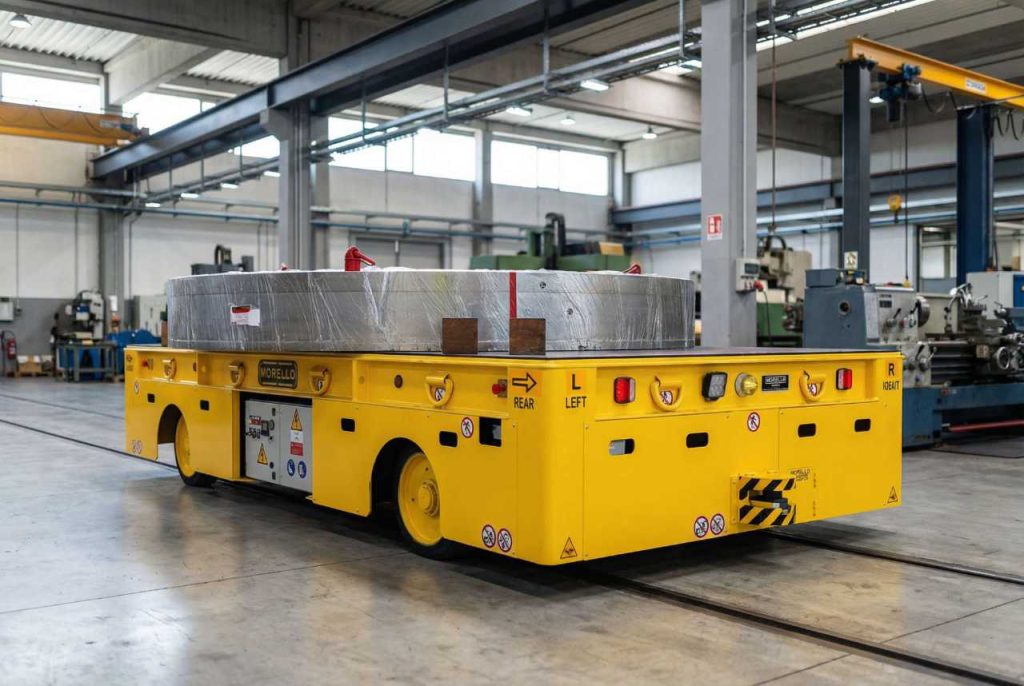
Selecting the right electric transfer cart for your industrial operations requires careful evaluation of technical specifications and operational requirements. Battery-powered carts have become essential equipment in modern manufacturing facilities, warehouses, and logistics centers, offering emission-free operation and reduced noise levels compared to traditional fuel-powered alternatives.
Understanding the key specifications—from load capacity and battery technology to control systems and safety features—ensures you invest in equipment that aligns with your material handling needs. Whether you’re moving components across a production floor, transporting heavy machinery between departments, or integrating automated logistics solutions, the specifications of your battery-powered cart directly impact productivity, safety, and long-term operational costs.
This electric transfer cart selection guide walks you through the critical technical parameters and decision factors that matter most when evaluating battery-powered carts for heavy-duty industrial applications.
Capacity requirements and load distribution fundamentals
How much weight will your electric transfer cart actually need to move? This question forms the foundation of any electric transfer cart selection guide. Load capacity isn’t simply about maximum weight—it encompasses the physical dimensions of your materials, their center of gravity, and how weight distributes across the cart platform. Industrial facilities handling aerospace components face different challenges than those transporting steel coils or wind turbine sections. A cart rated for 50 tons might seem adequate on paper, but if your load’s center of gravity sits high or off-center, you’ll need additional engineering considerations to prevent tipping hazards.
Battery-powered cart specifications must account for both static and dynamic loading conditions. When your cart accelerates, decelerates, or navigates turns, forces multiply beyond the simple weight of the cargo. Professional manufacturers calculate these factors using engineering principles that consider load distribution patterns, platform dimensions, and wheel configurations. For operations moving loads between 5 and 500 tons, custom calculations become essential rather than optional. The physical footprint of your materials also matters—a compact 20-ton load requires different platform dimensions than a lengthy 20-ton beam that extends across multiple support points.
Power source options for battery-powered cart specifications
Battery technology represents just one power option within the broader spectrum of electric transfer cart solutions, yet it delivers distinct advantages for specific operational contexts. What makes battery systems particularly valuable? They operate without physical connections to external power sources, providing complete freedom of movement within your facility. Modern lithium-ion and lead-acid battery configurations offer runtime capacities ranging from several hours to full shifts, depending on load weight, travel distance, and charging infrastructure.
An effective electric transfer cart selection guide must evaluate battery-powered specifications in relation to alternative energy delivery systems. Busbar systems supply continuous power through conductor rails installed along fixed routes—ideal for high-frequency operations on predetermined paths. Cable reel systems work effectively for medium-distance applications where flexibility matters more than unlimited range. Spring drum mechanisms suit shorter, repetitive movements. Each power source brings trade-offs in installation costs, operational flexibility, maintenance requirements, and energy efficiency. Battery systems eliminate trailing cables and fixed infrastructure, making them superior choices for facilities requiring multi-directional movement or operations across multiple zones without dedicated power rails.
Environmental factors that influence electric transfer cart selection
Where will your cart operate, and what conditions will it face daily? Environmental parameters dramatically affect both performance and longevity of material handling equipment. Floor surface quality directly impacts wheel selection, motor sizing, and overall system design. Smooth concrete floors allow standard wheel configurations, while rough surfaces, expansion joints, or slight inclines demand reinforced components and additional motor power. Temperature extremes—whether from outdoor exposure or proximity to furnaces and cooling systems—require specialized battery chemistries, motor protection, and electronic component ratings.
Explosive atmospheres in chemical processing, paint facilities, or grain handling operations necessitate ATEX-certified explosion-proof configurations with specialized electrical systems. Dust, moisture, and corrosive substances present in certain manufacturing environments require sealed enclosures and protective coatings. Space constraints matter too: can your cart navigate existing doorways, aisles, and clearance heights? Understanding your operational environment ensures your battery-powered cart specifications match real-world conditions rather than idealized testing scenarios. Facilities operating across multiple environmental zones may require different cart configurations for different areas, or versatile designs capable of handling varied conditions without compromising safety or efficiency.
Control systems and automation integration possibilities
How much human intervention does your material handling process require? Control system selection fundamentally shapes operational efficiency and labor allocation. Manual operation via onboard controls suits applications where operators need direct oversight and route flexibility. Radio remote controls allow operators to guide carts from safe distances—particularly valuable when moving hazardous materials or working in confined spaces where riding aboard isn’t practical. These systems provide human judgment while maintaining operator safety.
Autonomous navigation represents the advanced tier of control options, transforming electric transfer carts into true automated guided vehicles. These systems follow predetermined routes using magnetic strips, laser guidance, or vision systems, integrating seamlessly with warehouse management software and production scheduling systems. Autonomous carts communicate with each other to prevent collisions, optimize traffic flow, and operate continuously without breaks. Does your facility have repetitive transport needs on fixed routes? Automation delivers maximum return in these scenarios. However, operations requiring frequent route changes or handling unpredictable materials may benefit more from operator-controlled systems. Many facilities implement hybrid approaches—autonomous carts for routine transfers between fixed stations, with manual override capabilities for exceptional situations or maintenance procedures.
Safety standards and compliance in industrial material handling
What happens when something goes wrong? Safety systems determine whether incidents remain minor inconveniences or escalate into serious accidents. Modern battery-powered cart specifications include multiple protective layers: emergency stop buttons accessible from all approach angles, audible and visual warning systems that alert nearby personnel, and sensor arrays that detect obstacles and automatically halt movement. Laser and ultrasonic sensors create protective zones around moving carts, while shock-absorbing bumpers provide final physical protection against collisions.
Regulatory compliance isn’t optional—it’s fundamental to legal operation and worker protection. CE certification demonstrates conformity with European safety standards, while adherence to occupational health and safety regulations protects both employees and employers from liability. Your electric transfer cart selection guide must verify that prospective equipment meets applicable standards for your industry and region. Beyond baseline compliance, consider enhanced safety features appropriate to your specific hazards: spark-proof construction for explosive environments, reinforced platforms for overhead crane interaction zones, or specialized braking systems for inclined surfaces. Safety investments prevent accidents, reduce insurance costs, minimize downtime, and demonstrate corporate commitment to worker wellbeing—factors that far outweigh initial equipment cost differences.
Choosing the right partner for your material handling solution
Matching battery-powered cart specifications to your operational requirements demands more than catalog comparisons—it requires engineering expertise and manufacturing flexibility. When standard solutions fall short, custom-designed transfer carts bridge the gap between available products and actual needs.
Morello specializes in heavy-duty material handling equipment engineered for loads reaching hundreds of tons across aerospace, military, renewable energy, and industrial sectors worldwide. From initial concept through installation and ongoing support, experienced technical teams ensure your investment delivers long-term value. Whether you need battery-powered carts for emission-free indoor operations or integrated automated systems for complex logistics workflows, professional guidance transforms technical specifications into practical solutions. Don’t settle for equipment that almost fits your requirements—work with manufacturers who understand that every facility presents unique challenges requiring tailored approaches.
Contact Morello to discuss your specific material handling needs and discover how custom-engineered transfer carts optimize your production processes.