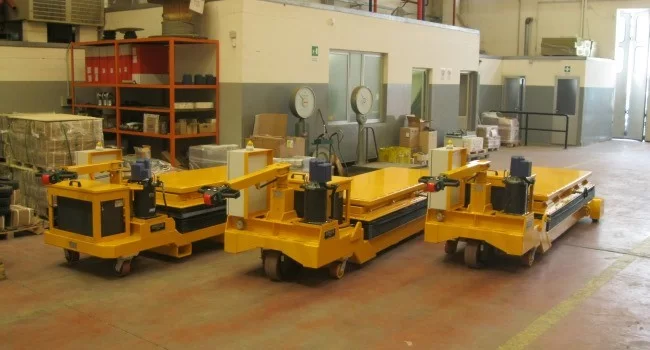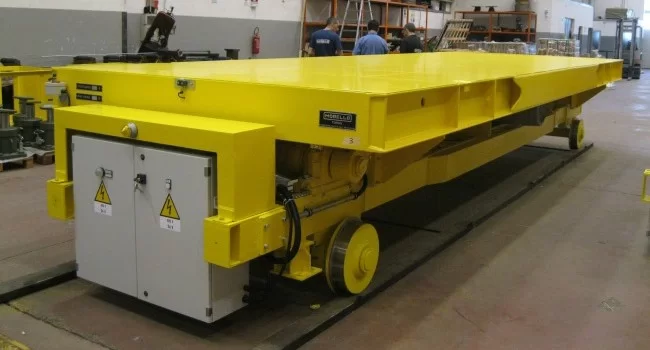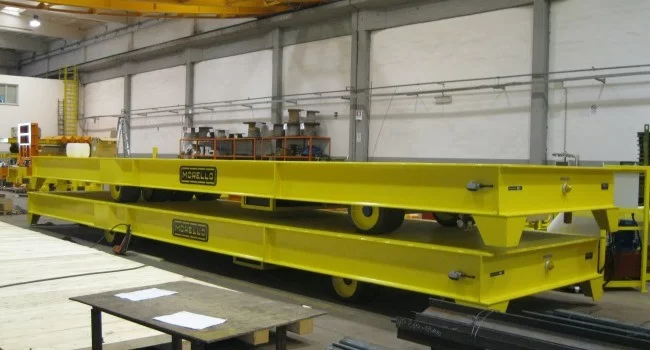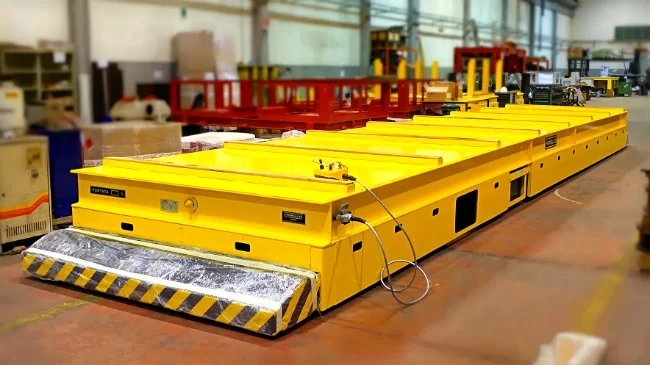
Electric transfer cars: revolutionizing industrial material handling

In today’s industrial environments, efficient material handling is critical for maintaining productivity and operational excellence. Electric transfer cars represent a significant advancement in the field of heavy load transportation, offering a versatile and efficient solution for moving substantial materials across manufacturing facilities, warehouses, and production plants. These specialized vehicles are designed to handle loads ranging from several tons to over 35 tons, providing reliable performance in demanding industrial settings.

MORELLO, a global leader in custom material handling equipment, has perfected the design and implementation of electric transfer cars that combine power, precision, and sustainability. These self-propelled vehicles are revolutionizing how industries approach material movement challenges, especially in sectors where traditional handling methods prove inadequate for oversized or exceptionally heavy components. This article explores the capabilities, benefits, and applications of electric transfer cars in modern industrial material handling operations.

Understanding electric transfer cars in modern material handling

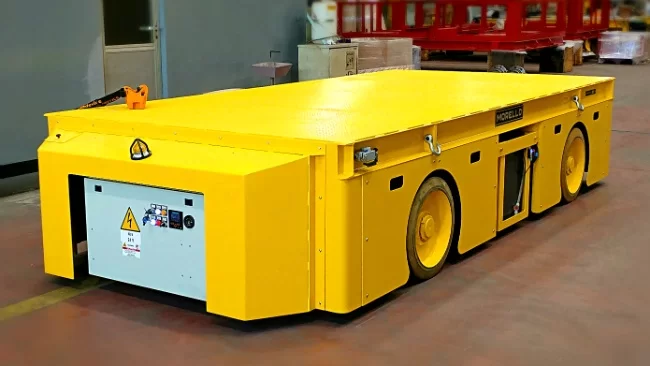
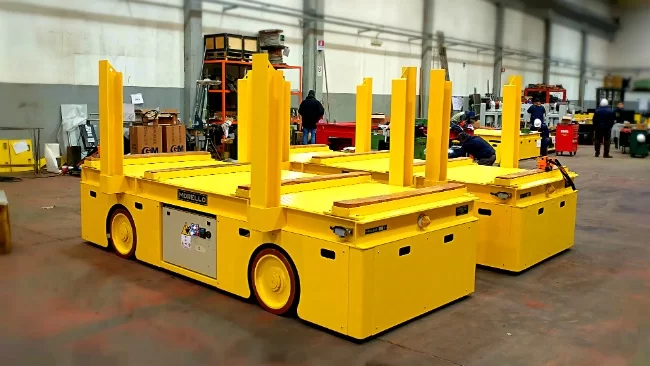
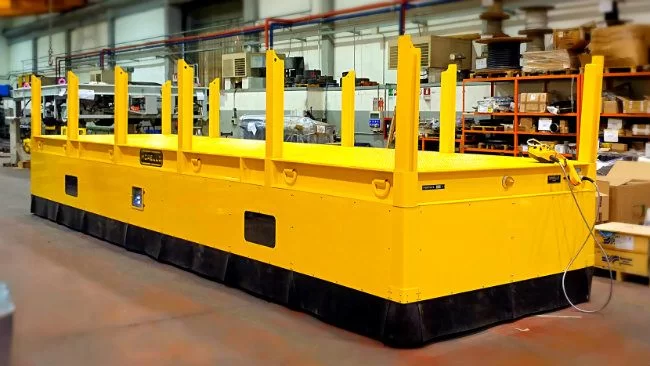
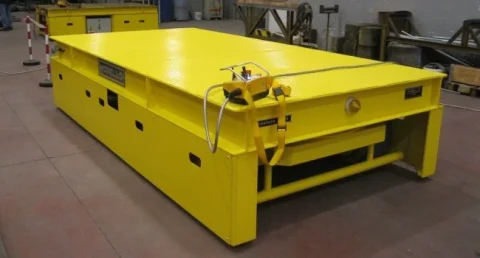
Electric transfer cars represent a sophisticated evolution in industrial material handling technology. These specialized vehicles operate on battery power, eliminating emissions while providing robust capabilities for transporting heavy loads across manufacturing facilities, warehouses, and production environments. Unlike conventional forklifts or manual transport systems, electric transfer cars are designed specifically for horizontal movement of exceptionally heavy or bulky materials that would otherwise require multiple handling equipment or complex rigging.

The fundamental design of these vehicles includes a low-profile platform mounted on wheels or rails, powered by high-capacity batteries that drive electric motors. This configuration allows for precise positioning and controlled movement of loads that can exceed 35 tons. The operator interface typically features intuitive controls that enable single-person operation despite the substantial weight being transported.

What distinguishes electric transfer cars in the material handling ecosystem is their versatility across different industrial applications. They can be customized with various steering systems—including fixed-path, steerable, and omnidirectional configurations—to navigate tight spaces and complex facility layouts. This adaptability makes them invaluable in industries where production layouts may change or where materials must move through congested spaces.

Their silent operation and zero emissions also make them appropriate for indoor use where air quality and noise concerns exist, providing advantages over diesel or gas-powered alternatives while maintaining comparable power capabilities.

Key features and capabilities

Modern electric transfer cars incorporate several advanced features that make them indispensable for industrial material handling operations. MORELLO’s engineering expertise has resulted in vehicles that balance power, control, and efficiency in ways that transform heavy load movement processes.

The load capacity of these specialized vehicles is perhaps their most impressive characteristic. Capable of handling weights up to 35 tons and beyond, they provide reliable transport solutions for even the most demanding industrial applications. This capability is delivered through robust structural design and optimized weight distribution that ensures stability during operation.

Battery technology represents another critical component. High-capacity lithium-ion or industrial lead-acid battery systems power these vehicles through full production shifts without requiring frequent recharging. The battery systems are engineered for rapid charging when needed, minimizing downtime and maintaining operational continuity.

Control systems in modern electric transfer cars offer precision that was previously unattainable with conventional handling equipment. Variable speed controls, proportional steering, and programmable movement parameters allow operators to execute precise maneuvers even with massive loads. Many models feature remote control capabilities, enabling a single operator to safely manage the movement of substantial materials from an optimal vantage point.

Safety features are comprehensively integrated, including emergency stop functions, obstacle detection sensors, warning lights, and audible movement signals. These systems work in concert to protect both operators and surrounding personnel while safeguarding the valuable materials being transported.

Customization options extend to the platform dimensions, steering configurations, and integration capabilities with existing production systems, making each vehicle adaptable to specific operational requirements.

Comparing electric transfer cars to traditional material handling systems

When evaluating material handling options for heavy industrial loads, understanding the comparative advantages of electric transfer cars becomes essential. Traditional systems like overhead cranes, forklifts, and tractor-trailer combinations have long dominated the industry, but electric transfer cars offer distinctive benefits that address specific operational challenges.

Unlike overhead crane systems, which require extensive ceiling infrastructure and present limitations in movement paths, electric transfer cars operate at ground level with flexible routing options. This eliminates the substantial structural requirements and fixed pathways that characterize crane installations. For facilities with ceiling height constraints or those needing to reconfigure production layouts frequently, this ground-level operation provides significant advantages.

Compared to conventional tractor-trailer systems, electric transfer cars offer superior maneuverability in confined spaces. The self-contained design eliminates the turning radius concerns associated with articulated tractor-trailer combinations, allowing for precise positioning in tight production areas where space optimization is critical.

Traditional forklift operations for extremely heavy loads often require multiple vehicles working in coordination, creating synchronization challenges and increasing accident risks. Electric transfer cars consolidate this function into a single unit capable of handling what might otherwise require several forklifts, streamlining operations and reducing labor requirements.

From an environmental perspective, electric transfer cars produce zero emissions at the point of use, unlike diesel-powered alternatives. This makes them suitable for indoor operations where air quality is a concern, eliminating the need for extensive ventilation systems that might otherwise be required for combustion-engine equipment.

The operational efficiency gains from implementing electric transfer cars often translate to measurable productivity improvements, particularly in operations where material movement represents a significant workflow bottleneck.

Application scenarios across different industrial sectors

Electric transfer cars for industrial material handling demonstrate remarkable versatility across numerous sectors, each benefiting from their specialized capabilities in unique ways. MORELLO’s implementation experience spans global industries with diverse requirements and operational conditions.

In the automotive manufacturing sector, electric transfer cars excel at transporting large body components, engine blocks, and completed chassis between production stations. Their precise positioning capabilities ensure alignment with assembly fixtures, while their gentle acceleration prevents damage to partially completed vehicles. One notable application involves the movement of complete car bodies through paint preparation areas where environmental controls are critical and emissions must be eliminated.

The aerospace industry utilizes these vehicles for handling oversized components such as wing assemblies, fuselage sections, and landing gear systems. The ability to customize platform dimensions allows for secure transportation of irregularly shaped components that would be challenging for conventional handling equipment.

Within steel and metal processing facilities, electric transfer cars transport heavy coils, plates, and beams between processing stations. Their stable platforms prevent material shifting during transport, while their electric drive systems eliminate contamination concerns in sensitive metallurgical processes.

The precast concrete industry benefits from electric transfer cars for moving massive structural elements from production to curing areas and ultimately to storage or loading zones. The high weight capacity accommodates concrete elements weighing many tons without requiring multiple handling steps.

Energy sector applications include the transportation of turbine components, generator housings, and transformer assemblies within manufacturing and maintenance facilities. The precision control allows for careful positioning of these sensitive and valuable components.

Logistics and distribution centers implement electric transfer cars for moving consolidated loads between loading areas, optimizing space utilization while reducing the need for multiple handling equipment pieces operating in congested spaces.

Maximizing efficiency with customized electric transfer solutions

The true potential of electric transfer cars is realized through customization that aligns precisely with specific operational requirements. MORELLO’s approach to designing these specialized vehicles begins with a comprehensive analysis of the material flow, facility layout, and handling challenges unique to each client’s environment.

Platform dimensions represent a critical customization factor, with width, length, and load-bearing surface configurations tailored to accommodate specific materials. For clients handling irregularly shaped components, custom fixtures and securing mechanisms can be integrated directly into the transfer car design, eliminating the need for separate restraint systems.

Drive system optimization balances power requirements with energy efficiency considerations. By analyzing the actual load weights, transport distances, and cycle frequencies, engineers can specify motor and battery configurations that deliver necessary performance while minimizing energy consumption and maximizing operational runtime between charges.

Control interfaces can be customized based on operator preferences and safety protocols. Options range from traditional onboard controls to wireless remote systems and even semi-autonomous operation capabilities that follow predetermined paths through production areas. These control variations significantly impact workflow efficiency and operator productivity.

Integration with existing facility systems represents another customization dimension. Electric transfer cars can be designed to interface with production control systems, providing real-time location and status data that supports overall production scheduling and material flow optimization. This connectivity enables predictive maintenance scheduling and performance analytics that further enhance operational efficiency.

Safety system customization addresses specific environmental risks and company protocols. From standard features like perimeter sensors and warning signals to specialized systems that interact with facility access controls, these safety adaptations ensure that the transfer solution complements existing workplace safety frameworks.

Through this multifaceted customization approach, electric transfer cars transform from general material handling equipment into precision-engineered solutions that address the exact challenges of each industrial application.

Elevating industrial material handling with advanced electric transfer technology

Electric transfer cars have fundamentally transformed industrial material handling operations by providing a powerful combination of capacity, precision, and adaptability. As manufacturing and logistics operations continue to evolve toward greater efficiency and sustainability, these specialized vehicles offer solutions that address the most challenging aspects of heavy material movement. MORELLO’s commitment to engineering excellence ensures that each electric transfer car delivers optimal performance within its specific operational context, whether in automotive manufacturing, aerospace production, or energy sector applications.

The competitive advantages gained through implementing these advanced handling systems extend beyond mere material movement to impact overall production efficiency, workplace safety, and environmental responsibility. By partnering with a recognized leader in custom material handling solutions, industrial operations can overcome their most significant transportation challenges while positioning themselves for future growth and adaptation.

Ready to revolutionize your heavy material handling operations? Contact MORELLO today to discuss how our customized electric transfer cars can transform your industrial material movement challenges into operational advantages.
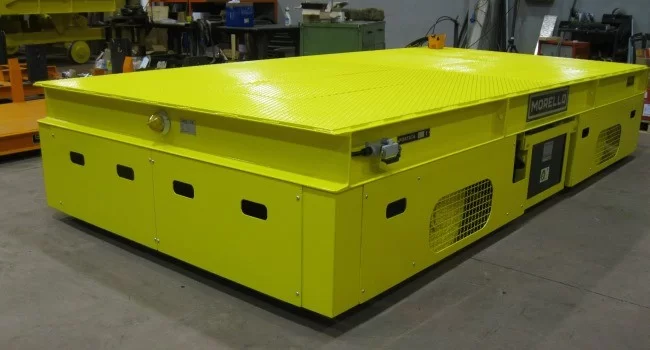
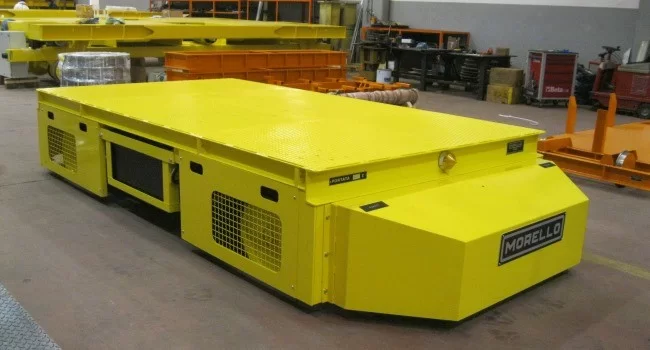
Battery-powered self-propelled trailers: revolutionizing heavy load movement

When it comes to moving exceptionally heavy loads in industrial environments, traditional methods often fall short of meeting modern efficiency demands. Battery-powered self-propelled trailers represent the cutting edge of material handling technology, offering unprecedented mobility and control for loads that once required complex rigging systems or multiple pieces of equipment.

These innovative transportation solutions are transforming operations across automotive manufacturing, energy production, construction, and heavy logistics sectors. With load capacities reaching 50 tons and beyond, these specialized trailers combine powerful electric propulsion with precision maneuverability, eliminating the need for external towing vehicles while reducing operational footprints. For industrial engineers and operations directors tasked with optimizing material movement in complex facilities, understanding the capabilities and applications of these advanced systems is essential for maintaining competitive advantages in production efficiency and workplace safety.

The evolution of battery-powered self-propelled trailers for industrial material handling

Industrial material handling has undergone remarkable transformation with the introduction of battery-powered self-propelled trailers. These specialized vehicles emerged as a response to the growing challenges of moving exceptionally heavy loads across manufacturing facilities, construction sites, and logistics centers. Initially, heavy load transportation relied exclusively on diesel-powered equipment or complex towing systems that required significant manpower and space to operate effectively.

The breakthrough came with the development of high-capacity electric drive systems that could be integrated directly into trailer platforms. This innovation eliminated the need for separate towing vehicles while simultaneously reducing emissions and operational noise. Early models featured basic directional control systems, but modern battery-powered self-propelled trailers now incorporate sophisticated electronic steering mechanisms, allowing for precise maneuverability in confined spaces.

Perhaps the most significant advancement has been in battery technology. Contemporary lithium-ion power systems have replaced older lead-acid batteries, dramatically extending operational times while reducing charging intervals. This technological leap has made 50-ton capacity self-propelled battery trailers not just feasible but increasingly common in industries where continuous operation is essential.

The evolution continues with the integration of smart technologies, including remote operation capabilities, obstacle detection systems, and programmable movement paths that further enhance safety and efficiency in industrial environments where space constraints and hazardous conditions present ongoing challenges.

Technical innovations: how 50-ton capacity trailers work

The engineering behind a 50-ton capacity self-propelled battery-powered trailer represents a masterclass in industrial design. These powerful machines combine multiple technical innovations to create seamless heavy load transportation systems that can operate in challenging environments.

At the heart of these trailers lies a sophisticated power management system. Multiple high-torque electric motors, typically positioned at strategic points within the chassis, provide the necessary propulsion. These motors connect to heavy-duty wheel assemblies through specialized gear reduction systems that maximize torque while maintaining precise speed control. The distributed drive configuration ensures that power delivery remains balanced across the entire platform, preventing structural stress points even when carrying maximum loads.

The battery systems in modern self-propelled trailers utilize advanced chemistry that optimizes power density. A typical 50-ton capacity unit houses multiple battery banks that can deliver sustained power for operational periods of 6-8 hours before requiring recharging. Temperature management systems protect these batteries during high-demand operations, extending their service life while maintaining consistent performance.

Control systems represent another critical innovation. Operators interface with these massive machines through intuitive control panels that provide proportional speed control, directional steering, and real-time diagnostic information. Many advanced models incorporate wireless remote control capabilities, allowing operators to maintain visual contact with the load and surrounding environment while controlling the trailer from a safe distance.

The platform itself features reinforced structural elements designed through finite element analysis to distribute weight evenly while maintaining the necessary flexibility to navigate uneven surfaces without compromising stability.

Key applications and industry-specific benefits

Battery-powered self-propelled trailers have found their niche across numerous industrial sectors, each benefiting from specific capabilities these specialized vehicles offer. In the automotive manufacturing industry, these trailers excel at transporting large vehicle components, dies, and tooling equipment between production stations. The precise maneuverability allows assembly line reconfigurations without the space requirements of traditional towing equipment.

The energy sector relies heavily on these trailers for moving turbine components, generator assemblies, and transformer units within power generation facilities. The battery-powered operation eliminates emissions, making them ideal for indoor use where air quality concerns are paramount. For nuclear facilities, these trailers provide the added benefit of operating without combustion engines in sensitive environments where fire risks must be minimized.

In aerospace manufacturing, where components can be both massive and delicate, self-propelled trailers offer smooth acceleration and deceleration profiles that protect high-value payloads from sudden movements. The adjustable speed control allows operators to move multi-million dollar components with confidence.

Construction and precast concrete industries benefit from these trailers’ ability to navigate unpaved surfaces while maintaining stability. The distributed weight bearing capability prevents damage to finished floors when moving heavy structural elements inside partially completed buildings.

Perhaps most impressively, logistics and warehousing operations utilize these trailers to maximize storage density. The omnidirectional steering capabilities available on advanced models allow palletized goods to be positioned in tight spaces that would be inaccessible to conventional forklifts or tow tractors, significantly increasing warehouse capacity without facility expansion.

Comparing battery-powered trailers to traditional heavy load transportation methods

When evaluating material handling options for heavy loads, operations directors must consider how battery-powered self-propelled trailers stack up against conventional transportation methods. The most immediate comparison is with tractor-trailer systems, which have long been the standard for moving substantial weights across industrial facilities.

The operational footprint represents one of the most significant differences. A traditional tractor-trailer combination requires considerable space for maneuvering, particularly when navigating turns or positioning loads in confined areas. In contrast, battery-powered self-propelled trailers can execute zero-radius turns and lateral movements, requiring up to 40% less operational space.

From a labor perspective, self-propelled trailers typically require fewer personnel. While tractor-trailer systems often need both a driver and spotters to navigate safely, a single operator can control a battery-powered trailer, even remotely for complex movements. This staffing efficiency translates to measurable cost savings over time.

Environmental considerations also favor battery-powered options. Unlike diesel tractors that produce emissions and require ventilation systems when operating indoors, electric trailers generate zero local emissions. This characteristic eliminates the need for expensive air handling equipment and creates healthier working environments.

Maintenance profiles differ substantially as well. Combustion engines in traditional tractors require regular service intervals with numerous consumable parts and fluids. Electric drive systems in self-propelled trailers have significantly fewer moving components, reducing maintenance frequency and associated downtime. While the initial investment for a battery-powered self-propelled trailer typically exceeds that of a conventional system, the total cost of ownership calculations often favor the electric option when factoring in operational efficiencies and reduced maintenance requirements.

Future-proofing industrial operations with advanced self-propelled trailer technology

As industrial facilities evolve toward greater automation and connectivity, battery-powered self-propelled trailers are increasingly becoming central to forward-thinking material handling strategies. These advanced transportation systems offer a clear pathway toward future-proofed operations through several key technological developments.

Integration with facility management systems represents one of the most promising advancements. Modern self-propelled trailers can be equipped with telemetry packages that communicate with centralized control systems, providing real-time location data, battery status, and maintenance requirements. This connectivity allows operations managers to optimize material flow throughout facilities, identifying bottlenecks and implementing data-driven improvements.

The transition toward semi-autonomous operation capabilities signals another significant development. Advanced sensor arrays—including LiDAR, computer vision, and ultrasonic detection—are being incorporated into trailer designs, enabling obstacle avoidance and predetermined path following without continuous operator intervention. These features serve as stepping stones toward fully autonomous operation, where trailers will eventually navigate complex industrial environments independently.

Energy management innovations continue to extend operational capabilities. Rapid charging technologies and hot-swappable battery systems minimize downtime, while regenerative braking recovers energy during deceleration. Some manufacturers now offer solar charging options for facilities with appropriate infrastructure, further reducing operational costs and environmental impact.

Perhaps most importantly, modular design approaches allow for component upgrades without replacing entire trailer systems. This adaptability ensures that investments in battery-powered self-propelled trailer technology can evolve alongside changing operational requirements, protecting capital expenditures while maintaining competitive advantages in heavy material handling efficiency.

Transforming industrial material handling with innovative trailer solutions

Battery-powered self-propelled trailers represent a significant leap forward in heavy load handling technology, offering industrial operations a powerful combination of efficiency, flexibility, and sustainability. With capacities reaching 50 tons and beyond, these specialized vehicles eliminate many of the limitations associated with traditional material transportation methods while providing a clear path toward future automation capabilities. As manufacturing, energy, construction, and logistics sectors continue to face increasing demands for operational efficiency, these advanced trailers deliver measurable advantages in both immediate productivity and long-term adaptability.

MORELLO‘s expertise in custom-engineered material handling solutions makes us the ideal partner for organizations seeking to optimize their heavy load transportation systems. Our engineering team specializes in developing battery-powered self-propelled trailers tailored to your specific operational requirements, facility constraints, and load characteristics.

Contact MORELLO today to discuss how our innovative trailer technology can transform your material handling processes and deliver sustainable competitive advantages for your industrial operations. Explore our customized handling solutions and take the first step toward operational excellence.

Self-propelled battery trailers: transform your material handling

In today’s fast-paced industrial environments, efficient material handling is crucial for maintaining productivity and operational excellence. Self-propelled battery trailers represent a revolutionary advancement in the transportation of heavy loads across manufacturing facilities, warehouses, and construction sites. These specialized vehicles combine robust load capacity with unprecedented maneuverability, offering a sustainable alternative to traditional diesel-powered equipment.

MORELLO‘s cutting-edge self-propelled battery trailers are engineered to handle loads up to 10 tons with precision and reliability, while maintaining impressive travel speeds of up to 30 meters per minute. By eliminating the need for separate towing vehicles and reducing the environmental impact associated with conventional material handling equipment, these battery-powered solutions are transforming how industrial operations approach the movement of heavy materials. Whether navigating tight spaces in complex facilities or transporting critical components across expansive work areas, these innovative trailers deliver exceptional performance while prioritizing safety and efficiency.

The evolution of self-propelled battery trailers in industrial material handling

Industrial material handling has undergone a remarkable transformation since the introduction of self-propelled battery trailers. These specialized vehicles emerged as manufacturers sought more efficient alternatives to traditional towing methods that required separate power units and multiple operators. The early models represented a significant leap forward, combining transportation and power systems into unified platforms capable of independent operation.

As technology progressed, these trailers evolved from basic transport vehicles to sophisticated material handling solutions. The integration of advanced battery technologies marked a pivotal moment, extending operational times while reducing charging requirements. Simultaneously, control systems advanced from simple manual interfaces to complex electronic systems offering precision movement and enhanced safety features.

MORELLO has been at the forefront of this evolution, continuously refining self-propelled battery trailer designs to meet increasingly demanding industrial requirements. The company’s innovations have focused on three critical areas:

  • Load capacity optimization – Engineering solutions that maximize weight-bearing capabilities while maintaining maneuverability
  • Energy efficiency improvements – Developing power management systems that extend operational duration
  • Control interface refinement – Creating intuitive operator experiences that reduce training requirements and improve productivity

Today’s self-propelled battery trailers for industrial material handling represent the culmination of decades of engineering advancement. They offer unprecedented flexibility in manufacturing environments, distribution centers, and construction sites where the movement of heavy components requires both power and precision.

Technical specifications and capabilities

Modern battery-powered trailers for heavy-duty operations represent the pinnacle of industrial material handling technology. MORELLO’s self-propelled battery trailers exemplify this advancement with impressive technical specifications that meet demanding industrial requirements. The SGAI VC model, for instance, offers a substantial 10-ton capacity on a platform measuring 3,500 x 2,000 mm, providing ample space for oversized components while maintaining structural integrity under significant loads.

The propulsion systems in these specialized vehicles deliver remarkable performance metrics. With travel speeds reaching 30 meters per minute, these trailers efficiently transport materials across large manufacturing facilities without sacrificing precision during positioning operations. The battery systems powering these units utilize advanced lithium-ion or enhanced lead-acid technologies, delivering extended operational periods between charging cycles.

Control systems have evolved significantly, incorporating features such as:

  • Directional versatility stands as a defining characteristic of premium self-propelled battery trailers. Many models offer multi-directional movement capabilities, including forward/reverse operation, lateral movement, and even diagonal travel patterns. This omnidirectional functionality proves invaluable when navigating congested workspaces or positioning loads in confined areas.
  • Safety features integrate seamlessly into the design architecture, with emergency stop functions, obstacle detection systems, and operator presence controls. Load stability mechanisms actively monitor weight distribution and automatically compensate for shifting centers of gravity during transport operations. These intelligent systems work in concert to maintain safe operating conditions even when handling asymmetrical or dynamically changing loads.

Key advantages of battery-powered trailers

Battery-powered trailers for heavy-duty operations offer substantial benefits over traditional material handling solutions, creating measurable value for industrial facilities. Perhaps the most significant advantage lies in their operational independence. Unlike conventional tractor-trailer systems that require dedicated towing vehicles, self-propelled battery trailers function as standalone units, eliminating equipment redundancies and reducing fleet management complexity.

The environmental impact represents another compelling advantage. These electric-powered systems produce zero local emissions during operation, contributing to cleaner working environments and supporting corporate sustainability initiatives. The noise reduction compared to diesel-powered alternatives creates healthier workspaces and enables communication without the constant background noise of combustion engines.

From a financial perspective, battery-powered trailers deliver compelling long-term value. The initial investment is offset by reduced operational costs, with electricity typically costing significantly less than diesel fuel for equivalent work performed. Maintenance requirements also decrease substantially with fewer moving parts and elimination of complex transmission systems. The simplified drivetrain architecture means fewer components subject to wear, translating to increased uptime and extended service intervals.

Maneuverability within confined spaces represents a practical advantage that directly impacts productivity. The compact design and precision control systems allow operators to navigate tight aisles and position loads exactly where needed without multiple adjustment maneuvers. This spatial efficiency translates directly to time savings during material transport operations.

Finally, these systems demonstrate remarkable adaptability across diverse industrial applications. Whether in manufacturing, logistics, construction, or energy production, self-propelled battery trailers for industrial material handling provide consistent performance while accommodating unique operational requirements.

Implementation strategies for integrating self-propelled trailers into existing workflows

Integrating self-propelled battery trailers into established industrial environments requires thoughtful planning and strategic implementation. The transition begins with a comprehensive workflow analysis to identify critical material movement pathways and potential bottlenecks. This assessment should examine current transportation methods, load characteristics, facility layout constraints, and operational timing requirements.

Facility preparation often necessitates infrastructure modifications to support battery-powered equipment. Installing charging stations at strategic locations ensures continuous operations while minimizing downtime. Floor surfaces may require evaluation and potential reinforcement to accommodate the concentrated weight distribution of fully loaded trailers. Doorways, corridors, and turning areas should be measured against trailer specifications to verify adequate clearance throughout all transport routes.

Personnel training represents a crucial implementation component. Operators require instruction not only in basic control functions but also in optimized movement patterns that maximize efficiency. Maintenance staff need specialized training in electric drivetrain diagnostics, battery management, and preventive maintenance protocols. This knowledge transfer ensures the organization can fully leverage the technology’s capabilities while maintaining operational readiness.

A phased deployment approach typically yields the best results. Beginning with a single trailer in a limited operational area allows for process refinement before expanding to full implementation. This measured strategy provides opportunities to document best practices, address unforeseen challenges, and demonstrate tangible benefits to stakeholders throughout the organization.

MORELLO provides comprehensive implementation support, including site assessment services, customized trailer configurations, and training programs tailored to specific industrial applications. This collaborative approach ensures that self-propelled battery trailers for industrial material handling integrate seamlessly into existing workflows while maximizing return on investment.

Future innovations in material handling technology

The evolution of self-propelled material handling technology continues at an accelerating pace, with several emerging innovations poised to further transform industrial operations. Battery technology stands at the forefront of this advancement, with research focused on increasing energy density while reducing weight and charging times. Next-generation power systems promise to extend operational periods significantly, potentially enabling multiple shifts without recharging requirements.

Autonomous navigation capabilities represent another exciting frontier. While current self-propelled battery trailers for industrial material handling require operator guidance, semi-autonomous and fully autonomous systems are under active development. These technologies incorporate advanced sensor arrays, machine learning algorithms, and real-time decision-making capabilities to navigate complex industrial environments without human intervention.

Integration with facility management systems offers substantial efficiency gains. Future trailers will likely communicate directly with inventory management platforms, production scheduling software, and predictive maintenance systems. This interconnectivity enables optimized material flow based on real-time production demands and resource availability.

Modular design approaches are gaining traction, allowing a single base platform to adapt to diverse material handling requirements through interchangeable components. This flexibility enables companies to configure trailers for specific tasks without investing in multiple specialized units, maximizing equipment utilization while minimizing capital expenditures.

MORELLO maintains its position at the innovation forefront through continuous research and development investments. The company’s engineering teams collaborate with industry partners to identify emerging needs and develop solutions that anticipate future challenges in battery-powered trailer technology for heavy-duty operations. This forward-looking approach ensures that MORELLO’s self-propelled battery trailers will continue setting industry standards for performance, reliability, and technological advancement.

Revolutionizing industrial operations with advanced material handling solutions

Self-propelled battery trailers represent a transformative approach to industrial material handling, offering unprecedented efficiency, environmental benefits, and operational flexibility. As manufacturing and logistics operations continue to evolve, these specialized vehicles provide a powerful solution for transporting heavy loads with precision and reliability. MORELLO’s commitment to engineering excellence ensures that each self-propelled battery trailer delivers exceptional performance while meeting the unique requirements of demanding industrial environments.

The transition from traditional towing methods to self-propelled technology creates measurable advantages in productivity, safety, and cost-effectiveness. By eliminating the need for separate towing vehicles and reducing environmental impact, these battery-powered solutions align perfectly with modern industrial objectives of operational efficiency and sustainability.

Ready to transform your material handling capabilities? Explore MORELLO’s complete range of customized self-propelled battery trailers and discover how our innovative solutions can optimize your heavy-duty operations while reducing operational costs and environmental impact.

Industrial material handling trailers: maximizing efficiency in heavy load transport

In today’s complex industrial environments, efficient material handling is critical for operational success. Industrial material handling trailers represent a cornerstone solution for companies managing heavy loads across diverse sectors including energy, construction, and logistics. These specialized transport systems are engineered to move substantial cargo safely and efficiently through challenging industrial settings. MORELLO has established itself as an industry leader in custom industrial trailer solutions, delivering high-performance equipment tailored to specific operational requirements. Our industrial material handling trailers combine robust construction with precision engineering to handle loads exceeding 40 tons while maintaining maneuverability in confined spaces. This article explores how industrial trailers delivery can transform heavy material transport operations, examining the technical innovations, customization options, and strategic advantages that make these systems indispensable for modern industrial facilities facing increasingly complex material handling challenges.

Advanced features of MORELLO’s industrial material handling trailers

MORELLO’s industrial trailers represent the pinnacle of heavy-load transport engineering with features specifically designed to address complex material handling challenges. Each trailer incorporates multiple steering axles that enable precise navigation through tight spaces and complex industrial environments. This steering capability is particularly valuable when maneuvering in congested production facilities or construction sites where space is at a premium.

The robust pneumatic tire system is another standout feature, with each industrial material handling trailer equipped with 16 pneumatic tires. These tires provide exceptional load distribution, reducing ground pressure and minimizing potential damage to facility floors. The pneumatic design also absorbs vibrations and shocks during transport, protecting sensitive cargo and extending the service life of both the trailer and the transported materials.

Safety remains paramount in MORELLO’s design philosophy, evident in the comprehensive pneumatic braking systems integrated into each trailer. These systems ensure reliable stopping power even when handling loads approaching the 40-ton capacity limit. The braking technology includes redundant safety mechanisms that prevent unintended movement during loading and unloading operations – critical moments when load stability can be compromised.

The control systems for MORELLO’s industrial trailers balance sophisticated engineering with intuitive operation, allowing operators to manage complex movements with confidence and precision, even when handling exceptionally valuable or dimensionally challenging cargo.

The engineering behind our industrial material handling trailers

Designing industrial trailers capable of handling 40-ton loads requires exceptional engineering precision and material science expertise. MORELLO’s approach to achieving this remarkable capacity begins with the chassis design, which utilizes high-tensile steel alloys strategically reinforced at critical stress points. The load-bearing frame incorporates advanced structural analysis to distribute weight evenly across all axles and wheels.

The dimensional considerations are equally important in these high-capacity designs. With standard platforms measuring approximately 8000 x 2300 mm, these trailers provide substantial surface area for cargo placement while maintaining a footprint that remains practical for industrial operations. This balance between capacity and maneuverability represents one of the most significant engineering challenges in heavy transport equipment design.

The axle engineering incorporates specialized suspension systems that maintain proper weight distribution regardless of terrain variations. This adaptive capability ensures that no single component bears excessive stress during operation, extending service life while maintaining safety margins. Each axle is independently engineered to handle a calculated portion of the maximum load, with redundancy built into the system.

Material selection plays a crucial role in achieving the 40-ton capacity without excessive weight or bulk. Advanced metallurgical techniques allow for thinner yet stronger components, reducing the trailer’s own weight while maximizing its payload capacity. This weight optimization directly translates to operational efficiency, as every kilogram saved in trailer weight becomes available for additional cargo capacity.

Global industrial trailer delivery: from design to implementation

MORELLO’s approach to industrial trailer delivery spans continents, exemplified by recent projects like the delivery of three specialized industrial material handling trailers to a Thai manufacturing company. This global reach demonstrates not only the universal need for heavy-load handling solutions but also the company’s capability to adapt designs to regional requirements and regulations.

The delivery process begins long before any physical shipment occurs. Initial consultations identify the specific operational challenges faced by the client, including load characteristics, facility layout, and environmental conditions. These factors directly influence the trailer design process, where MORELLO’s engineers develop detailed specifications tailored to the client’s exact needs.

Manufacturing these custom trailers involves precision fabrication across multiple specialized departments. The chassis construction, pneumatic system integration, and electronic control implementation proceed simultaneously before final assembly and rigorous testing. Each trailer undergoes load testing at maximum capacity to verify structural integrity and operational performance.

The logistics of delivering industrial material handling trailers globally present unique challenges. These substantial pieces of equipment require specialized transport arrangements, often involving multiple shipping methods. MORELLO coordinates comprehensive delivery plans that account for international customs requirements, specialized handling needs, and installation support upon arrival.

On-site implementation includes technical team deployment to oversee installation, calibration, and initial operator training. This hands-on approach ensures that clients can immediately integrate these sophisticated tools into their operations with confidence. The thorough implementation process creates a foundation for the decades-long operational lifespan these industrial trailers are designed to provide.

Customization options for heavy-load industrial trailers

The versatility of MORELLO’s industrial material handling trailers stems from extensive customization options that allow each unit to be precisely tailored to specific operational requirements. While the standard VCP1 model provides exceptional performance for many applications, the ability to modify key characteristics transforms these trailers into specialized tools for unique industrial challenges.

Platform dimensions represent one of the most frequently customized aspects. Though the standard 8000 x 2300 mm platform serves most applications effectively, clients can specify custom dimensions to accommodate uniquely shaped cargo or to navigate specific facility constraints. These dimensional modifications maintain the structural integrity necessary for heavy-load handling while adapting to spatial requirements.

Control system customization allows for integration with existing facility management systems. Options range from basic manual controls to sophisticated electronic interfaces that provide real-time operational data. For facilities with multiple material handling systems, MORELLO can implement compatibility protocols that enable coordinated operation across diverse equipment types.

Surface treatments and environmental adaptations extend the operational range of these industrial material handling trailers. Specialized coatings protect against corrosive environments in chemical processing facilities, while thermal insulation modifications enable safe operation in extreme temperature conditions. For outdoor applications, weather-resistant components ensure reliability regardless of environmental exposure.

Accessory integration further expands functionality, with options including integrated weighing systems, automatic coupling mechanisms, and specialized cargo securing fixtures. These modular additions allow the core trailer design to serve multiple purposes within the same facility, maximizing the return on investment while maintaining the specialized performance characteristics required for heavy-load handling.

Industrial trailers with pneumatic systems: performance benefits

Pneumatic systems represent a cornerstone technology in MORELLO’s industrial material handling trailers, delivering multiple performance advantages that directly impact operational efficiency and safety. The comprehensive implementation of pneumatic technology extends beyond the obvious application in tires to encompass braking systems and auxiliary functions.

The pneumatic braking system provides responsive, proportional stopping power that scales appropriately to the load being transported. This adaptive capability ensures consistent braking performance regardless of whether the trailer is operating at partial or full capacity. The system maintains pressure reserves that guarantee braking capability even in the event of primary system failure, creating multiple layers of operational safety.

Load cushioning represents another significant benefit of pneumatic integration. The air-based systems absorb vibrations and impact forces that would otherwise transfer to the cargo, reducing the risk of damage during transport. This cushioning effect is particularly valuable when moving sensitive equipment or components with precise tolerances that could be affected by mechanical shock.

Maintenance accessibility is enhanced through the pneumatic system design, with modular components that can be individually serviced or replaced without extensive disassembly. This approach minimizes downtime during routine maintenance and expedites repairs when necessary. The pneumatic components are designed with industry-standard fittings and specifications, ensuring replacement parts availability throughout the global service network.

Environmental adaptability is another advantage, as pneumatic systems maintain consistent performance across a wide temperature range. Unlike hydraulic systems that may experience viscosity changes in extreme conditions, properly maintained pneumatic systems deliver reliable operation in both cold and hot environments, making them ideal for facilities with seasonal temperature variations or challenging climate conditions.

Elevating industrial operations through specialized trailer solutions

Industrial material handling trailers represent a critical component in the operational efficiency of manufacturing, construction, and logistics enterprises worldwide. MORELLO’s commitment to engineering excellence is evident in every aspect of our industrial trailers, from the robust 40-ton capacity to the sophisticated pneumatic systems that ensure safe, reliable performance. Our global delivery capabilities ensure that companies across continents can access these specialized material handling solutions tailored to their specific operational requirements. The combination of customization options, advanced engineering, and comprehensive implementation support creates transportation systems that directly contribute to operational efficiency and workplace safety.

Ready to transform your heavy material handling operations? Contact MORELLO today to discuss how our custom industrial material handling trailers can address your specific challenges and improve your operational efficiency. Our engineering team is prepared to develop solutions that precisely match your requirements, regardless of complexity or scale. Explore our solutions and take the first step toward optimized heavy load transportation.

Manual steering powered trailers: transforming industrial logistics

In today’s complex industrial environments, the efficient movement of heavy materials is a critical operational challenge. Manual steering powered trailers represent a sophisticated solution that combines operational flexibility with robust performance capabilities. These specialized industrial vehicles serve as the backbone of material handling systems across energy, construction, and logistics sectors where precision movement of substantial loads is essential. Designed with both power and control in mind, these trailers feature manual steering systems that allow operators to navigate tight spaces with remarkable accuracy while still benefiting from motorized propulsion. MORELLO’s manual steering powered trailers exemplify engineering excellence, offering customized solutions that address specific industrial requirements. From manufacturing facilities to construction sites, these versatile transport systems enhance productivity, improve safety protocols, and optimize workflow efficiency. Their unique combination of manual steering precision and powered movement capability makes them indispensable tools for operations managers and industrial engineers seeking reliable material handling equipment.

The engineering behind manual steering powered trailers

The engineering principles that drive manual steering powered trailers for industrial use represent a masterful balance between human control and mechanical power. These specialized vehicles integrate robust power systems with intuitive steering mechanisms, creating solutions that address the complex challenges of heavy material transport in industrial settings.

At the heart of these trailers lies the steering system, typically featuring a tiller or drawbar mechanism that provides operators with precise directional control. This manual interface translates operator movements into mechanical actions through a series of linkages, bearings, and pivot points designed to minimize required effort while maximizing control sensitivity. The steering geometry is carefully calculated to ensure predictable handling characteristics even when navigating with substantial loads.

The power components work in harmony with the steering system, delivering controlled propulsion that responds to the operator’s guidance. Most MORELLO’s models utilize electric drive systems with variable speed controllers that provide smooth acceleration and precise speed regulation. The power train design incorporates heavy-duty components sized appropriately for sustained industrial use, including reinforced drive axles, industrial-grade bearings, and high-torque motors.

What makes these trailers particularly valuable is the engineering integration between manual control and powered movement. This hybrid approach allows operators to benefit from motorized assistance while maintaining the intuitive feel and precision that only manual steering can provide—especially critical when maneuvering in confined spaces or positioning heavy loads with millimeter precision.

Key features and capabilities of industrial powered trailers

MORELLO’s manual steering powered trailers incorporate a comprehensive suite of features designed specifically for demanding industrial environments. These specialized transport solutions offer capabilities that extend far beyond basic material movement, providing operational advantages that directly impact workflow efficiency and safety.

The load capacity represents one of the most significant capabilities, with models ranging from 2-ton compact units to heavy-duty versions capable of transporting loads exceeding several tons. This scalability allows operations to select equipment precisely matched to their material handling requirements. Many models, like the SGAM series, feature elevating loading platforms that facilitate seamless material transfer between different height surfaces—eliminating the need for additional lifting equipment.

Power delivery systems in these trailers are engineered for industrial durability, typically featuring:

  • Sealed electric drive systems that operate reliably in dusty or challenging environments
  • Extended-life battery systems with quick-charge capabilities to minimize operational downtime
  • Programmable speed controls that allow for speed limitation in sensitive areas
  • Regenerative braking that captures energy during deceleration to extend operating times

The manual steering mechanisms provide exceptional maneuverability, enabling operators to navigate through tight production areas, narrow aisles, and congested workspaces. This steering precision, combined with compact chassis designs, allows for material delivery directly to point-of-use locations that would be inaccessible to larger, less maneuverable equipment. Additionally, the intuitive control systems require minimal operator training while still providing sophisticated capabilities for complex material handling challenges.

Applications across diverse industrial sectors

Manual steering powered trailers have proven their versatility across numerous industrial environments, adapting to specialized material handling requirements in ways that conventional equipment cannot match. Their unique combination of powered movement and precise manual control makes them ideal solutions for operations where both power and precision are essential.

In manufacturing facilities, these trailers excel at transporting heavy components between production stations. Aerospace manufacturers utilize them to move delicate but substantial assemblies, relying on the smooth acceleration and precise steering to protect valuable components. Similarly, automotive production lines depend on these trailers to deliver chassis components, engine assemblies, and finished subassemblies with minimal disruption to ongoing operations.

The energy sector presents particularly demanding applications, with power generation facilities using manual steering powered trailers to transport turbine components, generator assemblies, and maintenance equipment through confined spaces. Their ability to handle substantial weights while navigating through narrow access points makes them invaluable during both construction and maintenance operations.

Construction and precast concrete industries leverage these trailers’ capabilities to move formwork, rebar assemblies, and finished concrete elements. The elevating platform features prove especially valuable when transferring materials between storage areas and installation points at different heights.

Logistics operations within distribution centers implement these trailers for specialized handling of oversized or non-standard items that exceed the capabilities of conventional material handling equipment. The precise control allows operators to position loads exactly where needed, while the powered drive system eliminates ergonomic concerns associated with manually pushing heavy loads.

Operational advantages of manual steering systems

Manual steering systems in powered trailers for industrial use offer distinct operational benefits that directly impact productivity, safety, and overall efficiency. While fully automated systems continue to advance, the intuitive control provided by manual steering remains unmatched in certain applications where human judgment and adaptability are essential.

The immediate tactile feedback that operators receive through manual steering mechanisms creates an intuitive connection between the handler and the load. This direct relationship allows for real-time adjustments based on changing conditions—something automated systems with pre-programmed parameters cannot easily replicate. When navigating around unexpected obstacles or through congested work areas, this responsiveness translates into safer, more efficient operations.

From a practical standpoint, manual steering powered trailers require significantly less infrastructure investment than fully automated alternatives. There’s no need for complex guidance systems, sensors, or specialized pathways. This flexibility allows operations to deploy these trailers immediately without facility modifications or extensive preparation. When production layouts change or new workflows emerge, these trailers can be quickly redeployed without reprogramming or system reconfiguration.

Maintenance considerations also favor manual steering systems. The mechanical simplicity of these steering mechanisms results in fewer components that can fail, less specialized maintenance requirements, and reduced downtime. Most maintenance tasks can be performed by in-house technicians without specialized training or equipment, further reducing the total cost of ownership.

Perhaps most importantly, manual steering systems allow operators to leverage their experience and spatial awareness when maneuvering valuable loads. This human element becomes particularly valuable when positioning precision is critical or when navigating through areas where conditions frequently change.

Customization options for specialized material handling

MORELLO’s approach to manual steering powered trailers emphasizes customization, recognizing that standardized solutions often fall short in specialized industrial environments. This commitment to tailored design enables the creation of material handling equipment precisely matched to specific operational requirements and load characteristics.

Platform configurations represent one of the most commonly customized elements. While standard rectangular platforms serve many applications, specialized shapes accommodate irregular loads such as turbine components, structural elements, or manufacturing equipment. Additionally, platform surfaces can be equipped with custom fixtures, clamps, or positioning guides that secure specific components during transport. For applications involving sensitive materials, vibration dampening systems can be integrated into the platform structure.

The steering mechanisms themselves can be modified to address specific handling requirements. Extended drawbars provide greater leverage for heavier loads, while articulated steering linkages allow for tighter turning radiuses in confined spaces. For applications requiring one-handed operation, palm-controlled steering systems can be implemented to free operators for other tasks.

Power systems offer numerous customization possibilities based on operational environments and duty cycles. Explosion-proof electrical systems allow safe operation in hazardous environments, while enhanced battery packages extend operational time between charges for high-utilization applications. Variable speed control systems can be programmed with application-specific parameters, limiting speeds in congested areas while allowing higher speeds in open transport zones.

Beyond these mechanical customizations, integration capabilities with existing material handling systems represent a significant advantage. Custom interface points allow manual steering powered trailers to seamlessly connect with conveyors, lift tables, or production equipment, creating continuous material flow without transfer delays or additional handling steps.

Advancing industrial logistics with precision-engineered transport solutions

Manual steering powered trailers represent a critical advancement in industrial material handling technology, offering the perfect balance between operator control and mechanical assistance. These specialized vehicles continue to evolve as manufacturing processes become more complex and efficiency demands increase. By combining the intuitive feedback of manual steering with the power of motorized propulsion, these trailers enable operations to move substantial loads with remarkable precision and minimal physical effort.

MORELLO‘s commitment to engineering excellence and customized solutions ensures that each manual steering powered trailer is optimized for its specific application environment. Whether you’re managing a manufacturing facility, construction site, or energy production operation, these versatile transport solutions can significantly enhance your material handling capabilities.

Ready to transform your heavy material transport operations? Contact MORELLO’s engineering team today to discuss your specific requirements and discover how our manual steering powered trailers can be customized to address your most challenging material handling needs.

Advanced industrial transfer cars with integrated lifting systems for heavy industries

The integration of advanced lifting systems into industrial transfer cars represents a significant evolution in material handling solutions for heavy industries. These robust systems, capable of handling loads up to 40 tons, demonstrate how modern industrial transfer solutions can effectively address the unique challenges faced by manufacturing facilities.

MORELLO has recently strengthened its presence in the Russian market by delivering custom-engineered transfer cars with integrated lifting platforms designed specifically for pipe mill applications. These vehicles combine horizontal transportation capabilities with vertical lifting functionality, creating versatile systems that optimize workflow in demanding industrial environments.

Russian manufacturing facilities, particularly in sectors like pipe production, steel processing, and heavy machinery, require transfer solutions capable of handling substantial loads while maintaining operational precision. The integration of lifting platforms directly into transfer cars eliminates the need for separate lifting equipment, streamlining production processes and reducing handling time.

Our comprehensive approach to designing and manufacturing these specialized vehicles takes into account the unique operational conditions found in Russian industrial facilities, including temperature variations, space constraints, and specific safety regulations. The following sections explore the technical specifications, advanced features, control systems, power transmission solutions, and customization capabilities that make MORELLO’s industrial transfer cars with integrated lifting systems ideally suited for deployment in Russian manufacturing environments.

Technical specifications of transfer cars

MORELLO’s transfer cars are engineered to withstand demanding industrial conditions while maintaining exceptional performance standards. The SBR 4R-E model exemplifies our technical capabilities with its impressive 40-ton load capacity and substantial platform dimensions of 13,500 x 3,000 mm, providing ample space for transporting large pipe sections and related materials.

These robust vehicles feature a reinforced steel frame construction designed to withstand the continuous operational demands of heavy manufacturing environments. The structural integrity of these transfer cars is enhanced through strategic reinforcement at critical stress points, ensuring longevity even under maximum load conditions repeatedly experienced in pipe production facilities.

The integrated lifting platform represents a key technical innovation, with hydraulic systems capable of precise vertical movement while maintaining platform stability. This vertical travel capability allows for seamless transitions between different production levels without requiring additional lifting equipment or transfer stations.

Mobility is achieved through a multi-wheel configuration with individual drive motors, providing the distributed power necessary to move substantial loads across factory floors. The wheel arrangement is specifically engineered to distribute weight evenly, protecting floor surfaces while ensuring smooth operation even when navigating through tight spaces common in Russian industrial facilities.

Environmental adaptability features include specialized components rated for operation in temperature ranges typical of Russian industrial environments, with weatherproofing considerations for facilities where exposure to external conditions may occur.

Advanced features of integrated lifting platforms for heavy industrial applications

The integrated lifting platforms in MORELLO’s industrial transfer cars represent a significant engineering achievement, particularly valuable for manufacturing environments where efficiency and reliability are paramount. The lift-up transmission system employs a sophisticated double-stage reduction mechanism that provides both power and precision during vertical movement operations. This dual-stage approach ensures smooth transitions between heights while maintaining platform stability even when handling asymmetrical loads.

Safety features are integrated throughout the lifting system design, including load sensors that continuously monitor weight distribution across the platform surface. These sensors communicate with the control system to prevent operation if unsafe load conditions are detected. Additional safety measures include emergency stop functions, mechanical locking mechanisms that engage automatically when the platform is stationary, and redundant hydraulic circuits to maintain position even in case of power failure.

The lifting platform’s edge detection system uses pressure-sensitive strips to immediately halt operation if obstructions are encountered during vertical movement. This protection extends to both the lifting mechanism and transported materials, preventing damage while safeguarding operator safety.

For pipe mill applications, the platforms feature specialized surface treatments and materials that resist corrosion from industrial processes. The platform surfaces are engineered with high-friction coatings that prevent load shifting during movement, a critical consideration when transporting cylindrical objects like pipes that might otherwise roll during acceleration or deceleration.

Maintenance accessibility has been prioritized with service points grouped logically and diagnostic ports positioned for easy connection, minimizing downtime in production-critical environments.

Control systems and positioning technology in transfer equipment

The precision and reliability of MORELLO’s industrial transfer cars depend heavily on sophisticated control systems and positioning technologies. At the heart of these systems is the translation control mechanism utilizing absolute encoders, which provide real-time positional data without requiring reset or calibration after power interruptions. This technology ensures consistent accuracy even in demanding industrial environments where power fluctuations may occur.

For container detection and alignment, MORELLO implements a hunting container system based on magnetic sensor technology. These sensors detect metallic targets embedded in floors or attached to containers, allowing the transfer car to automatically align with loading and unloading positions. The magnetic detection works reliably even in environments with dust, steam, or visual obstructions common in industrial settings.

Station positioning is further refined through photoelectric sensors that provide millimeter-level accuracy when approaching fixed loading/unloading points. These sensors use infrared or laser technology to detect reflective targets, enabling precise docking even when handling maximum loads. The system automatically adjusts approach speed based on distance measurements, ensuring smooth deceleration and preventing impact damage.

The control interface features intuitive touchscreen displays with multi-language support for operator convenience. These displays provide real-time diagnostic information, operational status, and maintenance alerts. Remote monitoring capabilities allow technical staff to observe performance metrics and address potential issues before they impact production.

For facilities requiring automated operation, the control systems can interface with factory management software through standard industrial protocols, enabling integration into broader production scheduling and material flow systems without requiring specialized programming.

Power transmission solutions for industrial environments

Reliable power delivery is essential for industrial transfer cars operating in manufacturing facilities, where continuous operation and adaptability to local infrastructure are critical requirements. MORELLO’s transfer cars implement a “Blindotrolley” power supply system, which represents an optimal solution for facilities with defined travel paths. This enclosed conductor bar system provides continuous power without the limitations of battery systems or the restrictions of fixed cables.

The Blindotrolley configuration features a protective housing that shields conductors from dust, moisture, and mechanical damage—particularly valuable in pipe mills where environmental conditions can be harsh. The collector assemblies are engineered with spring-loaded contacts that maintain consistent electrical connection even when traversing joints or experiencing minor misalignments due to floor irregularities.

For data transmission, these industrial transfer cars utilize dual-redundant communication systems. Primary communication occurs through a 5GHz Wi-Fi network optimized for industrial environments with high electromagnetic interference. This is complemented by a secondary coaxial cable antenna system that provides backup communication capabilities when wireless signals might be compromised by structural obstacles or interference.

The power distribution within the vehicle employs industrial-grade components rated for extended temperature ranges, accommodating both the cold winters and warm summers experienced in various regions. Voltage stabilization systems protect sensitive electronic components from grid fluctuations that might otherwise compromise operational reliability.

For facilities with existing power infrastructure, MORELLO’s engineering team customizes the power collection system to interface seamlessly with available supply methods, whether that involves conductor rails, cable reels, or hybrid solutions combining multiple power sources for operational flexibility.

Customization capabilities for specialized material handling requirements

Understanding that each industrial facility presents unique operational challenges, MORELLO approaches each transfer car project with a commitment to customization. The engineering process begins with comprehensive site analysis, including floor load capacity assessment, route mapping, and identification of spatial constraints that might impact vehicle design. This thorough evaluation ensures that the final solution integrates seamlessly with existing infrastructure.

Platform dimensions and configurations can be tailored to accommodate specific product geometries common in pipe manufacturing. Load support systems may include specialized cradles for cylindrical products, adjustable guides for varying diameters, or reinforced sections for concentrated loads. The lifting mechanism itself can be modified to provide different vertical travel ranges based on facility requirements, with options for multi-level positioning or continuous height adjustment.

Control system customization extends beyond basic operational parameters to include integration with facility management systems through standardized industrial protocols. Russian-language interfaces are developed with input from actual operators to ensure intuitive operation and clear communication of system status. Remote monitoring capabilities can be configured to meet specific requirements for data collection and performance analysis.

Environmental adaptations represent another key area of customization, with options for enclosed operator cabins, heating systems for electronic components, and specialized seals and coatings for operation in challenging conditions. For facilities with explosive atmospheres, MORELLO can implement ATEX-compliant components and design modifications that meet strict safety standards.

The modular approach to vehicle design facilitates future modifications as operational needs evolve, protecting the client’s investment by allowing for component upgrades rather than complete system replacement when requirements change.

Engineered excellence for industrial material handling challenges

MORELLO’s industrial transfer cars with integrated lifting systems represent a perfect fusion of engineering innovation and practical application for demanding industrial environments. By combining robust construction, advanced control systems, reliable power transmission, and customizable features, these specialized vehicles deliver exceptional performance in pipe mills and other heavy manufacturing facilities. The successful implementation of these systems demonstrates our commitment to understanding the unique requirements of each industrial context and developing solutions that enhance operational efficiency while maintaining the highest safety standards.

For industrial engineers and operations directors seeking to optimize material handling in manufacturing facilities, MORELLO offers consultation services to evaluate your specific requirements and develop customized solutions. Discover how our expertise in self-propelled industrial carts can transform your heavy load handling operations with integrated lifting capabilities tailored to your exact specifications. Contact our engineering team today to discuss your project requirements.

Tyred battery transfer cars: revolutionizing industrial mobility

Industrial facilities across the globe face increasingly complex material handling challenges that demand innovative solutions. MORELLO’s tyred battery transfer cars represent the pinnacle of heavy-duty material transport technology, designed specifically for operations where conventional handling equipment falls short. These specialized vehicles combine robust engineering with advanced battery technology to deliver exceptional performance in demanding environments.

The delivery of tyred battery transfer cars for industrial use has become a critical component of operational strategy for companies in sectors ranging from energy production to manufacturing and logistics. With load capacities of up to 40 tons and custom-engineered platforms designed for specific cargo requirements, these self-propelled units offer unparalleled versatility and efficiency.

What sets these machines apart is their ability to navigate tight spaces with precision while maintaining full control over heavy loads. The integration of electric propulsion systems not only reduces environmental impact but also eliminates the operational constraints associated with combustion engines in indoor facilities. This technological advancement has opened new possibilities for streamlining production flows and optimizing space utilization in industrial settings where every square foot represents significant value.

Advanced engineering behind tyred battery transfer cars

The technological sophistication of MORELLO’s tyred battery transfer cars represents decades of engineering excellence and continuous innovation. At the core of these industrial vehicles is a meticulously designed power management system that optimizes energy consumption while delivering consistent torque across varying load conditions. The proprietary battery technology provides extended operational cycles between charges, addressing one of the most significant challenges in heavy-duty electric vehicle applications.

The structural integrity of these transfer cars is ensured through advanced stress analysis and reinforced chassis design, allowing for the even distribution of massive loads across the platform. The integration of high-durability tyres specifically engineered for industrial applications provides the necessary traction and stability while minimizing floor damage—a crucial consideration in manufacturing facilities with specialized flooring.

Control systems represent another area where MORELLO’s engineering shines. The precision steering mechanisms employ sophisticated algorithms that calculate optimal turning radiuses based on load distribution, ensuring safe maneuverability in confined spaces. Operators benefit from intuitive control interfaces that provide real-time feedback on vehicle performance metrics, including battery status, load distribution, and system diagnostics.

Perhaps most impressive is the modular design philosophy that allows for the integration of various attachments and customized handling solutions without compromising the core performance of the vehicle. This adaptability ensures that each delivery of tyred battery transfer cars for industrial use can be tailored to the specific operational requirements of the client.

Global deployment and industry applications

MORELLO’s delivery of tyred battery transfer cars for industrial use spans across continents, addressing diverse operational challenges in multiple sectors. In Southeast Asia, major energy companies have implemented these specialized vehicles to transport heavy components within power generation facilities, where the combination of weight capacity and precision maneuvering proves invaluable. The recent deployment of six 40-ton capacity electronic self-propelled trailers to Indonesia exemplifies this global reach, providing essential material handling capabilities for critical infrastructure development.

In the aerospace industry, these transfer cars facilitate the movement of aircraft components through production lines, where the tolerance for positioning errors is measured in millimeters despite loads weighing several tons. The automotive manufacturing sector similarly benefits from these solutions, with assembly plants utilizing the vehicles to transport chassis components, stamping dies, and completed vehicle sections between production stations.

Heavy precast concrete manufacturing represents another significant application area, where the mobility of massive structural elements presents unique challenges. MORELLO’s transfer cars enable the efficient movement of beams, columns, and wall sections throughout production facilities and staging areas, dramatically reducing handling time and labor requirements.

The steel industry has likewise embraced these solutions for transporting coils, plates, and beams within processing facilities. The ability to navigate through complex plant layouts while carrying loads that often exceed conventional handling equipment capacities has made these specialized vehicles indispensable assets for metallurgical operations around the world.

Performance advantages in heavy load handling

When evaluating the delivery of tyred battery transfer cars for industrial use, performance metrics reveal significant operational advantages compared to traditional material handling methods. The self-propelled nature of these vehicles eliminates the need for separate towing equipment, reducing both capital investment and operational complexity. This integrated approach allows for more efficient space utilization within facilities where every square meter impacts productivity.

The electric drive systems provide instant torque delivery, enabling smooth acceleration even under maximum load conditions. This characteristic is particularly valuable when initiating movement of static loads that would otherwise require oversized combustion-powered equipment. The precision control extends to braking systems as well, with regenerative technology that not only enhances safety but also returns energy to the battery system during deceleration phases.

Load stability during transport represents another critical performance dimension. MORELLO’s transfer cars incorporate sophisticated weight distribution systems that maintain the center of gravity within optimal parameters regardless of cargo positioning. This capability significantly reduces the risk of tipping or load shifting during movement—a common concern when handling oversized components in manufacturing environments.

The omnidirectional steering options available on select models provide unmatched maneuverability in congested industrial settings. This feature allows operators to navigate through complex facility layouts without the wide turning radius requirements typical of conventional transport solutions. For operations where positioning accuracy directly impacts production efficiency, this capability translates to measurable productivity gains and reduced handling times across the manufacturing process.

Customization capabilities for specific operational needs

The delivery of tyred battery transfer cars for industrial use rarely follows a one-size-fits-all approach. MORELLO’s engineering philosophy centers on adaptability, with each vehicle designed to address the unique operational parameters of its intended environment. Platform dimensions represent the most visible customization aspect, with options ranging from compact designs for space-constrained facilities to expansive surfaces exceeding 12 meters in length for oversized component transport.

Load capacity customization extends beyond simple weight ratings to include specialized weight distribution systems for irregularly shaped cargo. Engineers analyze the specific materials being transported to develop optimal support structures that prevent deformation while maintaining mobility. This approach proves particularly valuable when handling delicate components that require precise positioning despite their substantial mass.

Control interfaces can be tailored to integrate with existing facility management systems, enabling real-time tracking of material movement throughout the production process. Remote operation capabilities can be implemented for environments where operator safety concerns exist, allowing for precise control from protected locations. For facilities with multiple transfer cars, fleet management systems can coordinate movements to optimize workflow and prevent congestion in high-traffic areas.

Environmental adaptations represent another crucial customization category. Vehicles destined for hazardous environments can incorporate explosion-proof electrical systems, while those operating in temperature-controlled facilities feature specialized components designed for consistent performance in extreme conditions. The modular architecture of MORELLO’s transfer cars allows these modifications to be implemented without compromising the core reliability that industrial operations demand.

Sustainability and future trends in industrial mobility solutions

The environmental advantages of battery-powered transfer cars extend well beyond the elimination of direct emissions. The delivery of tyred battery transfer cars for industrial use represents a significant step toward sustainable manufacturing practices, with each implementation reducing the carbon footprint of material handling operations. These electric vehicles produce zero local emissions during operation, creating healthier working environments while simultaneously reducing ventilation requirements in enclosed facilities.

Energy efficiency metrics reveal that electric transfer systems typically convert more than 85% of stored energy into useful work, compared to roughly 30% for diesel-powered alternatives. This efficiency translates directly to reduced operational costs while minimizing environmental impact. The integration of regenerative braking systems further enhances this advantage by recapturing energy during deceleration phases that would otherwise be lost as heat.

Looking forward, emerging battery technologies promise to extend operational ranges while reducing charging times—two factors that currently represent the primary limitations for electric industrial vehicles. MORELLO’s engineering teams actively explore advanced lithium chemistry variants and solid-state battery technologies that could potentially double energy density while enhancing safety profiles for heavy industrial applications.

The integration of semi-autonomous and fully autonomous capabilities represents another frontier in the evolution of these systems. Sensor fusion technologies combining lidar, computer vision, and inertial measurement units are being developed to enable predictive navigation through dynamic industrial environments. These advancements will eventually allow transfer cars to optimize their own routes, coordinate with other vehicles, and adapt to changing facility conditions without human intervention—further enhancing safety and operational efficiency.

Transforming industrial mobility through innovative engineering

The delivery of tyred battery transfer cars for industrial use continues to transform how global enterprises approach material handling challenges. MORELLO‘s commitment to engineering excellence, combined with deep industry expertise, has positioned these specialized vehicles as essential tools for operations where conventional solutions fall short. From energy production facilities in Southeast Asia to manufacturing plants across Europe and the Americas, these robust transport systems enable the safe, efficient movement of critical components while supporting sustainability initiatives.

As industrial requirements evolve, so too will the capabilities of these sophisticated machines. The integration of advanced battery technologies, autonomous navigation features, and enhanced customization options will further extend their utility across diverse operational environments. For operations managers and industrial engineers facing complex material handling challenges, MORELLO’s expertise in battery-powered transfer carts offers a proven pathway to optimized workflow, enhanced safety, and improved operational efficiency.

Electric platform trolley with 20-ton capacity: power and precision

In today’s demanding industrial environments, the efficient transportation of heavy materials is critical for operational success. Electric platform trolleys with 20-ton capacity represent the pinnacle of heavy load handling technology, offering unparalleled performance. These sophisticated transport solutions combine robust engineering with advanced electric drive systems to deliver reliable performance in challenging conditions. Designed specifically for moving substantial loads over significant distances, these trolleys provide industrial engineers and operations directors with a versatile, environmentally friendly alternative to traditional material handling equipment. This article explores the essential features that make 20-ton electric platform trolleys invaluable assets for companies managing oversized components, long materials, and heavy equipment. By understanding these capabilities, you can make informed decisions about implementing the right heavy-duty transportation system for your specific operational requirements.

Key features of the electric platform trolleys

When operations demand the movement of exceptionally heavy loads, standard material handling equipment simply won’t suffice. Electric platform trolleys with 20-ton capacity represent specialized engineering solutions designed specifically for industries where substantial weight transportation is a daily requirement. These robust machines combine powerful electric drive systems with precision control mechanisms to safely manage loads that would overwhelm conventional equipment.

The modern 20-ton electric platform trolley integrates advanced engineering principles with practical operational features to create a versatile transportation system for shipyards, heavy manufacturing, aerospace facilities, and large-scale construction projects. What distinguishes these high-capacity trolleys is their ability to distribute substantial weight across reinforced chassis designs while maintaining maneuverability in confined spaces.

Unlike diesel-powered alternatives, these electric systems offer zero-emission operation, making them suitable for both indoor and outdoor applications without environmental concerns. The integration of regenerative braking technology further enhances their efficiency by recovering energy during deceleration phases, extending operational runtime between charging cycles.

For operations directors and industrial engineers evaluating heavy material handling solutions, understanding the specific capabilities and features of these specialized trolleys is essential for optimizing workflow, ensuring safety compliance, and maximizing return on investment across diverse industrial applications.

Core engineering specifications of electric platform trolleys

The foundation of any high-capacity electric platform trolley lies in its engineering specifications, which must be meticulously designed to handle extreme loads while maintaining operational efficiency. A standard 20-ton capacity trolley typically features dimensions of approximately 12,000 x 2,500 mm, providing ample surface area for transporting oversized components and long materials exceeding 12 meters.

At the heart of these robust systems are AC drive motors, selected for their superior torque characteristics and reliability under sustained heavy-load conditions. These motors enable controlled travel speeds of approximately 20 meters per minute – a rate optimized for safely transporting substantial weights while maintaining precise positioning capabilities.

The structural framework incorporates reinforced steel construction with strategic load distribution points to prevent chassis deformation under maximum capacity. Large-diameter hard rubber wheels are specifically engineered to handle concentrated weight while providing the necessary traction across various industrial surfaces including concrete, resin floors, and asphalt.

Front axle steering mechanisms, powered by dedicated AC motors, ensure responsive directional control even when navigating with full payload. This steering configuration allows operators to maneuver with precision in confined spaces – a critical requirement in busy manufacturing environments and shipyards where space utilization is paramount.

The loading platform itself features removable hardwood coverings, providing both protection for transported materials and a sacrificial surface that can be replaced when worn without requiring complete trolley refurbishment. This practical design consideration significantly extends operational lifespan while reducing maintenance costs.

Advanced battery and power management systems

The operational efficiency of 20-ton electric platform trolleys depends heavily on their power management capabilities. These sophisticated systems utilize various battery technologies tailored to specific operational requirements, offering flexibility in balancing performance, cost, and maintenance considerations.

Battery technology options for heavy-duty electric trolleys include:

  • Lead-acid batteries – Traditional, cost-effective solutions providing reliable performance with established maintenance protocols
  • Gel batteries – Offering improved cycle life and reduced maintenance requirements compared to standard lead-acid variants
  • Lithium-ion batteries – Premium solution featuring faster charging times, longer operational life, and superior energy density for extended runtime between charges

What truly distinguishes modern electric platform trolleys is their intelligent power management systems. These incorporate regenerative braking technology that captures kinetic energy during deceleration and converts it back into electrical energy, extending battery life significantly during repetitive stop-start operations common in industrial settings.

The power management controllers continuously optimize motor performance based on load conditions, terrain variations, and battery charge levels. This adaptive approach ensures consistent performance throughout the discharge cycle while protecting battery cells from damaging deep-discharge conditions.

With typical operational ranges of approximately 5 kilometers per charge cycle, these systems are engineered for intensive industrial shifts. Advanced battery monitoring systems provide operators with real-time feedback on remaining capacity, allowing for strategic recharging scheduling that minimizes operational disruptions while maximizing battery service life.

Safety features and operational controls

When managing equipment capable of transporting 20-ton loads, safety becomes paramount in both design and operation. Modern electric platform trolleys incorporate multiple safety systems that protect operators, nearby personnel, and the transported materials themselves.

At the forefront of these safety features are sensitive bumper systems strategically positioned at both front and rear sections of the trolley. These pressure-sensitive devices instantly halt trolley movement upon contact with obstacles or personnel, creating an essential safety perimeter around the equipment during operation. This automated emergency stopping capability is particularly valuable in busy industrial environments where visibility may be compromised.

Operator control systems offer flexibility through dual interface options. The standard wired pendant panel provides reliable, direct control for routine operations, while optional wireless remote controllers allow operators to maintain visual contact with load and surroundings from optimal vantage points. This capability proves invaluable when navigating through congested work areas or positioning loads in confined spaces.

Additional safety elements include audible movement warnings, emergency stop buttons accessible from multiple positions, and automatic braking systems that engage when controls are released. Sophisticated load monitoring systems continuously assess weight distribution across the platform, alerting operators to potentially unstable conditions before movement begins.

For enhanced operational safety, these trolleys feature progressive acceleration and deceleration profiles that prevent sudden load shifts, along with speed governors that automatically adjust maximum velocity based on load weight. These intelligent control systems ensure that even inexperienced operators can safely manage substantial loads while maintaining workplace safety standards.

Versatility across industrial environments

The true value of 20-ton electric platform trolleys lies in their exceptional adaptability across diverse industrial settings. These robust transportation solutions effectively bridge the gap between indoor precision handling and outdoor heavy-duty applications, offering operational continuity throughout complex manufacturing and logistics processes.

In shipbuilding environments, these trolleys excel at transporting lengthy hull sections, propulsion components, and outfitting modules across expansive yard facilities. Their zero-emission electric drive systems allow seamless transitions between outdoor fabrication areas and enclosed assembly halls without environmental concerns or operational interruptions.

Heavy manufacturing facilities benefit from the trolleys’ ability to navigate both smooth concrete floors and rougher transitional surfaces. The specialized wheel design, featuring large-diameter hard rubber composition, provides consistent traction across varying surfaces including polished concrete, textured resin floors, and asphalt pathways. This surface versatility eliminates transfer points that would otherwise create workflow bottlenecks.

Energy sector applications demonstrate another dimension of these trolleys’ adaptability. When configured with appropriate safety features, they can transport turbine components, transformer assemblies, and generator modules through power plant construction sites where terrain conditions frequently change as development progresses.

Environmental adaptability further extends their utility, with sealed electrical systems designed to withstand exposure to dust, moisture, and temperature variations typical in industrial settings. This robust engineering approach ensures reliable operation in coastal shipyards with salt-laden air, dusty manufacturing facilities, and outdoor construction environments subject to weather variations, making these electric platform trolleys truly versatile material handling solutions.

Customization options for specialized applications

While standard 20-ton electric platform trolleys offer impressive capabilities, MORELLO recognizes that many industrial applications require specialized solutions tailored to unique operational challenges. The company’s engineering approach centers on adaptable designs that can be modified to address specific industry requirements without compromising core performance characteristics.

Platform dimensions represent one of the most frequently customized aspects, with configurations available well beyond the standard 12,000 x 2,500 mm footprint. Operations involving exceptionally long components can utilize extended platforms, while facilities with narrow transfer aisles may opt for more compact designs with reinforced load distribution systems.

For environments with hazardous materials or potentially explosive atmospheres, ATEX and IEC Ex compliant versions incorporate specialized electrical shielding, spark-resistant components, and thermal monitoring systems. These safety-critical modifications enable operations in chemical processing facilities, munitions manufacturing, and certain energy production environments where standard electrical equipment would pose unacceptable risks.

Advanced automation represents another customization frontier, with AGV (Automated Guided Vehicle) capabilities available for integration into automated production lines. These systems utilize various navigation technologies including magnetic tape following, laser guidance, or vision-based systems to eliminate the need for manual operation in repetitive transport routes.

Load interface customizations address the specific characteristics of transported materials. Options include specialized clamping systems for secure transportation of cylindrical objects, adjustable supports for irregularly shaped components, and cushioned mounting points for vibration-sensitive equipment. The platform surface itself can be customized with various materials beyond standard hardwood, including non-marking composites, anti-static surfaces, or corrosion-resistant metals for specialized chemical environments.

Unlocking industrial efficiency with advanced material handling

The features that define 20-ton electric platform trolleys represent the culmination of precision engineering, safety-focused design, and adaptable technology working in harmony to solve complex material handling challenges. For industrial operations managing substantial loads, these specialized transportation solutions offer the ideal balance of power, control, and environmental responsibility. By eliminating emissions while maintaining exceptional load capacity, these systems align with both operational efficiency goals and sustainability initiatives increasingly important across global industries.

Whether your operation requires the movement of lengthy shipbuilding components, heavy manufacturing assemblies, or specialized energy sector equipment, MORELLO‘s customizable electric platform trolleys provide the foundation for optimized material flow and enhanced productivity. To explore how these advanced transportation solutions can be tailored to your specific operational requirements, discover our complete range of battery-powered trolley solutions and connect with our engineering team for a consultation on your heavy material handling needs.

Revolutionizing material handling: efficient electric trucks for heavy loads

In today’s industrial landscape, the need for efficient material transportation solutions has never been more critical. Facility managers and industrial engineers face the constant challenge of moving heavy loads safely and efficiently across complex manufacturing environments. Electric platform trucks have emerged as the premier solution for these demanding applications, offering unparalleled flexibility and performance. MORELLO’s advanced electric trucks for lifting and transporting materials represent the culmination of decades of engineering excellence, designed specifically to handle loads of up to 500 tons while maintaining exceptional maneuverability in confined spaces. These powerful yet precise machines eliminate the constraints of traditional material handling equipment, allowing operations to continue without the limitations of fixed rails or external power supplies. As industries worldwide embrace more sustainable and efficient practices, these electric transportation solutions are transforming how heavy materials are moved within industrial facilities.

The evolution of electric platform trucks in industrial material handling

Industrial material handling has undergone a remarkable transformation with the introduction of advanced electric platform trucks. What began as simple manually operated carts has evolved into sophisticated electric vehicles capable of transporting massive loads with precision and efficiency. This evolution represents a direct response to the growing demands of modern manufacturing and logistics operations facing increasingly complex material movement challenges.

The journey toward today’s efficient electric trucks for lifting and transporting materials has been driven by several key factors: the need for greater operational flexibility, stricter safety requirements, and the push toward more sustainable industrial practices. Early electric trucks were limited by battery technology and control systems, but contemporary models feature AC motor technology, advanced steering mechanisms, and intelligent power management systems that dramatically extend operational capabilities.

MORELLO has been at the forefront of this evolution, pioneering innovations that have redefined what’s possible in heavy material transport. By integrating dual-steering axle systems, these platform trucks can navigate tight spaces that would be impossible for conventional transport equipment. The development of non-marking rubber wheels has further expanded application possibilities, allowing these powerful machines to operate on sensitive surfaces like resin and painted floors without causing damage—a critical consideration in precision manufacturing environments.

Advanced features of high-capacity electric transport solutions

What makes today’s electric platform trucks truly exceptional is the sophisticated engineering behind their seemingly simple operation. MORELLO’s high-capacity electric transport solutions incorporate several groundbreaking features that set them apart as the best electric platform trucks for warehouse operations and heavy industrial environments.

At the core of these powerful machines is the dual-axle steering system—a technical achievement that enables remarkable maneuverability despite handling loads of up to 30 tons (and custom solutions exceeding 500 tons). With each axle capable of a 35-degree steering angle, these trucks can navigate through congested factory floors and tight corners that would stop conventional equipment. This dual-steering capability essentially transforms a massive industrial vehicle into a precision instrument.

The control systems represent another leap forward in material handling technology. Operators can choose between wired pendant panels for direct control or potentiometric remote controllers for operations requiring distance or better visibility. These intuitive interfaces make these sophisticated machines accessible even to operators without specialized training.

Power management is equally impressive, with standard lead-acid batteries providing approximately 6,000 meters of autonomous operation. For facilities with more demanding requirements, MORELLO offers enhanced battery configurations including gel and lithium options that extend operational time between charges. The integration of AC motors for both drive and steering functions ensures smooth, precise movement even when transporting the heaviest loads at the design speed of 20 meters per minute.

Customization capabilities for industry-specific material transport challenges

Every industrial operation presents unique material handling challenges that off-the-shelf solutions simply cannot address. MORELLO’s approach to creating efficient electric trucks for lifting and transporting materials centers on comprehensive customization capabilities that transform standard platforms into industry-specific solutions.

The foundational platform dimensions of 4,000 x 2,000 mm serve as merely a starting point. From there, every aspect of the vehicle can be tailored to meet precise operational requirements. Load capacity can be scaled from 30 tons to over 500 tons for exceptionally demanding applications in industries like aerospace, energy, or defense manufacturing. The platform configuration itself can be modified with specialized fixtures, clamps, or positioning systems that secure specific loads—whether they’re massive dies for automotive production, sensitive equipment for electronics manufacturing, or uniquely shaped components for specialized industries.

Beyond physical dimensions, operational parameters can be fine-tuned to match facility requirements. Travel speed, acceleration profiles, and steering sensitivity can all be calibrated to optimize performance within specific environments. For facilities with hazardous atmospheres, MORELLO offers ATEX and IEC Ex compliant versions that meet the strictest safety standards for explosive environments.

This customization extends to power systems as well. While standard lead-acid batteries provide excellent performance for many applications, operations with extended duty cycles or rapid charging requirements can opt for advanced battery technologies. The control systems themselves can be integrated with facility management software, enabling these electric platform trucks to function within broader automated material handling ecosystems.

Electric trucks vs. traditional material handling equipment: a performance comparison

When evaluating material handling solutions for heavy industrial applications, operations managers and engineers must consider how electric platform trucks compare to conventional alternatives. The performance advantages of efficient electric trucks for lifting and transporting materials become particularly evident when examining several critical operational factors:

  • Infrastructure requirements: Rail-based systems require permanent infrastructure modifications that limit operational flexibility and involve significant installation costs. In contrast, MORELLO’s electric platform trucks operate independently on existing floor surfaces, eliminating the need for fixed tracks while maintaining precise movement capabilities.
  • Operational flexibility: Traditional overhead crane systems offer vertical lifting but limited horizontal movement constrained by their fixed installation points. Electric platform trucks provide multidirectional movement throughout the facility, allowing materials to be transported directly to their destination without intermediate transfers.
  • Energy efficiency: Diesel-powered transport vehicles generate emissions that require extensive ventilation systems and create challenging work environments. Electric platform trucks operate with zero local emissions, significantly reducing ventilation requirements while creating quieter, cleaner workspaces.
  • Maintenance considerations: Conventional towing tractors with multiple trailers require complex maintenance schedules for numerous mechanical components. MORELLO’s electric trucks utilize simplified drivetrains with fewer moving parts, reducing maintenance requirements and increasing operational availability.

The autonomous operation capability of these electric transport solutions represents perhaps their most significant advantage over traditional systems. Without the constraints of external power connections or guide systems, these vehicles can navigate freely throughout facilities, accessing areas that would be impossible for fixed equipment to reach while maintaining the precision handling necessary for sensitive materials.

Global applications of efficient electric platform trucks

The versatility of MORELLO’s electric platform trucks has led to their adoption across diverse industries and geographic regions. From North American manufacturing facilities to European precision engineering operations and Asian industrial complexes, these efficient electric trucks for lifting and transporting materials have proven their value in solving complex material handling challenges worldwide.

In the automotive industry, these platform trucks transport massive dies between storage areas and stamping presses, enabling rapid production changeovers that would be impossible with fixed material handling systems. The ability to maneuver precisely with loads exceeding 30 tons allows automotive manufacturers to maintain production flexibility while ensuring worker safety during die transport operations.

Energy sector applications include the movement of turbine components, generator assemblies, and transformer units within manufacturing and maintenance facilities. The electrical operation of these trucks makes them particularly suitable for power generation environments where combustion engines might present safety concerns or contamination risks.

Aerospace manufacturing represents another critical application area, where oversized components with precise tolerance requirements must be transported between production stations. The smooth acceleration and precision movement capabilities of electric platform trucks prevent damage to sensitive components while maintaining production flow.

In precast concrete operations, these vehicles transport massive structural elements from casting areas to curing zones and loading stations. Their high load capacity and maneuverability in confined spaces make them ideal for navigating through concrete production facilities where traditional rail systems would be impractical.

MORELLO’s global presence ensures that regardless of location, industrial operations can access these advanced material handling solutions with appropriate local support and service capabilities. This international reach has established efficient electric platform trucks as the premier solution for heavy material transport across continents.

Transforming industrial material handling with MORELLO’s electric solutions

The evolution of efficient electric trucks for lifting and transporting materials represents a significant advancement in industrial material handling technology. MORELLO’s electric platform trucks combine exceptional load capacity with unprecedented maneuverability, offering industrial operations a flexible solution that adapts to their specific requirements rather than forcing processes to accommodate equipment limitations. As manufacturing and logistics operations continue to seek greater efficiency, these customizable electric transport solutions provide the performance, reliability, and adaptability necessary to meet evolving challenges.

Whether your operation requires moving massive dies in automotive manufacturing, transporting sensitive components in aerospace production, or handling oversized elements in energy sector applications, MORELLO’s custom-engineered electric platform trucks deliver the performance you need. Experience the difference that purpose-built material handling solutions can make in your industrial operations. Contact MORELLO today to discuss how our advanced electric platform trucks can be tailored to address your specific material transport challenges and transform your heavy load handling processes.

Electric powered carts with 40-ton load capacity: industrial solutions

In today’s demanding industrial environments, moving heavy loads efficiently and safely is a critical challenge for operations managers and industrial engineers. Electric powered carts with 40-ton load capacity represent the pinnacle of material handling innovation, offering unparalleled performance for transporting massive steel products, equipment, and components. These sophisticated transport solutions combine robust load-bearing capabilities with precision control systems, enabling seamless movement of extreme weights across manufacturing facilities, steel mills, and industrial complexes. MORELLO’s electric powered carts stand at the forefront of this technology, delivering customized mobility solutions that maximize operational efficiency while minimizing downtime. Designed specifically for industries where conventional handling equipment falls short, these 40-ton capacity carts provide the perfect balance of power, maneuverability, and reliability that modern industrial operations demand.

Advanced features of electric powered carts

MORELLO’s electric powered carts incorporate sophisticated engineering features that set them apart in the heavy material handling industry. These industrial transport solutions are equipped with dual-axle steering systems that provide an impressive 35° turning radius on both front and rear axles. This advanced steering capability allows these powerful machines to navigate through confined spaces with remarkable precision, solving one of the most challenging aspects of moving extremely heavy loads in congested industrial environments.

Control systems represent another area where these 40-ton electric powered carts excel. Operators can precisely maneuver these units using potentiometric wireless remote controllers that offer stepless speed variation. This technology enables millimeter-precise positioning of massive loads, critical when handling valuable materials or positioning components for assembly. For operational redundancy, each unit comes with a backup wired pendant controller that ensures continuous operation even if the primary remote experiences battery issues or technical difficulties.

The onboard intelligence of these carts is displayed through an integrated LCD panel that provides real-time information on:

  • Wheel steering angles for precise maneuvering
  • System diagnostics and failure notifications
  • Operational status indicators
  • Battery condition monitoring

These monitoring capabilities allow maintenance teams to proactively address potential issues before they impact operations, significantly reducing costly downtime in production environments.

Engineering behind electric carts for industrial use

The robust engineering that enables electric powered carts to handle 40-ton loads represents a masterpiece of industrial design. At the core of these machines is a reinforced structural framework meticulously calculated to distribute massive weights evenly across the chassis while maintaining operational integrity under dynamic loading conditions. MORELLO’s engineering team utilizes finite element analysis to identify and eliminate stress points, ensuring these carts maintain structural integrity even when operating at maximum capacity day after day.

Propulsion systems in these heavy-duty carts employ high-efficiency AC motors that deliver substantial torque while maintaining energy efficiency. Unlike conventional diesel-powered alternatives, these electric motors provide instant torque at zero RPM—a critical advantage when initiating movement with extreme loads. The power transmission systems incorporate industrial-grade reduction gearing that multiplies the motor’s torque output to effectively move 40-ton loads at controlled speeds up to 20 meters per minute.

The loading deck represents another engineering achievement, featuring removable treated wood beams that protect valuable cargo from damage during transport. These specialized beams absorb vibrations and minor shocks that would otherwise transfer directly to the transported materials. For added load security, the design incorporates removable vertical containment beams on both longitudinal sides that can be configured based on the specific cargo being transported.

Power management systems are equally sophisticated, with lead-acid battery configurations that support up to four hours of continuous operation. The quick-swap battery design allows for immediate replacement with fully charged spares, minimizing operational downtime when extended use is required. This power architecture can be scaled up with larger capacity batteries when applications demand longer operational periods between charging cycles.

Operational benefits of high-capacity electric transport solutions

Implementing electric powered carts with 40-ton load capacity transforms industrial material handling operations in ways that directly impact productivity and safety. These specialized transport solutions eliminate the traditional bottlenecks associated with moving extremely heavy loads between production stages, creating a more fluid workflow throughout manufacturing facilities.

From an operational perspective, the precision control offered by these electric carts significantly reduces the time required for positioning heavy components. Manufacturing engineers report up to 30% improvement in production cycle times when replacing conventional crane systems with electric powered carts for regular transport tasks. This efficiency gain stems from the ability to move materials directly to their destination without the multiple lifting and repositioning steps typically required with overhead cranes.

The environmental advantages of electric transport solutions are equally compelling for modern industrial operations. By eliminating the emissions associated with diesel-powered alternatives, facilities improve air quality in enclosed manufacturing spaces while reducing their carbon footprint. This creates healthier working conditions and supports corporate sustainability initiatives without compromising on performance.

Maintenance requirements represent another operational advantage of electric powered carts. The simplified drivetrain design, with fewer moving parts than hydraulic or internal combustion alternatives, translates to reduced maintenance downtime and lower lifetime operating costs. Electric motors typically require inspection rather than the regular rebuilds common with hydraulic systems, allowing maintenance teams to focus resources on production equipment instead of transport infrastructure.

Perhaps most importantly, these high-capacity electric solutions provide operational flexibility that static material handling systems cannot match. As production requirements evolve, these mobile platforms can be repurposed for different transport tasks throughout a facility, providing lasting value as manufacturing processes change.

Customization options for heavy-duty electric powered carts

MORELLO’s approach to manufacturing electric powered carts centers on tailored solutions that address the specific operational challenges faced by each client. Unlike mass-produced material handling equipment, these specialized transport platforms can be extensively customized across multiple dimensions to create purpose-built solutions for unique industrial environments.

The dimensional customization begins with the loading platform, which can be engineered to specific length and width requirements beyond the standard 4,000 x 1,550 mm configuration. This flexibility allows transport solutions to accommodate irregularly shaped components or specific facility constraints without compromising load capacity or operational performance.

Power system customization represents another significant area where these carts can be adapted to specific operational requirements. While standard units employ lead-acid batteries, clients can specify alternative power technologies including:

Battery technology options: Gel cell batteries for reduced maintenance requirements, lithium-ion systems for faster charging cycles, or specialized configurations for extended operational periods without recharging. Each power system is engineered to deliver the optimal balance of performance, operational duration, and total cost of ownership for the specific application.

Control system adaptations allow these electric powered carts to integrate with broader material handling ecosystems. Standard remote control systems can be enhanced with facility-specific safety interlocks, automated routing capabilities, or even full AGV (Automated Guided Vehicle) functionality for operations transitioning toward greater automation. These control adaptations can be implemented during initial manufacturing or as future upgrades when operational requirements evolve.

For specialized operating environments, MORELLO offers ATEX and IEC Ex conforming designs that meet international standards for equipment operating in potentially explosive atmospheres. These specialized configurations incorporate intrinsically safe electrical systems and anti-static features essential for operations in chemical processing, petroleum production, or other environments where standard electrical equipment would present safety hazards.

Integration of electric powered carts in modern industrial workflows

The strategic implementation of electric powered carts creates transformative opportunities within industrial production environments. Forward-thinking operations managers are increasingly incorporating these high-capacity transport solutions into integrated material handling systems that span entire production facilities. This integration approach eliminates traditional transfer points between different handling systems, creating seamless material flow from receiving through production to shipping.

In steel manufacturing operations, these electric carts serve as mobile staging platforms that bridge the gap between production cells. Rather than relying on overhead cranes to move semifinished products between workstations, operators can schedule precise deliveries using electric powered carts that arrive exactly when components are needed. This just-in-time material delivery approach reduces work-in-process inventory while maintaining production throughput—a critical balance in high-value manufacturing operations.

The digital connectivity capabilities of modern electric powered carts further enhance their integration potential. Advanced models can incorporate industrial IoT sensors that transmit operational data to facility management systems, enabling real-time tracking of material movements throughout a facility. This visibility allows production planners to optimize transport schedules based on actual production progress rather than predetermined timelines.

For facilities transitioning toward greater automation, the AGV upgrade path offered with these electric powered carts provides a strategic advantage. Operations can begin with manually operated transport solutions, then incrementally implement guidance technologies, obstacle detection systems, and autonomous navigation capabilities as operational experience and requirements evolve. This phased approach to automation allows facilities to distribute technology investments over time while continuously improving operational efficiency.

The versatility of these transport platforms extends their integration potential beyond traditional manufacturing. Energy sector operations, construction prefabrication facilities, and aerospace manufacturing have all successfully implemented electric powered carts with 40-ton capacity as central elements in their material handling strategies, demonstrating the cross-industry applicability of these flexible transport solutions.

Transforming heavy material handling with advanced electric solutions

Electric powered carts with 40-ton load capacity represent a significant advancement in industrial material handling technology, offering unmatched flexibility, precision, and operational efficiency for facilities managing extreme weights. MORELLO’s engineering expertise in this specialized field delivers transport solutions that not only meet current operational challenges but provide adaptable platforms that evolve alongside changing production requirements. As industries continue to seek more sustainable, efficient, and flexible approaches to material movement, these high-capacity electric transport solutions offer a compelling alternative to traditional handling methods.

Ready to revolutionize your heavy material handling operations? MORELLO‘s engineering team specializes in developing customized electric powered carts tailored to your specific operational requirements and facility constraints. Whether you’re managing steel production, precast concrete, or other heavy industrial components, our experienced consultants can help you design the optimal transport solution for your unique challenges. Explore our battery-powered trolley solutions and discover how our electric transport technology can transform your material handling operations.

20-ton AGV cart: revolutionizing material handling with advanced navigation

In today’s fast-evolving industrial landscape, the 20-ton AGV cart with automated navigation technology represents a significant advancement in material handling solutions. These sophisticated vehicles combine robust load capacity with intelligent guidance systems, enabling the autonomous transport of heavy materials across manufacturing facilities, warehouses, and production plants. Designed to handle substantial weights while navigating complex environments with precision, these AGV carts eliminate the need for manual operation in challenging industrial settings. MORELLO’s cutting-edge 20-ton AGV carts feature state-of-the-art navigation technologies that can follow predetermined paths using various guidance methods, including colored tape systems that allow for flexible route modifications without hardware or software changes. This innovative approach to heavy material transport not only enhances operational efficiency but also significantly improves workplace safety by reducing human intervention in hazardous environments. For operations managers and industrial engineers seeking reliable solutions for moving substantial loads, these automated vehicles deliver exceptional performance while adapting to specific facility requirements.

The evolution of AGV carts with automated navigation technology

Automated Guided Vehicles (AGVs) have transformed material handling operations across industrial sectors, with the 20-ton AGV cart representing a significant milestone in this technological evolution. These robust machines have progressed from simple line-following carts to sophisticated autonomous systems capable of navigating complex industrial environments while carrying substantial loads.

The development of heavy-duty AGVs began with basic wire-guided systems that required permanent infrastructure modifications. Modern AGV carts with automated navigation technology now utilize multiple guidance methods, including laser guidance, vision systems, and colored tape technology that allows for flexible pathway adjustments without structural changes to facilities.

What makes these advanced systems particularly valuable for industrial applications is their ability to combine substantial weight capacity with precise navigation. The integration of sophisticated sensors, AI-driven obstacle detection, and real-time path optimization has enabled these machines to operate safely alongside human workers while maintaining operational efficiency.

The control systems have similarly evolved from basic programmable logic controllers to integrated fleet management platforms that coordinate multiple AGVs simultaneously. This advancement allows manufacturing facilities to deploy several AGV carts that work in harmony, avoiding collisions and optimizing material flow throughout production areas.

For industrial engineers and operations managers, this evolution means greater flexibility in facility design and improved adaptability to changing production requirements—a critical advantage in today’s dynamic manufacturing environments.

Technical specifications and capabilities of heavy-duty AGV transfer systems

Heavy-duty AGV transfer systems, like MORELLO’s 20-ton AGV cart, are engineered with precise technical specifications to handle substantial industrial loads while maintaining operational excellence. Understanding these specifications is crucial for facility planners and operations managers considering automated material handling solutions.

The load capacity of these systems typically ranges from 15 to 40 tons, with specialized models capable of supporting even greater weights. The 20-ton AGV cart represents an optimal balance between substantial carrying capacity and maneuverability in confined spaces. Platform dimensions generally measure between 3,000 and 4,500 mm in length and 1,800 to 2,200 mm in width, allowing for transportation of oversized components.

Power systems in modern heavy-duty AGVs utilize high-capacity batteries that enable continuous operation for 4-8 hours before requiring recharging. AC brushless motors drive these systems, providing superior torque and precise speed control—typically 20-30 meters per minute when fully loaded. This combination delivers the power necessary for moving substantial weights while maintaining energy efficiency.

What truly distinguishes advanced AGV systems is their steering capability. Dual-axle steering allows for exceptional maneuverability in tight spaces, with some models achieving turning radiuses as small as 3 meters despite their substantial size. This feature is particularly valuable in manufacturing environments where space optimization is critical.

Control systems incorporate multiple redundant safety features, including obstacle detection sensors, emergency stop mechanisms, and sophisticated pathway monitoring. These systems work in concert to ensure safe operation around personnel and valuable equipment, making them suitable for integration into active production environments.

Colored guide tape technology: flexible pathways for industrial automation

Among the various navigation methodologies employed in 20-ton AGV carts with automated navigation technology, colored guide tape systems stand out for their remarkable flexibility and cost-effectiveness. This approach utilizes specialized optical sensors mounted on the AGV that detect and follow colored tape applied directly to the facility floor, creating defined pathways for automated material transport.

The primary advantage of this technology lies in its adaptability. Unlike embedded wire guidance systems that require significant infrastructure modifications, colored tape pathways can be installed, modified, or removed in hours rather than days. This enables operations managers to rapidly reconfigure material flow paths in response to changing production requirements without disrupting ongoing operations.

The implementation process is straightforward: high-contrast tape (typically in colors that stand out against the floor surface) is applied along desired routes. The AGV’s optical sensors detect the tape’s edges and center the vehicle along the path with precision typically within ±10mm, even when carrying a full 20-ton load. Modern systems can recognize multiple tape colors, allowing for programmed behaviors at intersections or decision points.

Maintenance requirements are minimal compared to other guidance technologies. While the tape must be kept reasonably clean and replaced if damaged, the system doesn’t require the complex infrastructure of magnetic or inductive wire guidance. This translates to reduced downtime and lower long-term operational costs.

For facilities with evolving layouts or those implementing automation incrementally, colored guide tape technology provides an ideal entry point into advanced material handling automation without committing to permanent infrastructure changes. This approach allows companies to experience the benefits of 20-ton AGV carts while maintaining the flexibility to adapt as operational needs evolve.

Dual-axle steering and battery management in advanced AGV systems

The maneuverability of a 20-ton AGV cart is significantly enhanced through dual-axle steering systems. Unlike conventional vehicles that steer only from the front axle, advanced AGVs employ steering capabilities on both axles, creating remarkable mobility despite their substantial size and load capacity.

This dual-axle configuration enables the AGV to navigate tight corners and narrow aisles with precision that would be impossible with single-axle steering. The system utilizes independent AC brushless motors for each steering mechanism, allowing for coordinated movements that can reduce turning radius by up to 40% compared to traditional designs. For manufacturing facilities with space constraints, this capability transforms previously inaccessible areas into viable automated transport routes.

Equally important to the operational efficiency of heavy-duty AGVs is their battery management system. Modern 20-ton AGV carts incorporate sophisticated power management technologies that extend operational time while minimizing charging requirements. The integration of skid-based automatic charging systems represents a particularly innovative approach—the AGV simply positions itself over a charging skid on the floor, establishing connection without manual cable attachment.

This contactless charging methodology eliminates connector wear issues and removes the need for human intervention in the charging process. The system monitors battery condition in real-time, optimizing charging cycles to maximize battery lifespan while ensuring sufficient power reserves for operational demands. Some advanced models incorporate opportunity charging capabilities, allowing them to automatically seek charging stations during idle periods.

Together, these dual-axle steering and intelligent battery management systems create AGVs that combine exceptional maneuverability with extended operational availability—critical factors for maintaining production flow in demanding industrial environments where downtime must be minimized.

Advantages of heavy-duty AGV carts in manufacturing environments

Implementing 20-ton AGV carts with automated navigation technology delivers substantial operational benefits across diverse manufacturing sectors. These advantages extend beyond simple automation to create transformative improvements in production efficiency, safety, and cost management.

From an operational perspective, heavy-duty AGV systems provide consistent, predictable material movement that integrates seamlessly with production schedules. Unlike manual transport methods that depend on operator availability and skill, automated carts maintain precise timing and positioning, reducing production bottlenecks and improving overall workflow continuity. This predictability allows for just-in-time material delivery that reduces inventory buffer requirements and optimizes floor space utilization.

The safety advantages are equally compelling. By removing human operators from the task of moving massive loads through busy facilities, companies significantly reduce workplace injury risks. Modern AGVs incorporate multiple safety systems including proximity sensors, automatic speed reduction in congested areas, and emergency stop capabilities that exceed the reaction capabilities of human operators.

From a financial perspective, the return on investment typically materializes through multiple channels:

  • Labor optimization – Redirecting skilled personnel from repetitive transport tasks to value-adding activities
  • Damage reduction – Eliminating human error in material handling, protecting both products and facility infrastructure
  • Extended operational hours – Enabling 24/7 material movement without shift limitations
  • Reduced maintenance costs – Preventing the accelerated wear associated with human-operated equipment

Perhaps most significantly, heavy-duty AGV implementation creates operational data streams that provide unprecedented visibility into material movement patterns. This information enables continuous optimization of facility layouts and production sequencing, creating a foundation for ongoing efficiency improvements that extend well beyond the initial automation benefits.

Transforming industrial material handling with advanced automation

The 20-ton AGV cart with automated navigation technology represents a significant advancement in industrial material handling, combining robust load capacity with intelligent guidance systems that adapt to changing operational requirements. By implementing these sophisticated solutions, manufacturing facilities can achieve new levels of efficiency, safety, and process reliability while reducing operational costs.

MORELLO‘s expertise in custom-designed heavy-duty AGV systems ensures that each implementation addresses the specific challenges of your industrial environment. Our engineering team works closely with clients to develop tailored solutions that integrate seamlessly with existing operations while providing a foundation for future automation initiatives.

Ready to explore how automated material handling can transform your manufacturing operations? Contact MORELLO today to discuss your specific requirements and discover how our advanced AGV solutions can optimize your heavy material transport processes. Our specialists will help you identify the right configuration to maximize your return on investment while enhancing workplace safety and operational efficiency.

60-ton electric platform cart: transforming industrial logistics

In the dynamic world of industrial material handling, the 60-ton electric platform cart represents a pinnacle of engineering excellence for transporting exceptionally heavy loads. These robust vehicles are revolutionizing operations across manufacturing facilities, energy plants, and large-scale construction sites worldwide. Designed with precision for demanding industrial environments, these electric platform carts combine immense load capacity with remarkable maneuverability, allowing operations teams to move critical components and massive assemblies with unprecedented efficiency. MORELLO’s 60-ton electric platform carts feature cutting-edge technology that addresses the most challenging aspects of heavy load transportation—from navigating tight spaces with dual-axle steering to conquering inclined surfaces while maintaining optimal safety standards. For industrial engineers and operations directors facing complex material movement challenges, these specialized electric vehicles deliver the performance reliability and operational flexibility needed to maintain productivity in the most demanding industrial settings.

Engineering excellence: the architecture of a 60-ton electric platform cart

The foundation of any 60-ton electric platform cart begins with a meticulously engineered structural framework designed to distribute massive loads evenly across the vehicle’s footprint. MORELLO’s industrial platform carts feature reinforced steel chassis constructions that maintain structural integrity even when handling loads approaching the 60-ton capacity limit. The loading deck, typically measuring around 9,000 x 2,500 mm, incorporates high-tensile materials that resist deformation under extreme weight.

What truly distinguishes these heavy-duty material handlers is their dual-axle steering system. Unlike conventional industrial vehicles, these platform carts can maneuver both front and rear axles independently, enabling remarkable navigation capabilities even in confined industrial spaces. This engineering approach transforms what would otherwise be an unwieldy behemoth into a precision tool capable of positioning multi-ton components with centimeter-level accuracy.

The suspension system represents another critical architectural element, featuring an oscillating axle design that compensates for uneven surfaces. This load-balancing capability ensures that weight remains optimally distributed across all wheels regardless of terrain irregularities, preventing localized stress points that could compromise stability. Additionally, superelastic tires provide the necessary cushioning effect while maintaining the load-bearing capacity required for such extreme applications.

The entire structure is comprehensively protected against environmental factors through IP65-rated components and complete protective fairing, ensuring reliable operation even in harsh industrial environments where dust, moisture, and temperature fluctuations are constant challenges.

Advanced mobility features of electric platform trolleys

When transporting loads of up to 60 tons within industrial facilities, mobility becomes a critical engineering challenge that MORELLO addresses through several innovative features. The propulsion system incorporates high-efficiency AC motors that deliver impressive torque while maintaining precise speed control—typically achieving travel speeds of up to 50 meters per minute even when fully loaded. This balance of power and control ensures safe material transport without sacrificing operational efficiency.

One of the most remarkable mobility achievements in these electric platform trolleys is their ability to navigate inclines of up to 10% gradient while carrying their full 60-ton capacity. This capability dramatically expands their operational versatility, allowing them to connect different production areas regardless of elevation changes—a feature particularly valuable in large manufacturing facilities where level surfaces cannot always be guaranteed.

The control systems represent another mobility breakthrough, offering operators multiple interface options:

  • Wired pendant controllers for precise, direct operation in sensitive positioning tasks
  • Radio remote control systems that allow operators to maintain optimal visibility from any angle
  • Optional AGV capabilities that enable autonomous navigation in facilities with predictable transport routes

Battery management technology ensures operational reliability with power systems designed for extended run times. Standard 80-volt battery configurations provide approximately 14 kilometers of travel distance per charge—sufficient for one to two full shifts of continuous operation. For facilities with more intensive usage requirements, enhanced battery configurations can extend operational ranges significantly without compromising the platform trolley’s load-carrying capacity.

Power and performance: how electric platform carts handle challenging environments

Industrial environments present numerous challenges that demand exceptional performance from heavy-duty material handling equipment. The 60-ton electric platform cart for industrial use excels in these demanding settings through a combination of robust power systems and environmental adaptations.

At the heart of these machines lies an advanced power management system that balances raw strength with operational efficiency. The high-capacity battery systems—typically 80-volt configurations—deliver sustained power to multiple drive motors simultaneously. This distributed power approach ensures that no single component becomes a performance bottleneck, even during the most demanding operations like navigating ramps or accelerating with full loads.

Environmental resilience is achieved through comprehensive protection measures. The electrical components maintain IP65 or higher ratings, making them impervious to dust infiltration and capable of withstanding water jets from any direction. This protection extends the operational lifespan of the equipment even in facilities with high particulate levels or frequent wash-down requirements.

Temperature management represents another critical performance factor. MORELLO’s electric platform trolleys incorporate thermal monitoring systems that prevent overheating during continuous operation. This is particularly valuable in manufacturing environments where ambient temperatures can fluctuate significantly or in facilities operating around the clock where equipment cooling periods may be limited.

The integration of superelastic tires with the oscillating axle system creates a remarkable ability to traverse imperfect surfaces without compromising load stability. This feature proves invaluable in older industrial facilities or outdoor transport areas where perfectly level concrete surfaces cannot be guaranteed. The result is consistent performance regardless of surface conditions—a key requirement when transporting sensitive or high-value components that cannot tolerate excessive vibration or sudden movements.

Customization options for heavy-duty material handling solutions

The diverse requirements of industrial material transport demand flexibility beyond standard equipment specifications. MORELLO recognizes this reality by offering extensive customization options for their 60-ton electric platform trolleys, allowing each unit to be precisely tailored to specific operational needs.

The loading deck represents a primary customization point, with adjustable dimensions available beyond the standard 9,000 x 2,500 mm configuration. The removable containment system—featuring six beams on each longitudinal side—can be modified to accommodate irregularly shaped loads or components that exceed the platform’s standard dimensions. This adaptability proves particularly valuable for manufacturers handling diverse product portfolios with varying dimensional requirements.

Power system customizations address varying operational intensities. While standard battery configurations provide approximately 14 kilometers of runtime, facilities with continuous operation requirements can opt for enhanced power systems. Available options include high-capacity lead-acid configurations, maintenance-free gel batteries, or advanced lithium-ion systems that offer faster charging capabilities and extended cycle life.

Safety and compliance adaptations represent another critical customization category. For operations in potentially explosive atmospheres, ATEX/IEC Ex conforming builds ensure safe operation in hazardous environments. These specialized versions incorporate intrinsically safe electrical systems, anti-static materials, and temperature-limited components to prevent ignition risks.

Control system customizations range from simple pendant controller modifications to sophisticated integration with facility-wide material handling networks. For operations moving toward greater automation, AGV capabilities can be incorporated, allowing the platform cart to follow predetermined paths or respond to centralized dispatch systems. These automation options can significantly reduce labor requirements while improving transport predictability in complex manufacturing environments.

Global implementation of high-capacity electric platform carts for industrial use

The adoption of 60-ton electric platform carts spans numerous industries and geographical regions, demonstrating their versatility as critical infrastructure in global manufacturing and logistics operations. MORELLO’s implementation footprint extends across multiple continents—from North America to Europe, Asia to Oceania, and throughout Central and South America—serving diverse industrial sectors with specialized material handling requirements.

In the energy sector, these high-capacity electric platform trolleys have become essential for transporting massive generator components, turbine assemblies, and transformers within production facilities and power generation plants. The ability to maneuver these critical components with precision significantly reduces installation timeframes while minimizing the risk of damage during transport.

Aerospace manufacturing represents another implementation domain where the transport of large airframe sections, engine assemblies, and specialized tooling demands both exceptional capacity and precision movement capabilities. The dual-axle steering systems prove particularly valuable in these applications, allowing navigation through complex production facilities with tight clearances and predefined transport paths.

Heavy construction component manufacturers leverage these electric platform carts to move precast concrete elements, structural steel assemblies, and modular building components through production facilities and staging areas. The carts’ ability to handle uneven surfaces makes them ideal for operations that span both indoor manufacturing spaces and outdoor loading zones.

Shipbuilding operations worldwide utilize these platforms for transporting hull sections, propulsion systems, and other large marine components. The high load capacity combined with precise maneuverability allows shipyards to optimize their production flow by moving components exactly when and where they’re needed in the assembly sequence. This implementation flexibility across diverse industries and regions demonstrates how these specialized material handling solutions address universal challenges in heavy-load transport regardless of geographical or sector-specific variations.

Advancing industrial logistics with precision-engineered transport solutions

The 60-ton electric platform cart represents a convergence of engineering innovation and practical industrial necessity, addressing the most challenging aspects of heavy material transport in modern manufacturing environments. By combining exceptional load capacity with remarkable maneuverability, these specialized vehicles enable operations that would otherwise require significantly more resources, time, and risk. The adaptability of these platforms—from their customizable configurations to their ability to navigate challenging environments—positions them as essential infrastructure for industries where efficient material flow directly impacts productivity and profitability.

For operations directors and industrial engineers facing complex material handling challenges, MORELLO offers decades of expertise in developing tailored solutions that precisely match operational requirements. Whether your facility needs to transport massive components through confined spaces or integrate automated material handling into existing workflows, our engineering team can design a platform cart solution that enhances your operational capabilities. Explore our complete range of heavy-duty electric platform carts and discover how our customized approach can transform your material handling operations.