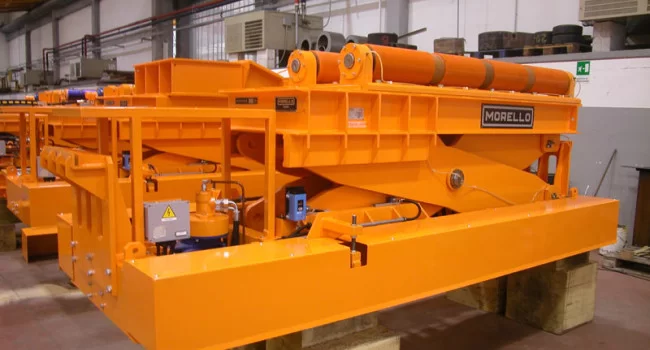
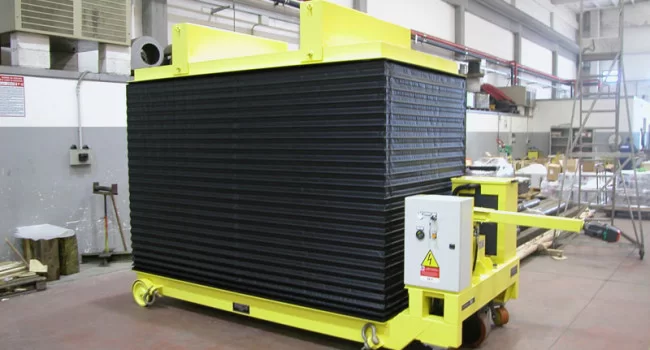
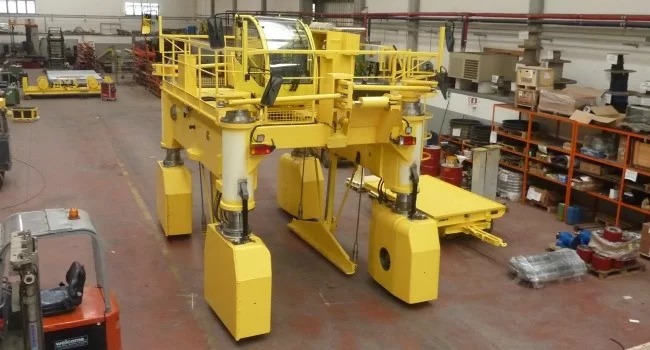
Revolutionize your material handling with 90 to 180-degree tilters

In today’s demanding industrial environments, precision and safety in material handling operations are non-negotiable requirements. The 90 to 180-degree tilter for heavy industrial materials represents a breakthrough solution for operations that require controlled rotation of substantial loads. These robust tilting systems have become essential equipment in manufacturing facilities worldwide, offering a safer alternative to traditional crane-based tilting methods.

MORELLO has engineered these tilters to address the complex challenges faced by industries dealing with heavy components, providing a reliable mechanism that can rotate loads weighing up to 40 tons—and even beyond with customized solutions. Whether you’re managing large metal fabrications, concrete elements, or specialized industrial components, these hydraulic tilters deliver the controlled movement necessary to maintain production efficiency while prioritizing operator safety and product integrity. Let’s explore how these sophisticated tilting systems are transforming material handling operations across global industries.

Understanding the engineering behind 90 to 180-degree tilters

The 90 to 180-degree tilter for heavy industrial materials represents a masterpiece of hydraulic engineering designed to solve complex material rotation challenges. At its core, these systems utilize powerful hydraulic cylinders that generate the necessary force to safely tilt loads weighing up to 40 tons and beyond. The engineering principle relies on a robust pivoting mechanism that provides controlled rotation around a fixed axis.

What makes these tilters particularly impressive is their precision control system. Unlike crane-based tilting operations where operators must rely on visual cues and manual coordination, hydraulic tilters employ pressure-regulated systems that ensure smooth, consistent movement throughout the rotation process. This precision is achieved through carefully calibrated valves that manage oil flow to the cylinders, allowing for speed adjustments based on load requirements.

The structural framework supporting this movement is equally important. Engineers design these frames with significant safety factors, typically using high-strength steel capable of withstanding not just the static weight of materials but also the dynamic forces generated during the tilting process. The pivot points incorporate specialized bearings designed to handle both radial and axial loads, ensuring longevity even under extreme industrial conditions.

Most advanced 90 to 180-degree tilters also feature electronic monitoring systems that provide real-time feedback on pressure levels, tilt angles, and load distribution, allowing operators to maintain precise control throughout the tilting operation. This engineering sophistication transforms what would otherwise be a hazardous material handling task into a safe, repeatable process.

Key features and capabilities of heavy-duty tilters for industrial applications

MORELLO’s heavy-duty tilter for precise material handling stands out with exceptional capabilities designed specifically for demanding industrial environments. These robust machines can handle loads up to 40 tons as standard, with custom solutions available for even heavier applications exceeding 200 tons. The tilting operation allows for precise positioning at both 90 and 180 degrees, providing versatility for various manufacturing processes.

The power system relies on electric grid supply, driving AC motors that power the hydraulic system. This configuration delivers reliable performance while minimizing maintenance requirements compared to pneumatic alternatives. With dual hydraulic cylinders working in perfect synchronization, these tilters maintain balanced force distribution throughout the rotation process, ensuring smooth operation even with asymmetrical loads.

Standard dimensions accommodate materials measuring approximately 1,600 x 1,600 x 2,000 mm, though MORELLO offers complete customization to match specific requirements for larger or uniquely shaped components. The tilting cycle typically completes in approximately 120 seconds with full load capacity, striking an optimal balance between operational efficiency and controlled movement. For specialized applications, adjustable speed controls can modify this timing to match production requirements.

For facilities operating in hazardous environments, these tilters can be manufactured to meet ATEX and IECEx standards, ensuring safe operation in potentially explosive atmospheres. The equipment’s versatility extends to installation options as well—while ground anchoring provides maximum stability for permanent installations, mobile configurations are available for facilities requiring flexibility in their material handling operations.

Safety advantages of hydraulic tilting systems over traditional methods

When comparing 90 to 180-degree tilters for heavy industrial materials with conventional methods, safety emerges as the paramount advantage. Traditional overhead crane tilting operations present significant hazards that hydraulic systems effectively eliminate. During crane tilting, loads can swing unpredictably, creating dangerous situations for both personnel and valuable materials. In contrast, hydraulic tilters provide controlled, stable movement throughout the entire rotation process.

The risk assessment comparison between these methods is striking. Overhead crane tilting requires multiple operators working in close coordination, often relying on hand signals or radio communication that can be misinterpreted. This human-dependent process introduces numerous points of potential failure. Hydraulic tilters, however, operate with mechanical precision, removing much of this human error element from the equation.

Another critical safety advantage comes from load containment. When tilting with cranes, securing the load properly becomes extremely challenging, particularly with asymmetrical objects. Even with specialized rigging, the center of gravity shifts during rotation can cause sudden movements. MORELLO’s hydraulic tilters incorporate engineered support surfaces that maintain secure contact with materials throughout the tilting process, preventing unexpected shifts or drops.

The controlled operation also minimizes floor space requirements for safe operation. While crane tilting necessitates clearing large areas to accommodate potential load swing, hydraulic tilters operate within a defined footprint, reducing the exposure zone where personnel must be excluded. This spatial efficiency not only improves safety but also allows for more effective facility layout and workflow design, contributing to overall operational safety through reduced congestion and clearer traffic patterns.

Customization options for specialized material handling requirements

Understanding that industrial operations rarely fit standard solutions, MORELLO offers extensive customization options for their 90 to 180-degree tilters. Each manufacturing environment presents unique challenges that require tailored approaches to material handling. The company’s engineering team works directly with clients to develop specifications that address specific operational requirements.

Load-specific adaptations represent one of the most common customization areas. While the standard tilter accommodates rectangular loads, many industries work with irregularly shaped components that require specialized support surfaces. Custom fixtures can be designed to cradle specific geometries, from cylindrical pressure vessels to complex machinery frames with protruding elements. These fixtures are engineered to distribute pressure evenly, preventing damage to sensitive components during the tilting process.

The operational parameters can also be customized based on production requirements:

  • Tilting speed adjustment – Faster cycles for high-volume production or slower, more controlled movement for delicate materials
  • Expanded dimensional capacity – Modified frameworks to accommodate oversized loads beyond standard dimensions
  • Enhanced weight capacity – Reinforced structures and upgraded hydraulic systems for loads exceeding 200 tons
  • Environmental adaptations – Corrosion-resistant materials for chemical environments or temperature-resistant components for high-heat applications

Integration capabilities with existing production systems represent another important customization area. MORELLO’s tilters can be designed with control interfaces that connect to facility-wide management systems, enabling synchronized operation with other material handling equipment. This integration can include automated loading and unloading sequences, data logging for quality control, and remote operation capabilities for hazardous environments where operator distance is essential for safety.

Real-world applications and success stories of precision tilting equipment

The versatility of MORELLO’s tilters for heavy industrial materials becomes evident when examining its implementation across diverse industries. In the energy sector, a major turbine manufacturer integrated these tilters into their production line to rotate massive generator housings weighing over 35 tons. This application required precision rotation to facilitate access to internal components during assembly. The result was a 40% reduction in handling time compared to their previous crane-based method, with zero incidents of component damage since implementation.

Within the aerospace industry, a leading aircraft component manufacturer employs custom-designed tilters to position wing spars during the manufacturing process. The delicate nature of these components demanded extremely controlled movement to prevent structural stress. MORELLO engineered a solution with modified support surfaces and ultra-smooth hydraulic control, enabling the precise positioning necessary for quality assurance while eliminating the surface marring that occurred with previous handling methods.

Heavy construction material producers have found particular value in these tilting systems. A precast concrete manufacturer utilizes a 180-degree tilter to flip massive wall panels after initial curing. This application demanded both strength and precision, as any sudden movement could compromise the integrity of partially-cured concrete. The hydraulic system’s adjustable speed controls allowed operators to program different rotation profiles based on curing stage, optimizing both production efficiency and product quality.

In the shipbuilding sector, a European marine engineering firm implemented MORELLO tilters for positioning hull sections during fabrication. The ability to securely rotate these asymmetrical components provided access to welding points that were previously difficult to reach, improving weld quality while reducing ergonomic stress on workers who formerly needed to work in awkward positions. This application demonstrates how precision tilting equipment not only improves production efficiency but also enhances workplace ergonomics and quality outcomes.

Transforming industrial material handling through precision engineering

The 90 to 180-degree tilter for heavy industrial materials represents a significant advancement in handling technology that addresses critical safety and efficiency challenges across multiple industries. By providing controlled, precise rotation for loads up to 40 tons and beyond, these systems eliminate the hazards associated with traditional methods while enhancing production capabilities. MORELLO’s commitment to customization ensures that each tilting solution perfectly matches the specific requirements of the application, whether in energy production, aerospace manufacturing, construction, or shipbuilding.

As industrial operations continue to evolve toward greater efficiency and safety standards, hydraulic tilting systems offer a proven solution that delivers measurable improvements in both areas. The investment in precision material handling equipment translates directly to reduced risks, improved product quality, and optimized workflow.

Ready to transform your heavy material handling operations? Explore MORELLO’s complete range of industrial tilters and upenders to discover how our engineering expertise can solve your most challenging material rotation requirements.

How to lift precast concrete safely: expert solutions for heavy loads

Handling precast concrete elements requires specialized knowledge, equipment, and safety protocols. These massive structures—often weighing between 20 and 60 tons—present unique challenges that demand careful planning and execution. When moving these critical construction components, even minor mistakes can lead to catastrophic failures, workplace injuries, or damage to the concrete elements themselves.

For industrial engineers and operations directors working with precast concrete, understanding the complete lifting and transportation process is essential for project success. The complexity increases when dealing with awkwardly shaped elements or when operating in confined spaces typical of construction environments.

This comprehensive article addresses the critical aspects of safely lifting and transporting precast concrete elements. We’ll examine the specialized equipment designed for these operations, explore essential safety protocols that protect both workers and materials, and discuss how proper planning can significantly improve operational efficiency while reducing risks.

Drawing from MORELLO’s extensive experience in developing custom material handling solutions for the precast concrete industry worldwide, we’ll provide practical insights that go beyond theoretical knowledge. Whether you’re managing a precast production facility or overseeing installation at construction sites, these expert recommendations will help you implement safer, more efficient handling procedures for your precast concrete elements.

By implementing the strategies outlined in this article, you’ll be better equipped to prevent common handling problems, optimize your workflow, and ensure regulatory compliance while protecting your valuable precast concrete investments.

Essential safety protocols for precast concrete lifting operations

When handling precast concrete elements weighing upwards of 60 tons, safety must be the primary consideration. The first critical step in how to lift precast concrete safely involves a comprehensive pre-lift assessment. This evaluation should document the exact dimensions, weight distribution, and structural integrity of each concrete element before attempting any movement.

Proper lifting points are non-negotiable for safe operations. Precast concrete elements must be designed with embedded lifting anchors or specially engineered attachment points that distribute the load evenly. Using improper lifting points can cause stress concentrations that lead to cracking or catastrophic failures during lifting. Always verify that these points can handle at least 150% of the element’s weight as a safety margin.

The selection of appropriate lifting equipment is equally crucial. Heavy-duty lifting devices specifically designed for precast concrete—such as specialized slings, spreader beams, and vacuum lifters—must be regularly inspected and certified. The equipment’s load capacity should substantially exceed the weight of the heaviest precast element you handle.

Worker training represents another vital safety protocol. Personnel involved in precast concrete lifting operations must receive specialized training on equipment operation, communication signals, and emergency procedures. This training should be regularly refreshed and documented to ensure compliance with safety standards.

Environmental factors cannot be overlooked. Wind conditions, ground stability, and workspace clearances all affect lifting safety. Operations should be suspended when wind speeds exceed safety thresholds (typically 20-25 mph), and the lifting area must be cordoned off to prevent unauthorized access.

Finally, implementing a clear communication system between all team members during lifting operations prevents confusion and reduces accident risks. Designated signal persons should use standardized hand signals or radio communication to coordinate movements precisely.

These safety protocols aren’t just regulatory requirements—they’re essential business practices that protect your workforce, preserve your concrete elements, and maintain project timelines. By rigorously implementing these safety measures, you create a foundation for efficient precast concrete handling that minimizes risks while maximizing productivity.

Specialized equipment and techniques for moving precast concrete

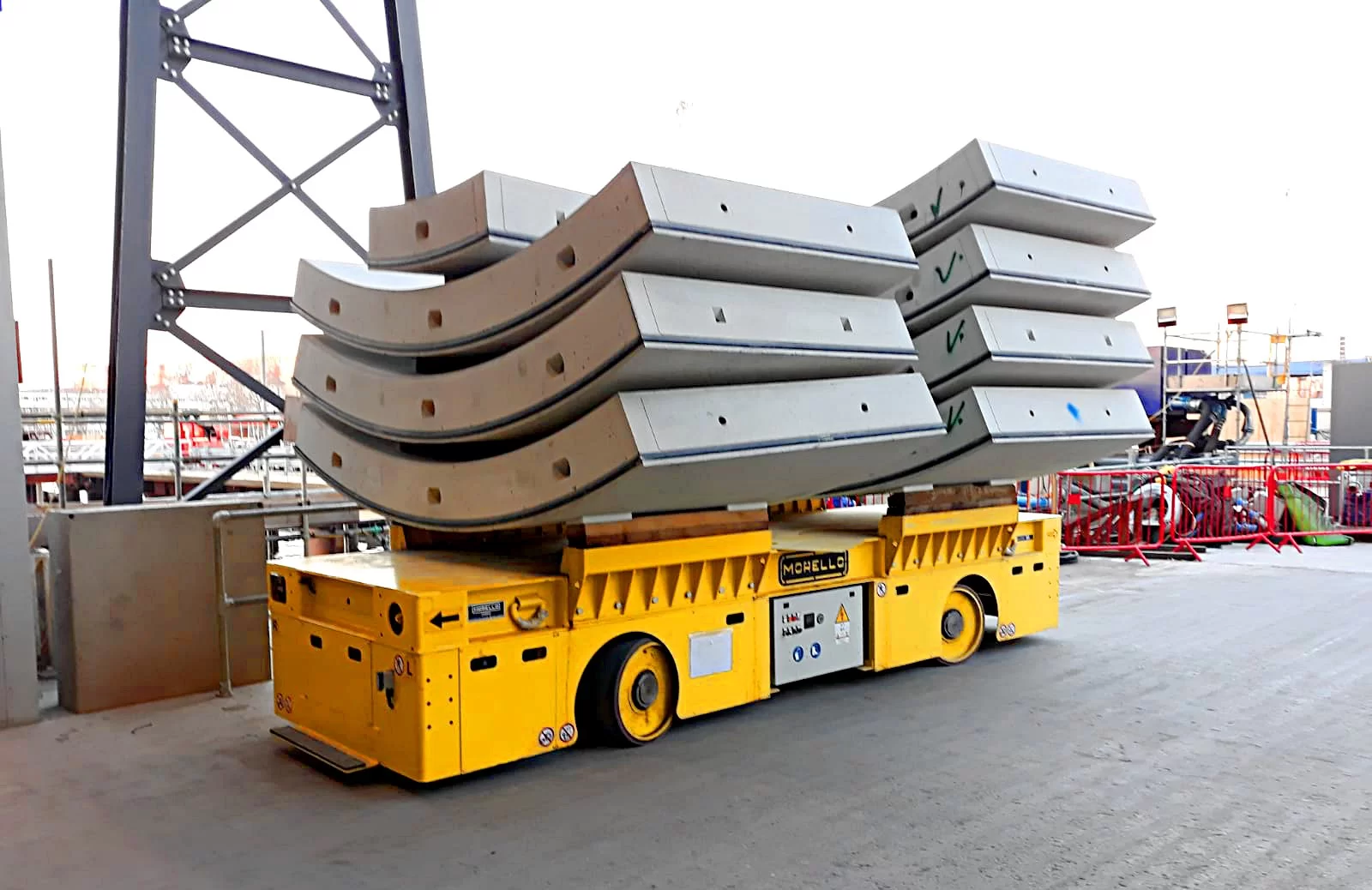
Successfully moving precast concrete elements requires purpose-built equipment designed to handle extreme weights while maintaining structural integrity. Self-propelled heavy-duty platform carts represent the gold standard for intra-facility transport of precast elements. These electric-powered vehicles can be precisely positioned beneath steel support pallets holding the concrete elements, then hydraulically lift the entire assembly for safe transport.

MORELLO’s OMNI-directional heavy-duty platform carts exemplify this technology, offering 360-degree maneuverability that proves invaluable in confined production facilities. With load capacities exceeding 60 tons and remote control operation, these systems allow a single operator to safely position massive concrete elements with millimeter precision.

For lifting operations, specialized crane attachments like vacuum lifters and concrete lifting clamps provide secure connections without damaging the concrete surface. These attachments distribute lifting forces across the concrete element, preventing stress concentrations that could lead to cracking. The key advantage of vacuum lifting systems is their ability to handle smooth-surfaced concrete panels without requiring embedded anchors.

Steel support pallets, often configured as A-frames for panel storage or flat beds for horizontal elements, serve as critical intermediaries between the concrete and transport equipment. These custom-engineered supports cradle the concrete elements at precisely calculated points to prevent flexing or stress during movement.

For outdoor transport between production facilities and curing/storage areas, heavy-duty trailers with hydraulic suspension systems help absorb road vibrations that could damage freshly cured concrete. These specialized trailers feature adjustable supports that can be configured to match the exact dimensions of different precast elements.

Remote control systems have revolutionized precast concrete handling by allowing operators to position themselves for optimal visibility while maintaining a safe distance from the suspended load. These systems typically feature emergency stop functions and proportional controls for precise movement adjustments.

When selecting equipment for moving precast concrete, factors including load dimensions, weight capacity requirements, operational speed needs, and facility layout constraints must all be carefully evaluated. The most effective solutions integrate these specialized tools into a comprehensive material handling system that prioritizes both safety and efficiency throughout the entire production and storage process.

Risk management and operational efficiency in precast handling

Effective risk management in precast concrete operations requires a systematic approach that balances safety priorities with production demands. The most successful facilities implement comprehensive risk assessment protocols that identify potential hazards before they materialize into costly incidents. These assessments should evaluate both the physical risks to personnel and the potential for damage to valuable concrete elements.

One crucial aspect of risk mitigation involves considering the concrete curing process when planning transport operations. Premature movement of insufficiently cured elements can lead to microfractures that compromise structural integrity. Establishing clear handling timelines based on concrete strength testing rather than fixed schedules ensures elements are moved only when they can safely withstand transportation stresses.

Operational efficiency in precast handling depends heavily on optimized workflow design. The strategic placement of production stations, curing areas, and storage zones minimizes transportation distances and reduces handling requirements. Advanced facilities often implement one-way traffic patterns for heavy equipment to eliminate collision risks while maximizing throughput.

Environmental considerations also impact both safety and efficiency. Climate-controlled production areas protect freshly cast concrete from temperature extremes that could affect curing, while proper drainage systems prevent water accumulation that could destabilize heavy equipment. For facilities operating in multiple climates, equipment specifications must account for the most challenging environmental conditions expected.

Technology integration has become increasingly important for risk management in precast operations. Real-time load monitoring systems provide immediate feedback on weight distribution during lifting, while fleet management software optimizes equipment utilization and maintenance scheduling. Some advanced facilities even employ predictive analytics to identify potential equipment failures before they occur.

The environmental benefits of modern handling systems shouldn’t be overlooked. Electric-powered transport equipment eliminates exhaust emissions within enclosed production spaces, creating healthier working conditions while reducing the facility’s carbon footprint. This decarbonization approach aligns with industry sustainability initiatives while often reducing operational costs through improved energy efficiency.

By addressing these risk management and efficiency factors holistically, precast concrete producers can create safer workplaces, reduce product damage rates, and improve production throughput—ultimately enhancing both profitability and competitive positioning in the marketplace.

Elevating precast concrete handling to new safety standards

Safely lifting and moving precast concrete elements demands specialized knowledge, equipment, and protocols that go far beyond standard material handling practices. As we’ve explored, the combination of proper safety procedures, purpose-built equipment, and comprehensive risk management creates a foundation for both worker protection and operational excellence.

The challenges of handling these massive concrete structures will only increase as architectural designs become more complex and construction timelines more compressed. Forward-thinking operations directors and engineers are turning to custom-engineered solutions like MORELLO’s heavy-duty platform carts to meet these evolving demands.

Ready to transform your precast concrete handling operations with innovative, safety-focused solutions? Explore MORELLO’s specialized precast concrete handling equipment designed specifically for the unique challenges of your industry. Our engineering team is prepared to develop custom solutions that address your facility’s specific requirements while prioritizing both safety and efficiency.

High-capacity electric pallet trucks: revolutionizing logistics

The integration of advanced technology in material handling equipment has revolutionized how industries approach logistics challenges. High-capacity electric pallet trucks represent a significant advancement in this field, offering unprecedented capabilities for moving substantial loads efficiently and safely. These specialized machines have become indispensable in environments where traditional handling equipment cannot meet the demands of increasingly heavy materials.

MORELLO has established itself as an industry leader by designing and manufacturing electric pallet trucks capable of handling loads from 20 tons to over 70 tons. These robust systems combine sophisticated engineering with practical functionality, addressing the complex material handling requirements of global industries including energy, construction, and logistics sectors.

What makes these high-capacity solutions particularly valuable is their ability to access spaces where overhead cranes cannot operate, while still maintaining the power necessary to transport exceptionally heavy loads. The low-profile design, coupled with precision control systems, enables operators to navigate challenging industrial environments with confidence and precision.

Through continuous innovation and customization capabilities, these electric pallet trucks are transforming logistics operations worldwide, offering sustainable alternatives to conventional material handling approaches while maximizing operational efficiency and workplace safety.

The evolution of high-capacity electric pallet trucks in modern logistics

The journey of electric pallet trucks from simple material handlers to sophisticated high-capacity logistics solutions represents one of the most significant advancements in industrial operations. Traditional pallet trucks, once limited to moving relatively modest loads, have undergone remarkable transformation to meet the growing demands of global industry.

The introduction of high-capacity electric pallet trucks for logistics marked a turning point in material handling capabilities. These machines evolved from manually operated equipment to fully powered systems capable of transporting loads that previously required specialized cranes or multiple handling stages. This evolution was driven by industrial sectors facing increasingly complex material movement challenges in confined spaces where conventional overhead solutions proved impractical.

MORELLO recognized this emerging need and pioneered designs that pushed the boundaries of what electric pallet trucks could achieve. By integrating robust structural engineering with advanced electric drive systems, these machines now offer capacities exceeding 20 tons while maintaining precise maneuverability. This represents a dramatic leap from the 2-3 ton capacity of standard industrial pallet trucks.

The modern high-capacity electric pallet truck features sophisticated control systems allowing operators to manage massive loads with fingertip precision. The transition from hydraulic systems to electric power management has also improved energy efficiency, reduced maintenance requirements, and minimized environmental impact—critical considerations for today’s sustainability-focused operations.

This evolution continues as manufacturers like MORELLO incorporate feedback from operators working in diverse industrial environments to refine designs that balance raw power with operational flexibility.

Engineering breakthroughs: how electric pallet trucks handle extreme loads

Creating an electric pallet truck for heavy material handling requires exceptional engineering solutions that overcome fundamental physical challenges. The breakthrough designs developed by MORELLO incorporate several innovative approaches that make these massive capacities possible while maintaining operational practicality.

At the core of these systems is an oversized steel frame engineered with advanced structural analysis to distribute weight evenly while maintaining the critical low-profile design. This robust foundation houses high-quality steel cylinders that provide the lifting power necessary for extreme loads. The engineering challenge lies in balancing structural integrity with the practical need for a low deck height—essential for accessing loads positioned on low-clearance pallets.

The power management system represents another significant breakthrough. Modern high-capacity pallet trucks utilize AC electric motors for both traction and steering functions, delivering precise control despite handling loads that can exceed 30 tons. These motors must provide sufficient torque for initial movement while maintaining the ability to regulate speed with exceptional accuracy during transport operations.

Load distribution engineering is equally critical. MORELLO’s designs incorporate specialized wheel configurations and materials that can withstand tremendous pressure while still allowing for directional control. The steering mechanisms, capable of ±90° turns on the front axle, employ sophisticated geometry to maintain maneuverability despite the extreme weights involved.

Safety systems have also evolved dramatically, with integrated load monitoring, automatic braking, and operator protection features that prevent accidents when handling such substantial materials. These engineering breakthroughs collectively transform what was once impossible into a standard operational capability for industries managing extreme-weight logistics challenges.

Battery technology and power management in industrial material handling

Powering a high-capacity electric pallet truck presents unique energy management challenges. The battery systems that drive these massive machines must deliver substantial power while maintaining operational longevity—a delicate balance that MORELLO has mastered through continuous technological refinement.

Traditional lead-acid batteries remain the industry standard for many applications, offering proven reliability and a favorable cost-to-performance ratio. However, the energy demands of moving 20-30 ton loads require specialized configurations that maximize power delivery while minimizing weight. MORELLO’s engineering team optimizes battery placement within the truck’s frame to maintain the critical low center of gravity while ensuring accessibility for maintenance.

The evolution of battery technology has introduced important alternatives that enhance performance in specific operational contexts:

  • Gel batteries offer improved durability and reduced maintenance requirements, making them ideal for intensive industrial environments
  • Lithium-ion systems provide higher energy density and faster charging capabilities, reducing downtime for operations requiring continuous use
  • Specialized hybrid configurations can be customized for environments with extreme temperature variations or unusual duty cycles

Equally important is the sophisticated power management system that regulates energy flow between the battery and the AC electric motors. These systems incorporate regenerative braking technology that captures energy during deceleration and converts it back to stored electrical power, extending operational range. Advanced monitoring systems continuously optimize power distribution based on load weight, travel distance, and lifting requirements.

For facilities with specialized needs, MORELLO offers alternative power solutions including direct plant electric grid connections and diesel-electric hybrid systems, providing flexibility for diverse operational environments while maintaining the core performance capabilities of these remarkable machines.

Customization options for specialized industry applications

The diverse challenges faced across industrial sectors demand more than one-size-fits-all solutions. MORELLO’s approach to developing high-capacity electric pallet trucks centers on extensive customization capabilities that address specific operational requirements across energy, construction, and manufacturing industries worldwide.

The loading deck configuration represents one of the most critical customization points. While standard designs typically feature two parallel forks, many specialized applications benefit from a single continuous loading deck that provides superior stability for irregularly shaped loads. The dimensions of these decks can be precisely tailored to match specific pallet sizes or material dimensions, optimizing the interface between the truck and its cargo.

Control systems offer another dimension of customization. Standard pendant control panels provide direct operator interface, but remote operation capabilities dramatically enhance safety in hazardous environments. Wireless remote controllers allow operators to maintain safe distances while retaining precise control over load positioning. For facilities with specific safety protocols, these control systems can be further customized with additional emergency stops, restricted operation zones, or specialized authentication requirements.

Environmental adaptations represent a particularly valuable customization category. For operations in potentially explosive atmospheres, MORELLO provides ATEX/IEC Ex conforming designs that eliminate ignition risks while maintaining full functionality. Similarly, clean room compatible versions support pharmaceutical and electronics manufacturing, while corrosion-resistant configurations serve chemical processing facilities.

Structural customizations extend to lifting height specifications, travel speed parameters, and steering radius adjustments—all critical factors when integrating these machines into existing facility layouts. This commitment to customization ensures that each high-capacity electric pallet truck precisely matches its operational environment, maximizing efficiency while addressing the unique challenges of specialized industrial applications.

Integration potential: from manual operation to fully automated AGV systems

The architectural design of MORELLO’s high-capacity electric pallet trucks enables a remarkable spectrum of operational modes, from basic manual control to sophisticated autonomous navigation. This flexibility allows organizations to implement these systems according to their current needs while maintaining a clear pathway for future automation.

At the foundational level, operator-controlled systems provide immediate productivity benefits through their ability to move exceptional loads with precision. The transition to wireless remote control represents the first step toward operational distancing, allowing a single operator to manage the equipment from a position that offers optimal visibility and safety.

The true transformation occurs when these robust platforms are enhanced with Automated Guided Vehicle (AGV) technology. The inherent stability and precise control characteristics of MORELLO’s high-capacity pallet trucks make them ideal candidates for automation. Their design architecture readily accommodates the integration of navigation systems, obstacle detection sensors, and facility management interfaces.

Manufacturing facilities increasingly leverage these automated capabilities to create consistent material flows that reduce handling costs while improving process reliability. The implementation of AGV functionality can follow multiple technological approaches based on facility requirements:

  • Magnetic tape or embedded floor wire systems provide straightforward navigation paths for predictable routes, while laser-guided systems offer greater flexibility for changing layouts. The most advanced implementations utilize SLAM (Simultaneous Localization and Mapping) technology that creates and updates environmental maps in real-time, allowing the vehicle to navigate dynamically changing spaces.

The scalability of these automation options allows organizations to progressively implement autonomous capabilities as operational needs evolve. This integration potential ensures that investments in high-capacity electric pallet trucks deliver immediate operational benefits while providing a foundation for future automation initiatives that will further enhance efficiency and safety.

Transforming heavy material handling through innovative engineering

The evolution of high-capacity electric pallet trucks represents a significant advancement in industrial material handling, offering unprecedented capabilities for managing extreme loads with precision and efficiency. MORELLO’s commitment to engineering excellence has produced systems that combine robust load-bearing capacity with the flexibility needed for today’s complex operational environments.

From energy production facilities to manufacturing plants and logistics centers, these specialized machines continue to transform how organizations approach their most challenging material movement requirements. The integration of customizable features, advanced power management systems, and automation potential ensures that each solution precisely addresses the unique demands of its application context.

Ready to revolutionize your heavy material handling operations? Contact MORELLO today to explore how our custom-engineered high-capacity electric pallet trucks can optimize your logistics processes while enhancing operational safety and efficiency. Our team of specialists will work with you to develop a solution tailored to your specific requirements, backed by our global reputation for innovation and reliability.

Battery-powered industrial trolleys: revolutionizing heavy load handling

In modern industrial environments where efficiency and precision are paramount, battery-powered industrial trolleys have emerged as essential tools for managing heavy loads. These sophisticated vehicles combine robust carrying capacity with advanced mobility features, allowing operations teams to transport substantial materials safely and efficiently across manufacturing floors, warehouses, and production facilities.

MORELLO’s battery-powered industrial trolleys represent the cutting edge of material handling technology, designed specifically for industries where traditional transportation methods prove inadequate. With load capacities reaching 30 tons and beyond, these motorized solutions offer unparalleled versatility for aluminum processing plants, steel manufacturers, aerospace facilities, and other heavy industry applications. By eliminating the limitations of manual handling or towed systems, these self-propelled units maximize operational efficiency while minimizing workplace hazards—a critical consideration for facility managers and industrial engineers tasked with optimizing production workflows while maintaining stringent safety standards.

The engineering behind high-capacity battery trolleys

At the core of every high-performance battery-powered industrial trolley lies sophisticated engineering designed to handle extreme weights while maintaining maneuverability. MORELLO’s motorized battery trolleys exemplify this engineering excellence, with models capable of transporting loads up to 30 tons while maintaining precise control. This remarkable capacity makes them ideal for aluminum processing operations, steel manufacturing, and other heavy industries where traditional transport methods fall short.

The structural framework of these trolleys incorporates high-tensile steel components strategically reinforced at stress points to distribute weight evenly across the chassis. This design prevents structural fatigue even under maximum load conditions, ensuring years of reliable service in demanding industrial settings. The weight distribution system works in tandem with specialized suspension elements that protect both the cargo and the facility flooring from damage during transport operations.

Power management represents another critical engineering achievement in these systems. Advanced battery technologies provide extended operational periods between charges while delivering consistent torque throughout the discharge cycle. This power consistency ensures that heavy loads can be moved with the same efficiency at the end of a shift as at the beginning, eliminating productivity fluctuations that plague less sophisticated systems.

Key performance features of industrial trolleys

Performance metrics define the practical value of battery-powered industrial trolleys in production environments. Speed capabilities of up to 10 Km/h allow for efficient material transport across large manufacturing facilities without compromising safety. This velocity, combined with responsive acceleration and deceleration characteristics, enables operators to maintain tight production schedules even when moving substantial loads.

The drive system incorporates AC low-voltage motors that deliver impressive torque while maintaining energy efficiency. This engineering approach provides the necessary power for initiating movement with heavy loads while conserving battery capacity during steady-state operations. Additionally, the incorporation of braking energy recovery systems captures kinetic energy during deceleration phases, redirecting it back to the battery system and extending operational periods between charging cycles.

Gradient handling capabilities represent another essential performance metric, with systems designed to navigate slopes of up to 4% while fully loaded. This feature proves invaluable in facilities with multi-level production areas or loading docks, eliminating bottlenecks in material flow that would otherwise require specialized equipment or time-consuming workarounds.

Safety innovations in heavy load transportation

Safety remains paramount in industrial environments, particularly when moving multi-ton loads through active work areas. Modern battery-powered trolleys incorporate numerous safety features designed to protect both operators and surrounding personnel. Driver cabins with climate control systems ensure operator comfort during extended use, reducing fatigue-related errors while providing protection from industrial environments.

Sophisticated braking systems offer redundancy through multiple stopping mechanisms, ensuring reliable deceleration even in emergency situations. The integration of proximity sensors and collision avoidance technology creates an additional safety layer, automatically adjusting vehicle behavior when obstacles or personnel are detected in the trolley’s path. These systems work together to minimize operational risks without compromising efficiency.

Visibility enhancements through strategic lighting placement and audible movement indicators alert nearby workers to trolley operations, reducing accident potential in busy manufacturing environments. The incorporation of superelastic wheels provides stable movement while absorbing vibrations that could otherwise destabilize loads during transport, addressing a critical safety concern when handling heavy materials.

Operational benefits for manufacturing environments

Beyond technical specifications, battery-powered industrial trolleys deliver tangible operational benefits that directly impact productivity and cost efficiency. Their self-contained power systems eliminate the infrastructure requirements associated with tethered transport solutions, allowing for flexible routing throughout facilities without fixed path limitations. This adaptability proves particularly valuable during production layout changes or when temporary material handling challenges arise.

The elimination of emissions at the point of use makes these trolleys ideal for indoor operations where air quality concerns exist. Unlike combustion-powered alternatives, battery systems produce no exhaust gases during operation, contributing to healthier work environments while meeting increasingly stringent regulatory requirements for industrial operations.

Maintenance requirements for battery-powered systems typically prove less intensive than hydraulic or combustion alternatives, with fewer moving parts and fluid systems to maintain. This characteristic translates to increased uptime and reduced service costs over the operational lifespan of the equipment, enhancing the total value proposition for operations managers evaluating material handling solutions.

Customization options for specialized industrial applications

While standard configurations meet many industrial requirements, MORELLO’s approach to battery-powered trolley design emphasizes customization capabilities to address specific operational challenges.

Platform dimensions can be tailored to accommodate unique load geometries, with the example trolley featuring a substantial 5,000 x 2,500 mm cargo area capable of handling oversized components or multiple standard loads simultaneously.

Control systems can be configured to match operational preferences, from traditional manual operation to semi-automated guidance systems that enhance precision during critical positioning tasks. This flexibility allows organizations to implement solutions that align perfectly with their specific workflow requirements rather than adapting processes to equipment limitations.

Additional customization options include specialized attachment points for securing irregular loads, enhanced lighting packages for low-visibility environments, and communication systems that integrate with facility management software for coordinated material movements. These adaptations transform standard trolleys into purpose-built solutions for specialized industrial applications, maximizing their operational value.

Advancing material handling through engineered excellence

Battery-powered industrial trolleys represent a significant advancement in heavy material handling technology, combining exceptional load capacity with operational flexibility that traditional systems simply cannot match. MORELLO‘s commitment to engineering excellence has produced trolley systems that not only move substantial loads efficiently but do so with enhanced safety, reduced environmental impact, and adaptability to specific industrial requirements. As manufacturing operations continue to evolve toward more agile production models, these sophisticated transport solutions provide the material handling foundation necessary for optimized workflows and maximized productivity.

If your operation faces challenges with heavy load transportation, MORELLO’s engineering team stands ready to develop a customized solution tailored to your specific requirements. Whether you need standard high-capacity trolleys or specialized systems for unique industrial applications, our expertise in self-propelled carts ensures that your material handling capabilities will support rather than constrain your production goals. Contact us today to discuss how our battery-powered industrial trolley solutions can transform your heavy load handling operations.

130-ton heavy-duty transport solutions: engineered for power

When industrial operations demand the movement of exceptionally heavy loads, standard transportation equipment simply won’t suffice. MORELLO’s 130-ton heavy-duty transport solutions represent the pinnacle of industrial material handling technology, specifically engineered for steel mills and heavy manufacturing environments where reliability cannot be compromised. These robust self-propelled transporters combine innovative design with powerful performance capabilities to safely and efficiently move massive steel components across mill yards and production facilities. For operations managers and industrial engineers tasked with optimizing material flow in high-capacity environments, understanding the capabilities and advantages of these specialized transport solutions is essential for maintaining productivity and operational excellence.

Engineering excellence: the anatomy of our transport solutions

The foundation of any effective heavy material handling system begins with understanding the engineering principles behind our transport solutions. MORELLO’s self-propelled transporters represent a significant advancement in material handling technology, particularly for steel mill environments where massive loads must be moved with precision and reliability.

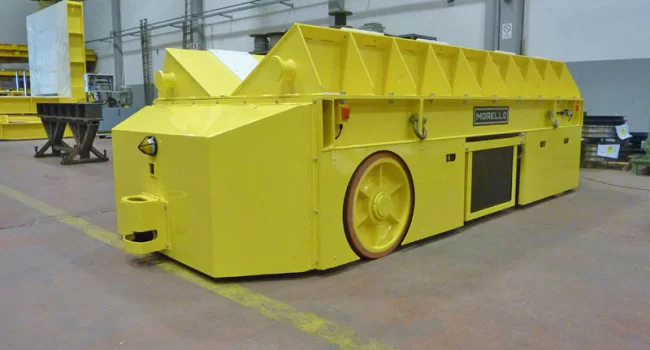
At the core of these robust machines is a framework designed specifically to distribute weight evenly across multiple points of contact. The SGP3 model features 16 superelastic wheels that work in concert to support loads up to 130 tons while maintaining structural integrity. This wheel configuration isn’t arbitrary—it’s the result of extensive engineering calculations that determine the optimal distribution of pressure to prevent floor damage and ensure stable transport.

What truly distinguishes the best heavy-duty transporters for large loads is their power system architecture. Traditional hydraulic systems have long been the standard for heavy equipment, but MORELLO has pioneered an alternative approach. By incorporating a 150 kW diesel generating set, these transporters power electric motors rather than hydraulic ones. This hybrid design offers multiple advantages:

  • Reduced maintenance requirements: Hydraulic systems demand constant attention due to the potential for leaks, contamination, and component wear. Electric drive systems eliminate many of these concerns, resulting in significantly lower maintenance costs and reduced downtime.
  • Enhanced control precision: Electric motors provide more responsive and accurate control over movement, allowing for millimetric positioning even with massive loads.
  • Improved fuel efficiency: The diesel-electric configuration optimizes fuel consumption by allowing the generator to operate at its most efficient RPM regardless of the transporter’s speed.
  • Lower environmental impact: Reduced fuel consumption translates directly to lower emissions, an increasingly important consideration for industrial operations worldwide.

The structural design incorporates a platform measuring 6,000 x 3,000 mm, though custom dimensions are available to accommodate specific operational requirements. This platform isn’t merely a flat surface—it’s engineered with load-bearing reinforcements strategically positioned to support concentrated weight points that commonly occur when transporting steel materials.

Have you considered how these massive transporters maintain stability on uneven surfaces? The answer lies in the sophisticated suspension system. Each pair of wheels is mounted on an oscillating axle, which itself is connected to a rocker arm mechanism. This multi-stage suspension configuration allows the transporter to navigate uneven floors without overloading any single wheel or axle. The system constantly redistributes weight as the machine encounters surface irregularities, maintaining optimal contact and preventing dangerous load shifts.

The drivetrain incorporates AC motors for both propulsion and steering functions. This electrical architecture enables precise speed control with programmable acceleration and deceleration ramps. Unlike hydraulic systems that can experience “jerky” movements during startup or directional changes, the electric drive provides smooth transitions that protect both the load and the equipment.

Speed capabilities reach up to 60 meters per minute when fully loaded—a considerable pace considering the massive weights involved. This velocity is carefully regulated through advanced control systems that monitor numerous parameters including weight distribution, surface conditions, and operational commands.

For operations managers and industrial engineers evaluating 130-ton heavy-duty transport solutions, understanding the relationship between speed, power, and control is essential. These transporters aren’t designed merely to move heavy objects—they’re engineered to integrate seamlessly into production workflows where timing and positioning precision directly impact overall productivity.

The frame construction utilizes high-tensile steel alloys specifically selected for their strength-to-weight ratio. This material choice optimizes the transporter’s own weight while ensuring it can safely handle loads many times its own mass. Strategic reinforcement points are incorporated throughout the structure, particularly at stress concentration areas identified through finite element analysis during the design phase.

What often goes unnoticed in these sophisticated machines is the integration of sensors and monitoring systems. Real-time feedback on weight distribution, drive system performance, and mechanical stress allows operators to maintain optimal operating conditions and helps prevent potential equipment failures before they occur. This predictive capability represents a significant advancement over traditional heavy transport equipment that relied primarily on visual inspection and scheduled maintenance.

When evaluating the best heavy-duty transporters for large loads, the engineering details make all the difference between adequate performance and exceptional reliability. The 130-ton capacity represents not just a weight rating but a carefully calibrated system where every component works in harmony to deliver consistent performance under the most demanding industrial conditions.

Electric drive advantages: performance and sustainability in heavy load handling

The transition from traditional hydraulic drives to electric propulsion systems represents one of the most significant advancements in heavy load transport technology. In MORELLO’s transport solutions, this electric drive architecture delivers transformative benefits that extend far beyond simple movement capabilities.

At the heart of these sophisticated transporters is a diesel-electric hybrid system that fundamentally changes how power is generated and utilized. Rather than directly powering hydraulic pumps and motors, the 150 kW diesel generator produces electricity that drives AC motors connected to each wheel assembly. This seemingly subtle distinction creates profound operational advantages that directly impact productivity, cost-effectiveness, and environmental responsibility.

The precision control afforded by electric drives cannot be overstated. When handling loads weighing up to 130 tons, the ability to make minute adjustments becomes critical—particularly in confined spaces or when positioning heavy components for assembly operations. Electric motors respond instantaneously to input commands, allowing operators to achieve millimetric positioning accuracy even with massive loads. This level of control is virtually impossible with conventional hydraulic systems, which inherently suffer from fluid compression issues and valve response limitations.

Consider the challenge of gradually accelerating a 130-ton steel component without causing it to shift or become unstable. Electric drives excel in this scenario because they offer infinitely variable torque control from zero speed. The potentiometric control system implemented in these transporters enables perfectly gradual acceleration and deceleration ramps, eliminating the jerky movements that often plague hydraulic systems during startup and directional changes.

From an energy efficiency perspective, the electric drive configuration delivers substantial advantages. Conventional hydraulic systems constantly circulate fluid under pressure, consuming energy even during idle periods. By contrast, electric motors draw power only when actively performing work. This operational characteristic, combined with the ability to precisely match generator output to actual demand, results in fuel consumption reductions of up to 30% compared to equivalent hydraulic systems.

Maintenance requirements represent another area where electric drives demonstrate clear superiority. Hydraulic systems demand rigorous and frequent maintenance due to their inherent complexity and vulnerability to contamination. Even microscopic particles in hydraulic fluid can cause accelerated component wear and system failures.

Electric drive systems eliminate most of these concerns. With significantly fewer moving parts and no pressurized fluid to maintain, these systems require minimal routine service. The primary maintenance points are limited to basic generator maintenance (similar to any diesel engine) and occasional bearing inspections for the electric motors. This reduction in maintenance translates directly to increased uptime and lower operational costs over the equipment’s lifecycle.

The environmental benefits of electric drives extend beyond reduced fuel consumption. By eliminating hydraulic fluid, these systems remove the risk of ground contamination from leaks—a serious concern in many industrial settings. Additionally, the more efficient power utilization results in lower emissions per ton of material moved, helping operations meet increasingly stringent environmental regulations.

For facility managers and operations directors evaluating the best heavy duty transporters for large loads, the noise reduction offered by electric drives presents another significant advantage. Hydraulic systems typically generate considerable noise from pumps, pressure relief valves, and fluid movement through lines. Electric motors operate much more quietly, creating a safer and more comfortable working environment for personnel.

The diagnostic capabilities inherent in electric drive systems provide yet another operational benefit. Modern electric motors incorporate sophisticated monitoring systems that continuously evaluate performance parameters including temperature, current draw, and rotational characteristics. This data allows for predictive maintenance approaches, where potential issues can be identified and addressed before they result in failures or unplanned downtime.

When implementing transport solutions in steel mill environments, the resilience of electric drives to harsh conditions becomes particularly valuable. Unlike hydraulic systems, which can experience fluid viscosity issues in extreme temperatures, electric motors maintain consistent performance across a wide operating range. This reliability ensures that material handling operations can continue uninterrupted regardless of environmental conditions.

The scalability of electric drive technology also deserves consideration. As industrial operations evolve and capacity requirements change, electric systems can often be upgraded through software modifications and minor hardware changes rather than complete system overhauls. This adaptability protects the initial investment and allows the equipment to evolve alongside operational needs.

For industries increasingly focused on sustainability metrics and carbon footprint reduction, the electric drive advantage represents a compelling proposition. These systems deliver not just improved performance and reduced maintenance, but a clear path toward more environmentally responsible heavy material handling operations.

Advanced steering and suspension systems for uneven terrain navigation

Moving 130-ton loads across industrial environments presents unique challenges, particularly when dealing with less-than-ideal surface conditions. MORELLO’s heavy-duty transport solutions incorporate sophisticated steering and suspension technologies specifically designed to overcome these challenges, ensuring safe and efficient operation even on uneven terrain.

The standard configuration of these transporters features eight-wheel steering capability, allowing for precise directional control despite the massive weight being carried. This steering system enables the transporter to navigate through complex industrial layouts with tight corners and limited maneuvering space. For applications requiring even greater maneuverability, MORELLO offers an enhanced configuration with all sixteen wheels providing steering functionality, dramatically reducing the turning radius and enabling operation in the most space-constrained environments.

What makes this steering system truly remarkable is its integration with the electric drive architecture. Each steering motor utilizes AC technology, providing the same responsive control and reliability benefits found in the propulsion system. This unified approach to power delivery creates a cohesive operational experience where steering and propulsion work in perfect harmony, responding instantly to operator commands without the lag often experienced in hydraulic steering systems.

The suspension design represents perhaps the most critical aspect of these transporters’ ability to navigate uneven terrain. Industrial environments rarely offer perfectly flat surfaces—concrete floors develop cracks and uneven sections over time, outdoor yards feature variable surfaces, and transitions between different areas often create challenging elevation changes. Conventional heavy-duty transporters with rigid frames would concentrate enormous pressure on whatever wheels happen to bear the weight at these transition points, potentially causing equipment damage and unsafe load shifting.

MORELLO’s solution to this challenge is a multi-stage articulation system that maintains optimal weight distribution regardless of surface conditions. The foundation of this system begins with the wheel arrangement. Each pair of wheels is mounted on an oscillating axle that can pivot independently, allowing the wheels to maintain ground contact even when encountering moderate surface irregularities.

These oscillating axles are then connected to rocker arm assemblies that provide a second layer of articulation. When one section of the transporter encounters an elevation change, the rocker arm system redistributes the load across multiple wheel sets, preventing any single component from bearing excessive weight. This mechanical load-sharing happens instantaneously and continuously as the transporter moves, requiring no operator intervention.

The benefits of this sophisticated suspension architecture extend far beyond simply maintaining stability. By ensuring consistent ground contact across all wheels, the system maximizes available traction—a critical factor when moving loads weighing up to 130 tons. This traction optimization allows the transporter to navigate slight inclines and operate safely in environments where surface conditions might vary due to environmental factors or industrial debris.

For facility managers evaluating the best heavy duty transporters for large loads, the implications of this advanced suspension system are significant. The ability to operate effectively across variable terrain means these transporters can connect different production areas without requiring perfectly maintained pathways. This flexibility can substantially reduce infrastructure costs and eliminate operational bottlenecks that might otherwise occur at transition points.

The steering system’s integration with the control architecture provides additional operational benefits. The precision of the steering system becomes particularly evident during final positioning operations. When placing heavy components for manufacturing processes or loading them for shipment, operators can achieve exact alignment without the need for secondary positioning equipment. This capability eliminates transfer steps in the production process, reducing both time requirements and potential damage risks associated with multiple handling operations.

From a safety perspective, the combination of advanced steering and suspension systems creates significant advantages. The consistent weight distribution prevents sudden load shifts that could potentially create dangerous situations. Additionally, the responsive steering control allows operators to make quick directional adjustments if unexpected obstacles appear in the transport path.

Durability represents another key benefit of MORELLO’s approach to suspension and steering design. By preventing any single component from experiencing excessive stress, the system extends the operational life of wheels, bearings, and structural elements. This design philosophy focuses on distributing forces rather than simply building components strong enough to withstand them—a more sophisticated approach that results in greater long-term reliability.

Control options and safety features for precision material movement

When managing loads of up to 130 tons, the interface between operator and machine becomes critically important. MORELLO’s heavy-duty transport solutions offer sophisticated control systems that prioritize both operational precision and comprehensive safety. These control mechanisms represent the culmination of extensive research into human-machine interaction within industrial environments, where split-second decisions and millimeter-perfect positioning can make the difference between smooth operations and costly disruptions.

Operators of these specialized transporters can choose between two primary control interfaces, each offering distinct advantages depending on the specific operational context. The pendant control panel provides a traditional, physical interface with tactile buttons, switches, and potentiometers that deliver immediate feedback. This control option excels in environments where the operator needs to maintain close visual contact with the load while still having direct manual control over movement parameters.

Alternatively, the radio remote control system offers complete freedom of movement, allowing the operator to position themselves at the optimal vantage point for any given operation. This wireless control solution proves invaluable when navigating through complex facility layouts or positioning loads in areas with limited visibility from a fixed position. The remote system maintains the same comprehensive control capabilities as the pendant panel, ensuring no sacrifice in functionality while gaining significant advantages in operational flexibility.

Both control systems incorporate potentiometric acceleration control—a sophisticated feature that enables infinitely variable speed adjustment. Unlike basic on/off or high/low speed controls found in less advanced equipment, this potentiometric system allows operators to precisely match movement speed to the specific requirements of each task. The practical implications of this capability become evident when considering the momentum involved with 130-ton loads. The ability to accelerate and decelerate gradually eliminates the risk of load shifting while also reducing mechanical stress on the transporter itself.

The control interfaces connect to an advanced electronic control unit (ECU) that serves as the central nervous system of the transporter. This ECU continuously monitors dozens of operational parameters including:

This comprehensive monitoring creates multiple layers of operational protection. Should any parameter exceed safe operating thresholds, the system can automatically adjust performance or, if necessary, initiate controlled shutdown procedures to prevent damage or unsafe conditions. This proactive approach to system management represents a significant advancement over reactive safety systems found in conventional heavy equipment.

For facility managers evaluating the best heavy-duty transporters for large loads, the intuitive nature of these control systems offers substantial workforce advantages. The learning curve for new operators is significantly reduced through logical control layouts and consistent response characteristics. This intuitive design reduces training requirements while simultaneously improving operational safety—a dual benefit that directly impacts both productivity and risk management.

These sophisticated movement capabilities prove particularly valuable in manufacturing environments where heavy components must be precisely positioned for assembly operations. The ability to make minute adjustments eliminates the need for secondary positioning equipment, streamlining workflows and reducing handling steps that could potentially introduce damage risks.

Safety features integrated throughout the control architecture create multiple redundant protection layers. Emergency stop functions are accessible from both control interfaces and at strategic positions around the transporter itself. These emergency systems don’t simply cut power—they initiate controlled deceleration protocols that bring the load to a safe stop without creating additional hazards through sudden movement changes.

Visual and audible warning systems alert nearby personnel whenever the transporter is in operation. These warning mechanisms automatically adjust their intensity based on the specific movement being performed, with higher-risk operations triggering enhanced notification levels. This adaptive approach maintains safety awareness without creating unnecessary disruption during routine movements.

For operations requiring integration with broader facility management systems, these transporters offer communication interfaces that enable coordination with production control networks. This connectivity allows for synchronized material movement based on production schedules, inventory requirements, or other operational parameters. The ability to incorporate transport solutions into comprehensive facility management frameworks represents a significant advancement in industrial logistics optimization.

The control systems also incorporate diagnostic capabilities that simplify maintenance and troubleshooting. Technicians can access detailed operational data and system status information through dedicated service interfaces. This diagnostic access reduces downtime by enabling rapid identification of any potential issues before they develop into significant problems requiring extensive repairs.

For industries operating under stringent safety regulations, these transporters can be configured with additional specialized safety features including personnel detection systems, load monitoring sensors, and operational boundary enforcement. These enhanced safety capabilities ensure compliance with workplace safety requirements while maintaining operational efficiency.

The combination of intuitive control interfaces, comprehensive monitoring systems, and multi-layered safety features creates an operational environment where even the most challenging material handling tasks can be executed with confidence and precision. This sophisticated approach to machine control represents a fundamental component of MORELLO’s philosophy that effective heavy material handling requires not just raw power, but intelligent application of that power through advanced control systems.

Customization capabilities for global industrial applications

Industrial operations across different sectors and regions face unique challenges that demand specialized solutions rather than one-size-fits-all approaches. MORELLO’s 130-ton heavy-duty transport solutions stand out in the market precisely because of their extensive customization capabilities, allowing each transporter to be tailored to the specific operational requirements of diverse industrial environments worldwide.

The foundation of MORELLO’s customization philosophy begins with understanding that while the basic function—moving extremely heavy loads safely and efficiently—remains constant, the specific parameters surrounding that function vary tremendously across different applications. A steel mill in North America may have different facility layouts, operational protocols, and regulatory requirements than a similar facility in Asia or Europe. The company’s global presence, with implementations across six continents, has created a deep repository of application-specific knowledge that informs their customization process.

Platform dimensions represent one of the most fundamental customization variables. While the standard configuration measures 6,000 x 3,000 mm, this can be modified extensively based on the specific materials being transported. Facilities handling longer steel beams might require extended length platforms, while those moving large machinery components might need wider configurations. These dimensional modifications aren’t simply about scaling the basic design—they require comprehensive engineering recalculations to ensure that load distribution, structural integrity, and operational characteristics remain optimal regardless of the modified dimensions.

Load capacity customization extends beyond the standard 130-ton rating. For operations with more demanding requirements, MORELLO can engineer solutions capable of handling over 500 tons. This dramatic capacity increase involves substantial modifications to the structural framework, power systems, and wheel configurations. Each component must be carefully redesigned to maintain the same reliability and performance characteristics at these extreme weight levels.

Power source options provide another significant customization pathway. While the diesel-electric hybrid configuration offers exceptional flexibility for most applications, some operational environments have specific requirements that demand alternative approaches.

For facilities with specialized workflow requirements, MORELLO offers automation capabilities that transform these transporters from operator-controlled equipment into automated guided vehicles (AGVs). This automation option incorporates sophisticated navigation systems, obstacle detection sensors, and integration with facility management software. The resulting AGV systems can operate autonomously within defined pathways, responding to transport requests from production control systems and coordinating with other facility equipment to optimize material flow.

Regulatory compliance represents another critical customization dimension. Industrial facilities operating in hazardous environments or handling potentially explosive materials must adhere to stringent safety standards. MORELLO’s customization capabilities include ATEX and IECEx conformity options, allowing these transporters to operate safely in environments where standard equipment would present unacceptable risks. These specialized configurations incorporate modified electrical systems, sealed components, and specialized materials that prevent potential ignition sources.

For operations spanning multiple production areas with varying environmental conditions, climate adaptation packages provide essential functionality. These customization options might include enhanced cooling systems for high-temperature environments, specialized sealing for dusty or corrosive atmospheres, or cold-weather packages for facilities in extreme northern regions. These environmental adaptations ensure consistent performance regardless of ambient conditions, maintaining productivity throughout the year.

The best heavy-duty transporters for large loads must also adapt to facility-specific interface requirements. MORELLO’s customization capabilities extend to the integration points between the transporter and other production equipment. Custom docking interfaces, specialized loading/unloading mechanisms, and purpose-designed transfer systems ensure seamless interaction with existing facility infrastructure, eliminating potential bottlenecks in material flow.

Control system customization allows these transporters to match the specific operational protocols of each facility. This might include specialized control layouts familiar to existing equipment operators, integration with facility-wide emergency systems, or custom operational parameters that reflect specific safety requirements or production constraints. These control adaptations ensure that the transporter becomes a natural extension of existing operational practices rather than requiring significant workflow adjustments.

Documentation and training packages represent a final but crucial customization dimension. MORELLO provides tailored documentation in multiple languages, with specialized training programs designed around the specific configuration delivered to each customer. This customized knowledge transfer ensures that operators and maintenance personnel can maximize the capabilities of their specific transporter configuration, regardless of their location or previous experience with similar equipment.

The breadth of these customization capabilities transforms MORELLO’s transport solutions from standardized products into purpose-built systems optimized for specific operational environments. This adaptability has established the company as a preferred partner for multinational corporations operating diverse facilities across global markets, where consistent performance must be maintained despite varying local conditions and requirements.

Engineered excellence for your most demanding transport challenges

MORELLO‘s 130-ton heavy-duty transport solutions represent the pinnacle of material handling engineering, combining robust structural design with sophisticated control systems and customizable features. These transporters deliver exceptional performance across diverse industrial environments, from steel mills to manufacturing facilities worldwide. The electric drive system, advanced suspension architecture, and precision control options work in harmony to ensure safe, efficient movement of massive loads even in challenging conditions. For operations managers and industrial engineers facing complex material handling requirements, these specialized transporters offer a proven solution that enhances productivity while reducing operational costs and environmental impact.

Ready to transform your heavy material handling operations? Contact MORELLO today to discuss how our customized heavy-duty transport solutions can address your specific challenges and optimize your production workflow. Our engineering team will work with you to develop a tailored solution that meets your exact requirements, delivering the performance and reliability your operations demand.

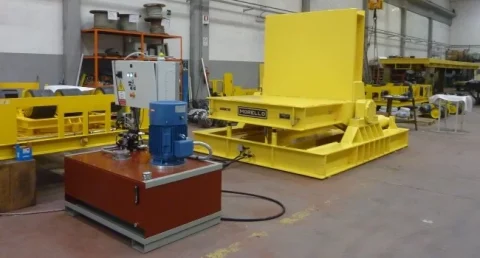
Heavy-duty lifting platforms on rail: enhancing industrial transport

In today’s demanding industrial environments, the efficient movement of heavy loads across manufacturing facilities presents significant challenges for operations managers and industrial engineers. Rail-based lifting platforms have emerged as a sophisticated solution for transporting substantial weights with precision and reliability. MORELLO’s specialized expertise in designing and manufacturing rail-mounted electrohydraulic lifting platforms addresses the complex material handling requirements faced by industries worldwide. These advanced systems combine the stability of rail guidance with powerful lifting capabilities, creating an optimal solution for operations that require consistent, safe movement of heavy materials like hot coils, steel components, and oversized industrial products. By integrating cutting-edge electrohydraulic technology with robust rail systems, these platforms deliver exceptional performance in environments where traditional handling equipment falls short.

Technical specifications of rail-mounted lifting platforms

Rail-mounted lifting platforms represent a sophisticated engineering achievement designed specifically for industrial environments where precision movement of substantial weights is critical. The PESBI-4R models delivered by MORELLO exemplify the advanced capabilities of these systems, featuring a robust 20-ton capacity paired with dimensional specifications of 3700 x 1500 x 1060 mm (2335 mm at maximum height). These electrohydraulic platforms combine powerful lifting mechanisms with the stability and guidance provided by rail systems.

The technical architecture of these platforms incorporates several key components that work in harmony to deliver reliable performance:

  • Hydraulic lifting system – Provides smooth, controlled vertical movement with precision positioning capabilities even under maximum load conditions
  • Self-propelled drive mechanism – Enables independent movement along rails without requiring external traction systems
  • Specialized rail interface – Engineered to maintain perfect alignment during transport operations while minimizing friction and wear
  • Reinforced load-bearing platform – Constructed with high-tensile materials to support hot coils and other industrial materials without deformation
  • Integrated control systems – Allow for precise operation with safety interlocks and emergency protocols built into the operational framework

These technical specifications enable the platforms to handle challenging materials like hot coils, which present unique handling requirements due to their temperature, weight distribution, and structural characteristics. The engineering precision applied to these systems ensures consistent performance even in the demanding conditions typical of steel processing facilities and similar industrial environments.

Applications and advantages of electrohydraulic lifting systems

Electrohydraulic lifting platforms on rail systems offer transformative solutions across multiple industrial sectors where traditional material handling equipment falls short. These specialized systems excel in environments requiring both precision movement and substantial load capacity, creating operational efficiencies that directly impact production capabilities and safety metrics.

In steel manufacturing facilities, these platforms handle the transport of freshly produced hot coils between processing stations without compromising material integrity or worker safety. The controlled movement prevents potential deformation of materials during critical cooling phases, maintaining product quality standards throughout the production cycle.

Beyond steel production, these systems find application in diverse industries including aerospace manufacturing, where they transport large airframe components; precast concrete facilities, where they move massive structural elements; and power generation plants, where they facilitate the positioning of turbine components and other heavy machinery.

The electrohydraulic technology delivers several distinct advantages over alternative transport methods. First, the combination of hydraulic power with electric control systems provides exceptional precision in load positioning—critical when aligning heavy components during assembly processes. Second, these systems offer superior energy efficiency compared to purely pneumatic or mechanical alternatives, reducing operational costs over their service life. Third, the rail-guided design eliminates the risk of veering off course during transport, a common challenge with wheeled transport systems in congested industrial environments.

Perhaps most significantly, these platforms achieve remarkable load stability during both transport and lifting operations, virtually eliminating the risk of load shifts that could damage valuable materials or create workplace hazards—a crucial consideration when handling materials worth hundreds of thousands of dollars.

MORELLO’s rail transport solutions for hot coil handling

MORELLO has established itself as an industry leader in developing specialized rail transport systems specifically engineered for the challenging task of hot coil handling. The recent delivery of four self-propelled electrohydraulic lifting platforms represents a significant advancement in material handling technology for steel production facilities worldwide.

Hot coil handling presents unique challenges that conventional transport equipment simply cannot address effectively. These massive steel coils often weigh up to 20 tons and retain temperatures of several hundred degrees during transport between production stations. MORELLO’s rail-based platforms are designed with these extreme conditions in mind, featuring heat-resistant components and specialized containment systems that prevent coil movement during transport.

The PESBI-4R model exemplifies MORELLO’s approach to solving complex industrial transport challenges. These platforms incorporate proprietary heat management systems that protect critical hydraulic and electronic components from the intense thermal radiation emitted by freshly produced coils. This protection ensures consistent performance and extends service life even in the harshest steel mill environments.

What truly distinguishes MORELLO’s hot coil transport solutions is their integration with existing production workflows. The rail-guided design allows these platforms to navigate precisely through congested mill environments, maintaining perfect alignment with processing equipment for seamless material transfers. The self-propelled capability eliminates the need for separate traction vehicles, reducing floor space requirements and simplifying traffic management within the facility.

By developing these specialized platforms, MORELLO addresses a critical production bottleneck in steel manufacturing, enabling producers to maintain thermal consistency during inter-process transport—a factor that directly impacts final product quality and reduces energy costs associated with reheating materials between production stages.

Integration of safety features in heavy-duty lifting platforms

When transporting loads of up to 20 tons along rail systems in active industrial environments, safety becomes not just a priority but an absolute necessity. MORELLO’s approach to safety integration in their rail-mounted lifting platforms reflects a comprehensive understanding of both operational risks and regulatory requirements across global markets.

At the foundation of these safety systems is a multi-layered protection architecture that begins with structural integrity. The platforms undergo rigorous stress analysis during design and are subsequently tested at 125% of rated capacity to ensure significant safety margins under all operating conditions. This structural foundation supports additional active and passive safety features that protect both operators and valuable materials.

The control systems incorporate sophisticated load monitoring that continuously evaluates weight distribution and center of gravity, automatically preventing operations that could compromise stability. Perimeter detection systems using multiple sensor technologies create awareness zones around the platform, detecting potential obstacles or personnel proximity and adjusting operation accordingly.

For operations involving hot materials, MORELLO implements thermal barriers and heat-resistant components that maintain system integrity even when transporting materials at extreme temperatures. These thermal protection systems prevent both equipment damage and potential hazards to nearby personnel.

The human-machine interface represents another critical safety dimension, with intuitive controls that minimize operator error and provide clear feedback about system status. Emergency stop functions are positioned strategically for immediate access, while redundant control systems ensure that no single component failure can compromise operational safety.

Perhaps most importantly, these safety systems accomplish their protective function without compromising productivity – integrating seamlessly with the operational workflow rather than creating additional steps or procedures that might tempt operators to bypass them under production pressure.

Customization options for industrial rail transport systems

Industrial environments rarely conform to standardized layouts or operational requirements, making customization capabilities essential for effective implementation of rail transport solutions. MORELLO’s approach to platform customization addresses this reality by offering modular design architecture that can be configured to meet specific client requirements without sacrificing reliability or performance.

The dimensional specifications of these platforms represent the most visible customization aspect. While the delivered PESBI-4R platforms feature specific dimensions (3700 x 1500 x 1060/2335 mm), MORELLO engineers work closely with facility managers to develop platforms that integrate seamlessly with existing infrastructure constraints and material handling requirements. This dimensional flexibility extends to lifting heights, platform surface area, and overall footprint considerations.

Beyond physical dimensions, functional customization addresses specific operational requirements. Load interface systems can be tailored to handle various material types beyond hot coils, including irregular shapes, fragile components, or items requiring specialized containment. The control systems can be integrated with facility-wide management software, enabling coordinated operations across multiple transport platforms and processing stations.

Power systems represent another significant customization avenue. While electrohydraulic systems offer exceptional performance for most applications, facilities with specific environmental concerns or existing power infrastructure may benefit from alternative configurations. MORELLO offers options ranging from fully electric systems for clean-room environments to hybrid solutions that optimize energy consumption for specific duty cycles.

Perhaps most importantly, these customization capabilities don’t require starting from zero for each implementation. MORELLO’s modular approach allows for the adaptation of proven subsystems, ensuring that customized solutions maintain the reliability and performance characteristics that have established the company’s reputation for excellence in industrial material handling across diverse global markets and applications.

Advancing industrial efficiency through specialized rail transport

The delivery of self-propelled electrohydraulic lifting platforms on rail represents more than just an equipment transaction—it showcases MORELLO’s commitment to developing specialized material handling solutions that address the most challenging industrial transport requirements. These sophisticated platforms combine robust lifting capacity, precision movement, and comprehensive safety features to create systems that enhance productivity while protecting both valuable materials and personnel. As industries continue to seek efficiency improvements in their material handling operations, rail-based transport systems offer compelling advantages for facilities dealing with heavy, hot, or sensitive components.

Whether your operation requires the movement of hot coils, oversized components, or other challenging materials, MORELLO‘s expertise in custom-engineered transport solutions can help optimize your material handling processes. To explore how rail-mounted lifting platforms or other specialized transport systems could enhance your facility’s operations, contact our engineering team for a consultation tailored to your specific industrial requirements.

Self-propelled trailers: revolutionizing steel coil transport

In the demanding world of heavy industrial operations, efficient material handling is not just a convenience—it’s a critical business necessity. Self-propelled trailers for heavy steel coil handling and transport represent the cutting edge of industrial logistics solutions, offering unprecedented control, safety, and efficiency. These specialized vehicles are engineered to address the unique challenges of moving massive steel coils through production facilities, where precision and reliability are paramount. With load capacities reaching up to 70 tonnes and beyond, these robust transportation systems have become indispensable assets for steel manufacturers worldwide.

MORELLO‘s advanced self-propelled trailers combine powerful electric drives, sophisticated control systems, and purpose-built designs to create seamless movement solutions that optimize workflow, reduce operational risks, and maximize productivity in even the most complex industrial environments.

Engineering excellence in self-propelled trailer technology

At the core of every MORELLO’s self-propelled trailer lies decades of engineering expertise focused on solving complex material handling challenges. The design philosophy begins with understanding the physics of moving massive steel coils—cylindrical loads that can weigh upwards of 70 tonnes with unique stability requirements and center of gravity considerations. These aren’t simply motorized platforms; they’re precision-engineered vehicles where every component serves a critical purpose.

The propulsion systems represent a significant advancement over traditional towing methods. Direct-drive electric motors provide instant torque and precise control, allowing operators to maneuver with millimeter accuracy even when handling loads that exceed the weight of a fully-loaded commercial truck. The power transmission systems are designed with redundancy in mind, ensuring operational reliability even in demanding 24/7 production environments.

What truly distinguishes these self-propelled trailers is their integrated approach to engineering. The chassis design distributes weight optimally across multiple load-bearing axles. Hydraulic systems work in concert with electronic controls to maintain stability during acceleration and deceleration. Meanwhile, the steering systems—whether conventional, articulated, or omnidirectional—are calibrated specifically for the spatial constraints of steel manufacturing facilities. This holistic design approach ensures that each trailer not only performs its primary function of transporting coils but does so with exceptional efficiency, durability, and precision.

Advanced features of battery-powered transport systems

The electric self-propelled trailer for industrial coil logistics represents a quantum leap in material handling capability. Modern battery technology has transformed these powerful machines, eliminating emissions while delivering performance that matches or exceeds traditional diesel-powered alternatives. MORELLO’s latest generation of battery-powered transport systems incorporates several groundbreaking features that address the specific demands of steel coil handling.

The high-capacity lithium-ion battery systems are engineered for extended operational cycles, with rapid charging capabilities that minimize downtime. These power systems are coupled with sophisticated battery management technology that optimizes energy usage based on load weight, travel distance, and operational conditions. Most impressively, regenerative braking systems capture and store energy during deceleration, significantly extending operational range between charges.

The operator interface represents another area of significant advancement. Intuitive control systems feature programmable speed settings, automatic load sensing, and customizable acceleration profiles. These systems can be operated via wireless remote control, allowing a single operator to maintain visual contact with the load from the optimal vantage point. For facilities pursuing automation initiatives, many models offer compatibility with guided pathway systems and can be integrated with factory management software for coordinated material flow.

Perhaps most valuable is the onboard diagnostic capability, which provides real-time performance data and predictive maintenance alerts. This technology minimizes unexpected downtime by identifying potential issues before they result in operational failures—a critical advantage in high-throughput steel processing environments where unplanned interruptions can cascade into significant production losses.

Operational benefits for steel manufacturing facilities

Implementing self-propelled trailers for heavy steel coil handling and transport delivers transformative advantages that extend far beyond simple material movement. For steel manufacturing facilities, these specialized vehicles become strategic assets that influence overall operational excellence.

Workflow optimization stands as the primary benefit. The independent mobility of self-propelled trailers eliminates the complex choreography required when using tractor-trailer combinations or overhead crane systems. This flexibility allows production planners to design more efficient material flows, reducing bottlenecks and minimizing work-in-process inventory. Many customers report cycle time reductions of 15-30% after transitioning to self-propelled transport solutions.

Space utilization improves dramatically as well. The exceptional maneuverability of these systems—particularly those with omnidirectional steering capabilities—allows facilities to reconfigure storage areas and production zones to maximize available square footage. The precision control enables coils to be positioned with minimal clearance requirements, effectively increasing storage density without compromising accessibility.

From a labor perspective, self-propelled trailers reduce personnel requirements while enhancing safety. A single operator can manage the entire transport process, from loading to positioning, without additional spotters or assistants. This operational efficiency translates directly to labor cost savings while allowing skilled personnel to focus on value-adding activities rather than logistics coordination.

Perhaps most significantly, these systems provide operational resilience. Unlike fixed material handling infrastructure such as conveyor systems or dedicated crane installations, self-propelled trailers offer deployment flexibility that can adapt to changing production requirements, facility modifications, or emergency situations—ensuring continuous material flow even when primary systems are unavailable.

Safety innovations in heavy coil handling equipment

When transporting steel coils weighing dozens of tonnes, safety isn’t merely a priority—it’s an absolute imperative. MORELLO has pioneered numerous safety innovations in their self-propelled trailer designs that specifically address the unique hazards associated with heavy coil handling operations.

Load stability management represents the most critical safety domain. Modern self-propelled trailers incorporate dynamic stability control systems that continuously monitor the center of gravity during transport. These systems automatically adjust suspension parameters and speed limitations based on real-time stability calculations. Specialized coil cradles with adjustable side supports prevent lateral movement, while anti-roll technology prevents the catastrophic consequences that could result from coil tipping.

Collision avoidance technology has evolved significantly, with proximity detection systems that create a safety envelope around the vehicle. Using a combination of ultrasonic sensors, LIDAR, and computer vision, these systems can detect obstacles—including personnel—and automatically modulate vehicle speed or initiate emergency stops when potential collisions are detected. Some advanced models incorporate zone-based speed governance that automatically restricts maximum velocity in congested areas.

Operator safety features include deadman controls that immediately halt vehicle movement if the operator becomes incapacitated, along with emergency stop buttons positioned for accessibility from multiple approach angles. Remote operation capabilities allow personnel to maintain safe distances from suspended loads while maintaining precise control over positioning.

Perhaps most importantly, these safety systems are designed with redundancy and fail-safe principles. Critical components have backup systems, and all safety features default to the most conservative state in the event of component failure or power loss—ensuring that even in exceptional circumstances, the load remains secure and personnel remain protected.

Customization options for specialized industrial environments

The diverse nature of steel manufacturing facilities means that no single transport solution can address all operational requirements. MORELLO’s approach to self-propelled trailer design embraces this reality through extensive customization capabilities that tailor each vehicle to its specific operational context.

Dimensional customization represents the most fundamental adaptation. Trailers can be engineered with specific deck dimensions, load heights, and clearance profiles to navigate through existing facility constraints such as doorways, aisles, and overhead obstructions. This adaptability extends to weight capacity as well, with reinforced chassis designs capable of handling loads from 20 to over 100 tonnes depending on application requirements.

Interface customization ensures seamless integration with existing production equipment. Custom docking mechanisms can be designed to align precisely with processing stations, allowing for efficient coil transfer without repositioning. For facilities with multiple coil dimensions, adjustable cradle systems can accommodate varying diameters and widths without manual reconfiguration.

Environmental adaptations address specific facility conditions. For operations in extreme temperature environments, specialized cooling systems protect electronic components, while sealed enclosures shield critical systems in dusty or corrosive atmospheres. Explosion-proof certifications are available for hazardous environments where standard electrical systems would pose ignition risks.

Control system customization provides perhaps the greatest operational flexibility. From simple pendant controllers to sophisticated touchscreen interfaces with production system integration, the operator experience can be tailored to match existing protocols and personnel capabilities. For facilities pursuing Industry 4.0 initiatives, data connectivity options enable real-time position tracking, maintenance monitoring, and integration with warehouse management systems—transforming the trailer from a simple transport device into a node in the factory’s digital ecosystem.

Elevate your steel handling operations with MORELLO’s engineered solutions

Self-propelled trailers for heavy steel coil handling represent a strategic investment in operational excellence for modern manufacturing facilities. By combining robust engineering, advanced safety systems, and customized design, these specialized transport solutions deliver measurable improvements in productivity, space utilization, and personnel safety. As steel manufacturers continue to seek competitive advantages through operational efficiency, the role of intelligent material handling solutions becomes increasingly critical to success.

MORELLO’s decades of experience in designing and manufacturing custom material handling equipment positions us as the ideal partner for your steel coil transport challenges. Our engineering team works directly with your operational specialists to develop solutions that address your specific facility constraints, production requirements, and safety protocols. Whether you’re upgrading existing transport systems or equipping a new production line, we invite you to contact our technical team for a consultation on how our self-propelled trailer technology can transform your heavy coil handling operations.

Revolutionizing steel industry: 220-ton automatic self-propelled rail cart

In the demanding world of heavy industrial logistics, the delivery of a 220-ton automatic self-propelled rail cart represents a significant advancement for steel manufacturing operations. MORELLO‘s latest innovation—the SBR-8R model —exemplifies cutting-edge engineering designed specifically for handling massive steel coils in major production facilities. This sophisticated transportation solution combines robust load capacity with precision control systems, enabling seamless movement of extraordinary weights across rail systems within complex manufacturing environments.

For operational directors and industrial engineers working in steel production, this automated rail cart technology offers transformative capabilities that streamline material handling workflows, enhance safety protocols, and optimize production efficiency. As manufacturing facilities continue to seek more intelligent, reliable solutions for moving heavy loads, MORELLO’s rail cart systems stand at the forefront of industrial material handling innovation, delivering performance that meets the exacting standards of today’s most demanding industrial applications.

Advanced engineering behind the 220 ton automatic self-propelled rail cart

The development of a 220-ton automatic self-propelled rail cart represents a remarkable achievement in industrial engineering. MORELLO’s approach to designing these massive transport systems combines mechanical robustness with sophisticated control technology to create machines capable of handling extraordinary weight demands with precision.

At the core of these rail carts lies a reinforced steel frame structure, engineered to distribute weight evenly while maintaining structural integrity under extreme loads. The propulsion system incorporates high-torque electric motors specifically calibrated for gradual acceleration and deceleration—critical for safely moving loads exceeding 200 tons without creating dangerous momentum.

What truly distinguishes these systems is their advanced automation architecture. Each cart features:

  • Multi-zone sensor arrays that constantly monitor position, speed, and load distribution
  • Proprietary control algorithms that adjust power delivery based on real-time operational conditions
  • Redundant safety systems with emergency stop capabilities at multiple points
  • Remote monitoring interfaces allowing operators to oversee movements from safe distances

The engineering challenge extends beyond mere weight capacity. These rail carts must operate reliably in harsh industrial environments, including extreme temperatures, metal particulates, and constant vibration. This requires specialized material selection, sealed electronic components, and industrial-grade connectivity solutions that maintain system integrity despite challenging conditions.

The integration of these engineering elements creates a transportation platform that not only moves extraordinary weights but does so with a level of control and safety that transforms how steel manufacturers approach material handling logistics.

Technical specifications and operational capabilities

The SBR-8R represents MORELLO’s flagship offering in rail-based material handling solutions, specifically engineered for steel production environments. With dimensions of 8000 x 2500 mm, this platform provides substantial surface area for accommodating oversized steel coils while maintaining a footprint that navigates effectively through production facilities.

The 220-ton capacity places this model among the most robust industrial transport solutions available, capable of handling multiple steel coils simultaneously or individual components of exceptional weight. The platform’s weight distribution system automatically adjusts to maintain stability regardless of load positioning, a critical feature when transporting asymmetrical materials.

Power delivery in the SBR-8R comes from multiple synchronized electric drive units, offering several operational advantages over traditional systems. The electric propulsion provides precise speed control—from crawl speeds of just 0.1 meters per minute for precise positioning to standard transport speeds of up to 20 meters per minute when moving between production stations.

The rail guidance system incorporates hardened steel wheels with specialized profiles designed specifically for industrial rail applications. This configuration delivers exceptional durability while minimizing maintenance requirements in demanding production environments.

Control systems feature both onboard manual operation and remote command capabilities, allowing integration with broader manufacturing execution systems. The interface includes intuitive visual feedback on load status, position accuracy, and system diagnostics, enabling operators to maintain operational awareness throughout transport cycles.

Perhaps most impressively, the SBR-8R achieves positioning accuracy within 5mm at full load—a remarkable achievement for a system handling 220 tons that enables seamless integration with automated production processes where precision is paramount.

Benefits of automatic rail carts for heavy loads in steel manufacturing

Steel manufacturing facilities face unique challenges when moving massive components throughout their production process. The implementation of automatic self-propelled rail carts delivers transformative advantages that directly impact operational efficiency, worker safety, and production economics.

From a productivity perspective, these automated systems dramatically reduce material transfer times between production stages. Traditional overhead crane systems require complex rigging procedures and specialized operators for each movement. In contrast, rail-based solutions enable continuous material flow with minimal human intervention, reducing transfer times by up to 60% in typical steel production environments.

Worker safety represents perhaps the most compelling benefit. By removing personnel from direct interaction with massive steel coils during transport, facilities report significant reductions in workplace incidents. The automated movement patterns eliminate human error factors that historically contribute to accidents when handling loads exceeding 200 tons.

The economic impact extends beyond mere efficiency gains. Steel manufacturers implementing these systems report substantial reductions in product damage during internal logistics operations. When moving delicate steel coils with specialized surface treatments, the precise acceleration and deceleration profiles of automated rail carts prevent the microdamage that occurs with less sophisticated handling methods.

Facility infrastructure also benefits from rail-based transport solutions. The distributed weight loading across rail systems reduces point loading on facility floors compared to wheeled transport alternatives. This extends the service life of production buildings while minimizing maintenance requirements for transport pathways.

Additionally, the predictable movement patterns of automated rail carts facilitate production planning with unprecedented accuracy, allowing operational managers to optimize workflows around reliable material transfer timelines that remain consistent regardless of shift changes or operator experience levels.

Implementation challenges and solutions for rail cart systems

Integrating 220-ton automatic self-propelled rail carts into existing steel manufacturing operations presents several significant challenges that require strategic planning and specialized expertise to overcome. Understanding these challenges—and their proven solutions—is essential for operational directors considering these systems.

The first major hurdle involves physical infrastructure requirements. Rail systems must be precisely installed with exacting tolerances to ensure smooth operation under extreme loads. For facilities transitioning from other transport methods, this often necessitates substantial floor reinforcement and precision grading work. MORELLO addresses this through comprehensive site assessment services that identify optimal rail pathways utilizing existing structural elements wherever possible, minimizing facility disruption.

Integration with existing production control systems presents another complex challenge. Modern steel plants typically operate multiple digital control environments that must interface seamlessly with new transport systems. The solution lies in MORELLO’s open-architecture control systems, which feature standardized communication protocols and customizable interface layers specifically designed to connect with legacy manufacturing execution systems.

Employee adoption represents a frequently underestimated implementation challenge. Transitioning from manual transport methods to automated systems requires significant operational adjustments. Successful implementations incorporate comprehensive training programs focusing not just on system operation but on new workflow patterns that maximize the technology’s benefits.

Perhaps most critically, maintaining production during implementation poses substantial logistical challenges. MORELLO has developed phased implementation methodologies specifically for steel manufacturing environments, allowing sections of transport infrastructure to be upgraded sequentially while maintaining critical production flows through temporary pathways and carefully orchestrated transition periods.

These implementation strategies have proven effective across diverse manufacturing environments, enabling smooth transitions to automated rail cart systems while minimizing production disruptions during the transition process.

Future innovations in heavy-duty material handling technology

As industrial manufacturing continues to evolve, the technology driving heavy-duty material handling systems is advancing rapidly. Several emerging innovations promise to further transform how facilities move massive loads like those handled by the 220-ton automatic self-propelled rail carts.

Artificial intelligence integration represents perhaps the most transformative development on the horizon. Next-generation rail cart systems will incorporate machine learning algorithms that optimize movement patterns based on historical data, predicting maintenance needs before failures occur and automatically adjusting operating parameters to maximize energy efficiency under varying load conditions.

Enhanced power management systems are also emerging as a crucial development area. New energy storage technologies enable regenerative braking systems that capture kinetic energy during deceleration phases, storing it for future acceleration cycles. This innovation significantly reduces power consumption—a critical factor as manufacturing facilities increasingly focus on sustainability metrics alongside productivity measures.

Sensor fusion technology is advancing to provide unprecedented situational awareness for automated transport systems. By combining multiple sensor types—including lidar, computer vision, and pressure mapping—future rail carts will maintain comprehensive real-time awareness of their operational environment, enabling safe operation in increasingly dynamic manufacturing settings where humans and automated systems work in closer proximity.

Wireless control architecture represents another frontier, eliminating the need for physical control connections and enabling more flexible reconfiguration of transport pathways. These systems utilize industrial-hardened wireless protocols with redundant communication channels to maintain reliability in electromagnetically noisy industrial environments.

MORELLO continues investing in these emerging technologies, working closely with leading steel manufacturers to develop next-generation transport solutions that will further enhance productivity, safety, and efficiency in heavy industrial environments, maintaining their position at the forefront of material handling innovation.

Transforming heavy industry with advanced rail cart technology

The delivery of MORELLO’s 220-ton automatic self-propelled rail cart represents far more than just equipment acquisition—it signals a fundamental shift in how steel manufacturers approach internal logistics challenges. These sophisticated transport solutions combine extraordinary load capacity with precision control systems that enhance safety, efficiency, and production reliability. As manufacturing facilities continue evolving toward more automated and integrated operations, the role of advanced material handling systems becomes increasingly central to maintaining competitive advantage in global markets.

For operational directors and industrial engineers evaluating their heavy load handling strategies, MORELLO’s expertise in custom-engineered transport solutions offers a pathway to significant operational improvements. Our engineering team specializes in analyzing your specific material flow requirements and developing tailored solutions that address your unique challenges.

Ready to transform your heavy material handling capabilities? Contact MORELLO’s engineering team today to discuss how our custom rail cart solutions can optimize your production efficiency while enhancing workplace safety.

Self-propelled lifting platforms: revolutionizing industrial operations

In today’s demanding industrial environments, efficient material handling is critical for operational success. Self-propelled lifting platforms have emerged as essential tools for companies seeking to optimize their heavy load transportation processes. These specialized machines combine lifting capabilities with autonomous movement, creating versatile solutions for complex industrial applications.

MORELLO has established itself as an industry leader in designing and manufacturing customized self-propelled lifting platforms that address the unique challenges faced by engineering teams and operations managers. These electrohydraulic systems offer precision movement and reliable performance when handling loads up to several tons, making them indispensable across sectors including energy, construction, and logistics. Whether navigating confined spaces or transporting oversized components, these platforms deliver the mobility, safety, and efficiency that modern industrial operations demand.

Key advantages of self-propelled lifting platforms in industrial settings

Self-propelled lifting platforms have transformed material handling processes across industrial environments by combining mobility with powerful lifting capabilities. These sophisticated machines offer several distinct advantages that make them invaluable for operations requiring precision movement of heavy loads.

The integration of propulsion and lifting mechanisms into a single unit creates an exceptionally versatile tool that eliminates the need for multiple pieces of equipment. This consolidation not only reduces capital expenditure but also minimizes the operational footprint required for material handling tasks. In manufacturing facilities where space optimization directly impacts productivity, these platforms provide a compact solution without sacrificing lifting capacity.

Another critical advantage is the enhanced maneuverability these platforms offer. With independent wheel control systems, operators can navigate through congested production areas with remarkable precision. This capability is particularly valuable when positioning heavy components during assembly processes or when transporting sensitive equipment that requires careful handling.

The self-contained hydraulic systems in these platforms deliver smooth, controlled lifting operations, reducing the risk of load shifts or drops that could damage valuable materials or create workplace hazards. This reliability factor is essential when handling high-value components in industries such as aerospace, energy production, or advanced manufacturing.

Finally, these platforms contribute to improved workflow efficiency by reducing the time required for load transfers between different handling equipment, creating a seamless movement process from storage to production areas.

Technical specifications and capabilities of modern electrohydraulic lifting systems

Modern electrohydraulic lifting platforms represent the convergence of advanced engineering principles and industrial-grade components, delivering exceptional performance specifications that meet demanding operational requirements. At the core of these systems is the electrohydraulic power unit that combines electric motors with hydraulic pumps to generate the tremendous force needed for heavy-duty lifting applications.

MORELLO’s self-propelled lifting platforms typically feature load capacities ranging from 2 to 50 tons, with customized solutions available for even heavier applications. The lifting height can be precisely calibrated according to specific industrial needs, with standard configurations offering vertical travel distances between 500 mm and 3000 mm. This versatility allows the platforms to accommodate various clearance requirements when navigating under structures or positioning loads at different working heights.

The propulsion systems incorporate high-torque electric motors coupled with precision gearboxes, enabling controlled movement even under maximum load conditions. Travel speeds are typically adjustable between 0.5 and 5 km/h, providing operators with the flexibility to match movement rates to specific operational contexts—slower speeds for precise positioning and faster rates for efficient transport between locations.

Advanced control systems are another hallmark of these heavy-duty electrohydraulic lifting platforms with mobility features. Programmable logic controllers (PLCs) manage the coordination between lifting and propulsion functions, while intuitive operator interfaces simplify complex maneuvers. Many systems now feature proportional controls that allow for incremental adjustments to both speed and height, enhancing precision during critical positioning tasks.

Applications across diverse industrial sectors

Self-propelled lifting platforms for industrial applications have proven their value across numerous sectors, adapting to specific operational challenges while maintaining core functionality. In the energy sector, these platforms play a crucial role in power generation facilities, where they transport heavy turbine components during installation and maintenance procedures. Their ability to navigate through complex plant layouts while carrying loads exceeding several tons makes them indispensable for scheduled outages and equipment upgrades.

The manufacturing industry harnesses these platforms for production line reconfigurations and machinery installation. When factories need to reposition heavy equipment or introduce new production cells, self-propelled platforms provide the precision movement required without disrupting adjacent operations. Automotive manufacturers, in particular, utilize these systems to transport chassis assemblies, stamping dies, and robotic welding cells between workstations.

In aerospace manufacturing, where components combine exceptional size with strict handling requirements, heavy-duty electrohydraulic lifting platforms with mobility features transport wing assemblies, fuselage sections, and engine components through various production phases. The ability to make minute adjustments in position while supporting substantial loads ensures alignment precision during complex assembly operations.

The precast concrete industry represents another significant application, with platforms designed to transport molds and finished elements weighing up to 40 tons. Similarly, steel fabrication facilities use these platforms to move plate steel, structural beams, and finished assemblies between cutting, welding, and finishing stations, maintaining workflow continuity while reducing handling damage.

Logistics centers and distribution facilities increasingly implement these platforms for specialized material handling tasks that exceed the capabilities of conventional forklifts or require greater positioning precision than overhead cranes can provide.

Safety features and operational considerations

When operating self-propelled lifting platforms in industrial environments, safety remains the paramount concern for both equipment integrity and personnel protection. MORELLO’s engineering teams have developed comprehensive safety systems that address the unique risks associated with mobile lifting operations. These platforms incorporate multiple redundant safety mechanisms that function independently to prevent accidents even if primary systems fail.

Load monitoring sensors continuously evaluate weight distribution across the platform surface, automatically preventing movement if unbalanced loading is detected. This feature is crucial when handling asymmetrical components that might shift during transport. Additionally, proximity detection systems using ultrasonic or laser technology create a safety perimeter around the platform, triggering automatic stops when obstacles or personnel enter the designated safety zone.

Operational stability is enhanced through hydraulic outriggers that deploy automatically when lifting operations commence. These stabilizers distribute the load forces across a wider footprint, preventing tipping even when platforms operate at maximum extension. For platforms used on variable surfaces, self-leveling systems continuously adjust to maintain horizontal positioning regardless of underlying terrain irregularities.

Emergency protocols include manual override capabilities that allow controlled platform lowering even during power failures. This feature ensures that loads can be safely positioned on the ground rather than remaining suspended during unexpected system interruptions. Operator interfaces feature prominently positioned emergency stop buttons and clear visual indicators for system status monitoring.

From an operational perspective, proper training represents a critical component of safe implementation. Operators must understand weight distribution principles, turning radius requirements, and the proper sequencing of lifting and movement operations to maximize both safety and efficiency. Regular maintenance schedules focusing on hydraulic system integrity, structural component inspection, and control system calibration ensure long-term operational reliability.

Customization options for specialized industrial requirements

The diverse nature of industrial material handling challenges demands flexibility in equipment design and capabilities. MORELLO excels in creating bespoke self-propelled lifting platforms that address specific operational requirements rather than forcing clients to adapt their processes to standardized equipment limitations. This customization begins with platform dimensions, where width, length, and load surface configurations can be precisely tailored to accommodate specific component geometries or facility constraints.

Propulsion systems represent another area where customization delivers significant operational advantages. While standard platforms typically feature conventional wheel arrangements, specialized applications might require omnidirectional movement capabilities through mecanum wheels or 360-degree rotating caster systems. These configurations enable lateral movement and rotation within confined spaces—capabilities particularly valuable in congested production environments.

For industries handling sensitive electronic components or operating in potentially explosive atmospheres, MORELLO engineers specialized platforms with EX-rated electrical systems and anti-static surface treatments. Similarly, facilities dealing with extreme temperatures might require platforms featuring thermally insulated components and specialized hydraulic fluids that maintain consistent performance across wide temperature ranges.

Control system customization allows for integration with broader facility automation networks. Advanced platforms can incorporate RFID readers, barcode scanners, or vision systems that enable autonomous navigation through predefined pathways or positioning based on visual markers. Remote operation capabilities can be implemented for applications where direct operator presence presents safety concerns or accessibility challenges.

Load interface customization addresses the specific contact requirements between platforms and transported items. Options include rotary tables for orientation adjustment, vacuum systems for non-marring hold of finished surfaces, and specialized fixtures that secure irregular components during transport. These tailored interfaces ensure that valuable or delicate materials receive appropriate support throughout handling operations.

Elevating industrial efficiency through innovative lifting solutions

Self-propelled lifting platforms represent a critical advancement in industrial material handling technology, offering unprecedented flexibility for operations that demand both vertical lifting and horizontal transport capabilities. As manufacturing and logistics operations continue to evolve toward greater efficiency and safety, these versatile machines will play an increasingly important role in optimizing workflow and protecting valuable components during transit. The combination of robust engineering, comprehensive safety systems, and customization options makes these platforms adaptable to virtually any industrial environment.

MORELLO‘s decades of experience in designing and manufacturing specialized material handling equipment positions us as the ideal partner for your complex transportation challenges. Our engineering team works directly with clients to develop self-propelled lifting platforms that address specific operational requirements while maintaining the reliability and safety standards that industrial applications demand. Contact MORELLO today to discuss how our customized self-propelled lifting solutions can transform your material handling processes and drive operational excellence.

Custom tilter solutions: engineered for your heavy materials

In today’s industrial landscape, handling heavy materials efficiently and safely is a critical challenge that directly impacts operational productivity. Custom tilter solutions represent the pinnacle of material handling innovation, offering specialized mechanisms designed to manipulate loads that conventional equipment simply cannot manage.

At MORELLO, we’ve developed advanced tilting systems capable of handling materials weighing up to 40 tons and beyond, providing 90° rotation with precision control for even the most demanding applications. These custom-engineered solutions serve diverse industries including machine tool manufacturing, energy production, construction, and large-scale logistics operations where standard equipment falls short. Whether you’re managing massive steel components, oversized machinery parts, or bulky precast concrete elements, our tilter systems are specifically designed to transform your material handling processes, reducing manual intervention while maximizing workplace safety and operational efficiency.

Engineering precision: the technology behind custom tilter solutions

At the core of every effective custom tilter solution lies a sophisticated engineering framework designed to handle materials that would overwhelm conventional equipment. MORELLO’s tilting machines represent the culmination of decades of material handling expertise, incorporating hydraulic systems capable of generating the immense force required to manipulate loads exceeding 40 tons with precision control.

The engineering challenge in creating effective tilters extends beyond mere lifting capacity. These systems must provide controlled angular movement—typically up to 90 degrees—while maintaining perfect balance throughout the tilting operation. This requires advanced load distribution calculations, precision-engineered pivot points, and sophisticated hydraulic control systems working in harmony.

What truly distinguishes custom tilter solutions from standard equipment is their adaptability to specific material properties. When designing a tilter for a machine tool manufacturer, for instance, the system must account for the unique weight distribution of the components being handled, their center of gravity, and the spatial constraints of the facility where the equipment will operate.

The control systems integrated into MORELLO’s heavy-duty tilting machines feature proportional hydraulics that allow operators to adjust tilting speed with exceptional precision—critical when handling delicate yet massive components where even minor impacts could cause significant damage. This precision is further enhanced through electronic monitoring systems that constantly adjust hydraulic pressure to maintain perfect control regardless of load variations.

Heavy-duty tilting machines: core features and operational benefits

MORELLO’s heavy-duty tilting machines are engineered with distinctive features that transform how industries handle substantial materials. The cornerstone of these systems is their robust load capacity, with models capable of safely tilting components weighing up to 40 tons—equivalent to approximately 20 standard automobiles. This exceptional capacity enables operations previously requiring multiple pieces of equipment or extensive manual intervention.

The electro-hydraulic power systems provide the perfect balance of raw power and precise control. Unlike pneumatic alternatives, hydraulic systems deliver consistent performance even under variable load conditions, ensuring smooth tilting operations regardless of weight distribution. This reliability is critical when handling expensive machine tools or sensitive industrial components.

Operational benefits of Morello’s heavy-duty tilting machine features include:

  • Enhanced workplace safety – By eliminating the need for workers to manually position heavy materials, these tilters significantly reduce workplace injuries and associated costs
  • Improved processing efficiency – Materials can be positioned at optimal angles for welding, assembly, or other manufacturing processes
  • Reduced equipment requirements – A single tilting solution often replaces multiple handling devices, streamlining operations and reducing capital expenditure
  • Minimized material damage – Precise control systems prevent impact damage during material manipulation

The integration capabilities of these tilters allow them to function as part of larger material handling systems. Many MORELLO’s tilters can be synchronized with conveyor systems, robotic handlers, or automated guided vehicles to create seamless material flow throughout production facilities, maximizing throughput while maintaining exceptional precision.

Industry applications for specialized material handling systems

Custom tilter solutions for heavy materials have revolutionized operations across numerous industries where the manipulation of substantial components presents significant challenges. In the machine tool manufacturing sector, these specialized systems enable the precise positioning of massive metal frames and components during assembly processes, allowing workers to access otherwise difficult-to-reach areas while maintaining perfect alignment of components.

The energy production industry has embraced custom tilting solutions to handle turbine components, generator housings, and massive structural elements during both manufacturing and maintenance operations. These applications often require tilting equipment designed to operate in confined spaces while handling asymmetrical loads with shifting centers of gravity—a perfect application for MORELLO’s custom-engineered solutions.

In precast concrete production, tilting machines transform manufacturing processes by enabling the controlled rotation of massive concrete forms. This application is particularly demanding, as the weight distribution of concrete elements changes dramatically as the material cures, requiring tilting systems with adaptive control mechanisms that respond to these dynamic conditions.

The aerospace industry utilizes specialized tilters for positioning aircraft components during assembly, where even minor misalignments can have significant consequences. These applications demand exceptional precision combined with substantial load capacity—characteristics that define MORELLO’s engineering approach.

Heavy equipment manufacturing represents another key application, where tilting machines position chassis components, engine blocks, and structural elements to optimize assembly efficiency. The versatility of custom tilter solutions allows manufacturers to handle diverse component shapes and weights using a single piece of specialized equipment, streamlining production while ensuring consistent quality and worker safety.

Safety innovations in MORELLO’s tilting equipment

When handling materials weighing up to 40 tons, safety isn’t merely a feature—it’s an absolute necessity that drives every aspect of design. MORELLO’s custom tilter solutions incorporate multiple layers of safety innovations that transform potentially hazardous operations into controlled, predictable processes.

At the foundation of these safety systems is redundant hydraulic circuit protection. Unlike standard tilting equipment that might rely on single-point failure components, MORELLO’s systems incorporate duplicate pressure relief valves, multiple flow control mechanisms, and backup power systems. This redundancy ensures that even if a primary system fails, secondary systems maintain complete control of the load—preventing catastrophic drops or uncontrolled movements.

Load detection and monitoring technology represents another critical safety innovation. Advanced weight sensors continuously measure the load’s mass and distribution, feeding this data to the control system in real-time. If the system detects any unexpected shift in weight distribution or exceeding of rated capacity, it automatically initiates a controlled stop sequence rather than risking equipment failure.

Operator safety interfaces further enhance protection through intuitive controls that require deliberate, two-handed operation for critical functions—eliminating the risk of accidental activation. Emergency stop systems are positioned at strategic locations around the equipment, ensuring that operations can be halted immediately from any position.

Perhaps most impressive are the adaptive safe-zone technologies incorporated into advanced tilter models. These systems use proximity sensors to create virtual safety boundaries around the equipment’s operational envelope. If personnel or other equipment breach these boundaries during operation, the system automatically slows or stops movement, preventing potential accidents before they occur.

Maximizing ROI with custom material handling solutions

Investing in custom tilter solutions represents a significant capital expenditure—one that demands clear justification through tangible returns. The financial benefits of implementing MORELLO’s specialized material handling systems extend far beyond simple operational improvements, delivering measurable ROI across multiple dimensions of industrial operations.

Labor efficiency gains typically provide the most immediate financial returns. By automating the positioning of heavy materials, manufacturers can reduce the personnel required for handling operations by 40-60%, allowing skilled workers to focus on value-adding activities rather than material manipulation. This efficiency translates directly to reduced labor costs while simultaneously increasing production throughput.

Equipment consolidation creates another avenue for cost recovery. A single custom tilter solution often replaces multiple pieces of conventional handling equipment—including cranes, forklifts, and positioning fixtures—reducing both capital investment and maintenance requirements. This consolidation also frees valuable floor space for productive operations, effectively increasing facility capacity without physical expansion.

The reduction in workplace injuries delivers perhaps the most significant long-term financial benefit. Heavy material handling represents one of the highest risk categories for industrial accidents, with associated costs extending to medical expenses, workers’ compensation, increased insurance premiums, and regulatory penalties. By removing workers from direct contact with heavy materials, custom tilting solutions dramatically reduce these incident-related costs.

Quality improvements further enhance return on investment through reduced rework and scrap rates. Precise positioning of components during manufacturing processes ensures consistent quality outcomes, eliminating the variability introduced by manual handling methods. For operations working with expensive materials or components, even minor reductions in scrap rates can translate to substantial cost savings over time, accelerating the payback period for equipment investment.

Transforming industrial operations through advanced tilting technology

The implementation of custom tilter solutions for heavy materials represents a transformative approach to industrial material handling challenges. MORELLO’s heavy-duty tilting machines deliver the perfect combination of raw power, precision control, and safety features needed to handle the most demanding applications across manufacturing, energy production, and construction sectors. By addressing the specific requirements of your operation—rather than forcing standardized solutions onto unique challenges—these custom-engineered systems drive measurable improvements in efficiency, safety, and quality outcomes.

Your operation’s specific material handling challenges deserve solutions engineered precisely for your requirements. MORELLO’s engineering team specializes in translating complex handling requirements into elegant, effective tilting systems that deliver immediate operational benefits and long-term financial returns.

Ready to explore how custom tilter solutions can transform your heavy material handling operations? Contact MORELLO’s engineering team today to discuss your specific requirements and discover how our specialized tilting equipment can optimize your material handling processes while maximizing workplace safety and operational efficiency.

40-foot lowered rolltrailers: revolutionizing heavy cargo transport

The transportation of exceptionally heavy cargo presents unique challenges that require specialized equipment designed for maximum efficiency and safety. The 40-foot lowered rolltrailer stands as a pinnacle solution in the industrial transportation sector, offering unparalleled capabilities for moving substantial loads across shipping yards, manufacturing facilities, and logistics terminals. These purpose-built platforms combine robust structural integrity with innovative engineering to handle loads up to 120 tons while maintaining operational flexibility.

For industrial engineers and operations directors in energy, construction, and logistics sectors, selecting the right heavy cargo transportation equipment directly impacts project timelines, operational costs, and workplace safety. MORELLO’s 40-foot lowered rolltrailers represent cutting-edge design that addresses the complex demands of modern industrial cargo movement, providing a reliable foundation for transporting critical components in challenging environments where standard transportation methods prove inadequate.

Technical specifications and capabilities

The 40-foot lowered rolltrailer represents a specialized engineering solution designed specifically for extreme load transportation challenges. These robust platforms feature a significantly reduced deck height compared to standard trailers, with the loading surface positioned just 600-800 mm from ground level. This lowered profile delivers crucial advantages when transporting tall or oversized cargo that might otherwise exceed height restrictions.

The core technical specifications that define these industrial transportation assets include:

  • Load capacity: Engineered to handle payloads up to 120 tons, with reinforced structural components that distribute weight evenly across the trailer bed
  • Dimensional parameters: Standard 40-foot length (12.2m) with width configurations typically ranging from 2.5m to 3.5m depending on application requirements
  • Deck construction: High-tensile steel framework with specialized floor plating designed for concentrated point loads
  • Wheel systems: Heavy-duty wheel assemblies with multiple axles to distribute ground pressure while maintaining maneuverability
  • Coupling mechanisms: Reinforced fifth wheel connections or drawbar arrangements compatible with terminal tractors and specialized towing vehicles

What distinguishes the 40-foot lowered rolltrailer from other cargo handling solutions is its versatility across different operational environments. The design accommodates side loading, end loading, and top loading configurations, providing flexibility when handling diverse cargo types. For industrial operations requiring frequent transport of heavy machinery, steel coils, prefabricated structures, or power generation components, these platforms deliver exceptional stability while minimizing total transport height.

Engineering advantages of lowered design for heavy cargo handling

The engineering principles behind the lowered design of 40-foot rolltrailers represent a significant advancement in heavy cargo transportation technology. By fundamentally rethinking the trailer’s center of gravity, MORELLO engineers have created a platform that delivers multiple operational benefits that directly impact efficiency and safety in industrial settings.

The reduced deck height dramatically improves stability during transport operations. When handling massive components weighing up to 120 tons, even minor shifts in weight distribution can create dangerous tipping scenarios. The lowered profile places the cargo mass closer to the ground, reducing the pendulum effect during acceleration, braking, and cornering maneuvers. This enhanced stability translates to safer operations, particularly when navigating through congested port facilities or manufacturing environments with tight clearances.

From a structural engineering perspective, the lowered design also creates advantages in load distribution mechanics. The specialized frame geometry redistributes stress forces more effectively across the entire trailer bed, preventing localized structural fatigue at connection points. This engineering approach extends operational lifespan while maintaining consistent performance under maximum load conditions.

Another critical advantage emerges when considering clearance requirements. Traditional high-bed trailers often encounter overhead restrictions that necessitate complex routing or special permits. The 40-foot lowered rolltrailer’s reduced overall height measurement when loaded allows passage through standard industrial doorways, under overhead cranes, and beneath facility infrastructure without requiring specialized routing considerations.

The engineering team at MORELLO has further refined the design by incorporating advanced materials science, utilizing high-tensile steel alloys in strategic structural components. This materials selection provides the necessary strength while optimizing the weight-to-carrying-capacity ratio – a crucial factor in heavy transport efficiency.

Industrial applications across shipping and logistics sectors

The 40-foot lowered rolltrailer for heavy cargo transportation has established itself as an essential asset across multiple industrial sectors where the movement of substantial loads presents logistical challenges. In maritime shipping environments, these specialized platforms serve as critical interfaces between vessel operations and shore-based logistics, facilitating the seamless transfer of oversized cargo components that would otherwise require complex handling procedures.

Within port terminal operations, the lowered rolltrailer design addresses a fundamental challenge: efficiently moving cargo between different modes of transportation. When vessels arrive carrying massive industrial components, these platforms enable direct roll-on/roll-off operations that minimize crane dependencies and reduce handling risks. Major shipping companies employ these trailers specifically for transporting wind turbine sections, power generation equipment, and industrial machinery that exceed standard container dimensions.

Beyond maritime applications, the energy sector relies heavily on these specialized transportation platforms. Power plant construction and maintenance operations require the movement of transformers, turbine components, and generator assemblies—often weighing between 80-120 tons—through complex facility layouts. The maneuverability of the 40-foot lowered rolltrailer, particularly when integrated with terminal tractors, allows precise positioning of these critical components during installation phases.

In manufacturing environments, especially those producing large-scale industrial equipment, these platforms serve as mobile production stations. Heavy assemblies can remain on the rolltrailer throughout multiple manufacturing processes, eliminating risky lifting operations between production stages. This application has proven particularly valuable in aerospace manufacturing, where large fuselage sections and wing assemblies require movement between different production cells.

The construction industry similarly benefits from these specialized trailers, using them to transport precast concrete elements, structural steel assemblies, and modular building components between fabrication facilities and construction sites with minimal handling requirements.

Safety considerations

Operating 40-foot lowered rolltrailers for heavy cargo transportation demands rigorous safety protocols to manage the inherent risks associated with moving massive loads. The combination of extreme weight, specialized equipment, and human operators creates a complex safety environment that requires systematic risk management approaches.

Load securement represents perhaps the most critical safety element when utilizing these industrial transportation platforms. Even with the stability advantages of the lowered design, proper cargo securing prevents shifting during transit. MORELLO’s engineering team has integrated multiple tie-down points strategically positioned across the trailer bed, designed to withstand extreme tension forces. These anchor points accommodate specialized lashing systems, including tension-monitored chains, load-rated straps, and custom securing brackets designed for specific cargo profiles.

Surface conditions significantly impact operational safety when moving loads approaching 120 tons. Operators must conduct thorough route assessments before transit, evaluating ground stability, surface irregularities, and potential obstacles. The concentrated weight distribution from heavy loads can exceed the load-bearing capacity of standard industrial flooring, potentially causing structural failures if not properly assessed. Comprehensive route planning includes evaluating turning radiuses, overhead clearances, and surface transitions to prevent unexpected complications during transport operations.

Personnel safety protocols are equally important, with MORELLO implementing clear operational exclusion zones around active rolltrailers. The low-profile design, while beneficial for stability, creates reduced visibility of the trailer bed itself. High-visibility markings, warning lights, and proximity detection systems help mitigate these risks by alerting nearby workers to active transport operations.

Maintenance compliance directly impacts operational safety. These specialized trailers require regular structural inspections, wheel assembly evaluation, and coupling mechanism assessment to prevent mechanical failures under load. MORELLO’s safety engineering includes redundant braking systems, load monitoring instrumentation, and emergency response protocols specifically developed for heavy cargo transport scenarios.

Customization options and integration with existing transport systems

The 40-foot lowered rolltrailer platform serves as a foundational technology that MORELLO’s engineers can extensively modify to address specific operational requirements across diverse industrial environments. This adaptability transforms standard heavy cargo transportation equipment into purpose-built solutions tailored to unique logistical challenges.

Deck surface customization represents one of the most frequently requested modifications. While standard steel decking provides excellent durability, specialized surface treatments including non-slip coatings, removable rubber padding, and sacrificial wear plates extend operational versatility. For clients handling delicate equipment with precise weight distribution requirements, MORELLO can integrate load-sensing technology directly into the deck structure, providing real-time feedback on cargo positioning.

Connection system adaptability ensures seamless integration with existing transport infrastructure. The engineering team designs custom coupling arrangements compatible with various terminal tractors, industrial tugs, and specialized towing vehicles. This compatibility extends to both mechanical connections and electronic interfaces, allowing for integration with automated transport systems and fleet management platforms already deployed within manufacturing facilities.

For operations requiring indoor/outdoor flexibility, customized wheel systems optimize performance across different surface conditions. Options include pneumatic tires for uneven yard surfaces, solid rubber compounds for maximum durability, and specialized polyurethane compositions for clean-room environments where contamination control is essential.

MORELLO’s design approach includes modularity as a core principle, allowing for future adaptability as operational requirements evolve. Attachment points for specialized equipment—including powered winches, hydraulic positioning systems, and self-leveling mechanisms—can be incorporated during initial manufacturing or added as retrofit options. This forward-compatible engineering philosophy protects the client’s investment by extending the operational lifespan of the 40-foot lowered rolltrailer beyond its initial application parameters.

The integration capabilities extend to digital systems as well, with options for telematics monitoring, maintenance tracking, and load history documentation that connect with enterprise asset management platforms.

Advancing heavy cargo logistics with specialized transport solutions

The 40-foot lowered rolltrailer represents a critical advancement in heavy cargo transportation technology, addressing the complex challenges faced by industrial operations managers and logistics engineers. By combining robust load capacity with innovative lowered design principles, these specialized platforms deliver measurable improvements in operational safety, efficiency, and flexibility. As industries continue to evolve toward larger components and more complex assembly processes, the role of purpose-built transportation equipment becomes increasingly central to successful project execution.

MORELLO‘s engineering expertise in heavy load handling enables customized solutions that integrate seamlessly with existing operations while providing the reliability demanded by high-stakes industrial environments. Whether your operation requires specialized cargo transportation for maritime applications, energy sector logistics, or manufacturing processes, our team provides tailored consultation to identify the optimal configuration for your specific requirements.

Contact MORELLO today to discuss how our industrial rolltrailer solutions can enhance your heavy cargo transportation capabilities and improve your operational efficiency.

Customized straddle carriers: engineered power for heavy industry

When industrial operations demand exceptional material handling capabilities, customized straddle carriers emerge as the definitive solution for navigating complex environments with heavy loads. These specialized vehicles represent the pinnacle of industrial transport engineering, combining robust lifting capacity with precision control systems specifically designed for challenging manufacturing settings.

MORELLO‘s customized straddle carriers stand apart in the industry, offering unmatched performance for steel mills and other heavy industrial applications where standard equipment falls short. Engineered to handle loads of up to 33 tons while maintaining maneuverability in confined spaces, these purpose-built machines transform material handling workflows by enabling safe, efficient transport of oversized and heavyweight materials. With bidirectional operation capabilities and advanced electronic control systems, these carriers deliver exceptional operational flexibility while addressing the specific challenges faced by industrial engineers and operations directors seeking reliable solutions for their most demanding material movement requirements.

Engineering excellence in customized straddle carriers

The development of a truly effective customized straddle carrier begins with a deep understanding of industrial requirements and environmental challenges. MORELLO’s engineering approach combines decades of material handling expertise with innovative design principles to create machines that exceed standard performance parameters. Each straddle carrier is meticulously engineered to address specific operational needs, particularly in demanding environments like steel mills where conventional equipment often proves inadequate.

What distinguishes a premium customized straddle carrier is its foundational design architecture. MORELLO’s carriers feature robust structural frameworks capable of supporting extraordinary loads while maintaining operational stability. The chassis design incorporates high-tensile steel components strategically reinforced at critical stress points, ensuring structural integrity even under maximum load conditions.

The powertrain system represents another area where engineering excellence becomes evident. Equipped with powerful diesel engines matched to sophisticated hydrostatic transmission systems, these carriers deliver exceptional torque characteristics necessary for smooth acceleration under heavy loads. This engineering harmony between power generation and transmission enables the carrier to maintain consistent performance across varied operational demands.

Perhaps most impressive is the integration of advanced suspension systems that allow these massive machines to navigate uneven industrial floors while maintaining load stability. With suspension stroke capabilities of 175mm, the carriers can traverse challenging surfaces without compromising load security or operator comfort—a critical consideration in environments where material integrity and handling precision directly impact production outcomes.

Advanced features that revolutionize steel mill logistics

Heavy-duty material handling in steel mills presents unique challenges that demand specialized solutions. MORELLO’s customized straddle carriers incorporate innovative features specifically designed to transform logistical operations in these demanding environments. The bidirectional capability stands as one of the most significant advancements, made possible through a 180° rotating driver cabin that eliminates the need for complex turning maneuvers in confined spaces.

Load management technology represents another revolutionary aspect of these specialized carriers. Integrated load cells within the lifting system provide real-time weight measurements during the lifting process, allowing operators to verify load specifications instantly. This data can be documented through an onboard printing system, creating immediate verification records that enhance quality control processes and compliance documentation.

The comprehensive camera system transforms operational visibility, providing operators with critical sightlines that would otherwise be obstructed when handling large materials like billets and steel products. This enhanced visibility dramatically improves handling precision while reducing the risk of collisions or product damage—critical considerations when moving high-value steel components.

For operations that extend beyond standard shifts, integrated lighting systems enable continuous material movement regardless of ambient lighting conditions. This feature proves particularly valuable in steel production environments where process continuity directly impacts operational efficiency and production targets.

The combination of these advanced features creates a material handling solution specifically engineered for the unique demands of steel mill logistics, where load complexity, spatial constraints, and operational continuity present constant challenges to efficient material flow.

Precision control systems for enhanced material handling

The true differentiator in MORELLO’s customized straddle carriers lies in their sophisticated control systems that transform raw power into precision handling capability. These advanced electronic hardware and software integrations represent the nervous system of the carrier, enabling operators to execute complex maneuvers with millimeter accuracy despite handling loads that can exceed 33 tons.

At the core of these control systems is a proprietary hydraulic management interface that modulates power distribution across the carrier’s functions. This intelligent system continuously adjusts hydraulic pressure and flow rates based on operational demands, ensuring smooth transitions between movement phases while preventing the jerky motions that can compromise load stability. For materials like steel billets, where even minor shifting can create dangerous handling situations, this precision control capability proves invaluable.

The operator interface has been engineered with human factors principles at the forefront, presenting critical operational data through intuitive displays that minimize cognitive load during complex maneuvers. Control responsiveness can be customized to match operator preferences, creating a handling experience that feels like a natural extension of the operator’s intentions rather than a mechanical process.

Safety protocols are deeply embedded within these control systems, with multiple redundancies ensuring that even in the event of component failure, the load remains secure. Automatic load monitoring continuously compares actual performance against expected parameters, alerting operators to any deviations that might indicate potential handling issues before they develop into problematic situations.

These precision control capabilities transform what would otherwise be challenging material movements into routine operations, enabling steel mills to optimize their internal logistics while maintaining the highest standards of handling safety and material integrity.

Performance benefits of MORELLO’s straddle carrier technology

When evaluating customized straddle carriers for industrial applications, performance metrics reveal the substantial operational advantages that MORELLO’s engineering approach delivers. The combination of robust design elements and innovative technology translates directly into measurable performance benefits that transform material handling capabilities in demanding environments.

Speed efficiency stands as a primary performance advantage, with carriers capable of maintaining 15 km/h even when fully loaded with 33-ton materials. This velocity—approximately three times faster than typical heavy-load handling equipment—dramatically reduces transfer times between production stages, eliminating bottlenecks that commonly plague steel mill operations. The hydrostatic transmission system enables this performance while maintaining precise speed control throughout acceleration and deceleration phases.

The lifting capacity represents another critical performance dimension, with a vertical stroke of 1,600mm that provides exceptional versatility when handling various pallet configurations and material dimensions. This vertical range enables operators to precisely position loads at optimal heights for different manufacturing processes, eliminating the need for secondary lifting equipment and streamlining workflow sequences.

Particularly impressive is the carrier’s ability to maintain full performance specifications even when operating on challenging surfaces. The advanced suspension system, featuring 175mm of articulation, absorbs surface irregularities while maintaining load stability—a capability that proves invaluable in industrial environments where perfect flooring conditions rarely exist. This terrain adaptability expands the operational envelope of the carrier, allowing it to connect production areas that would otherwise require intermediate handling steps.

These performance capabilities combine to create a material handling solution that doesn’t merely transport loads but fundamentally transforms logistics workflows by eliminating constraints that traditional equipment would impose on operational planning and facility layout.

Operational advantages in challenging industrial environments

Industrial operations directors and engineers consistently face complex material flow challenges that directly impact production efficiency and workplace safety. Customized straddle carriers from MORELLO address these challenges by providing specific operational advantages that prove particularly valuable in demanding steel mill environments.

Workspace optimization represents a significant operational benefit, as these carriers eliminate the need for wide turning radiuses typically required by traditional material handling equipment. The bidirectional operation capability, combined with precision maneuverability, allows facilities to reclaim valuable floor space that would otherwise be dedicated to equipment maneuvering zones. This spatial efficiency enables more compact facility layouts and often eliminates the need for costly building expansions when production capacity increases.

Workflow continuity improves dramatically with these specialized carriers, as they can traverse multiple production zones without requiring material transfers between different handling systems. This seamless movement capability reduces handling touchpoints—each representing a potential delay, damage risk, or safety concern. For steel products, where surface quality directly impacts value, minimizing handling events significantly enhances product integrity throughout the production process.

Perhaps most importantly, these carriers deliver exceptional operational flexibility that adapts to changing production requirements. Unlike fixed material handling systems that create permanent workflow constraints, straddle carriers can be rapidly redeployed to support shifting production priorities or emergency material movement needs. This adaptability proves particularly valuable during maintenance operations or when implementing new production processes that require temporary material flow adjustments.

The integration of weighing capabilities directly into the carrier eliminates separate weighing stations and their associated process delays, creating streamlined workflows where verification happens simultaneously with material movement—a particularly valuable capability in environments where precise material tracking impacts production scheduling and quality control processes.

Transforming industrial material handling with custom engineering

The evolution of customized straddle carriers represents a significant advancement in heavy-duty material handling technology, particularly for demanding environments like steel mills where standard equipment often fails to meet operational requirements. MORELLO’s approach to carrier design combines robust engineering principles with innovative control systems to create material handling solutions that directly address the specific challenges faced by industrial operations directors and engineers. By integrating bidirectional capabilities, advanced suspension systems, and precision control technologies, these specialized carriers transform logistical constraints into operational advantages.

For operations seeking to optimize their material handling capabilities while improving safety and efficiency, MORELLO’s customized straddle carriers offer a proven solution backed by decades of engineering expertise. Contact our team of industrial material handling specialists to discuss how a customized straddle carrier solution can be tailored to your specific operational requirements and transform your heavy material movement challenges into streamlined workflows. Discover how MORELLO’s engineering excellence can revolutionize your material handling operations today.