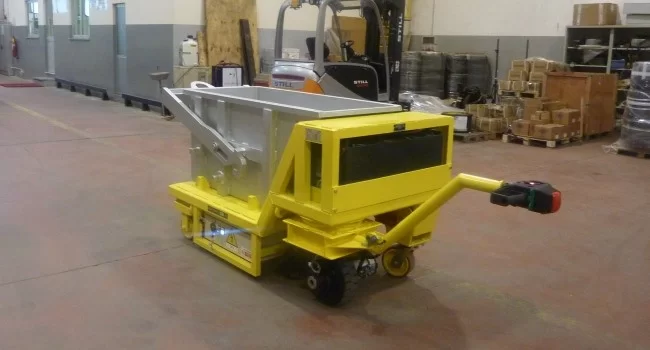
Motorized carts for light industrial loads: boosting efficiency

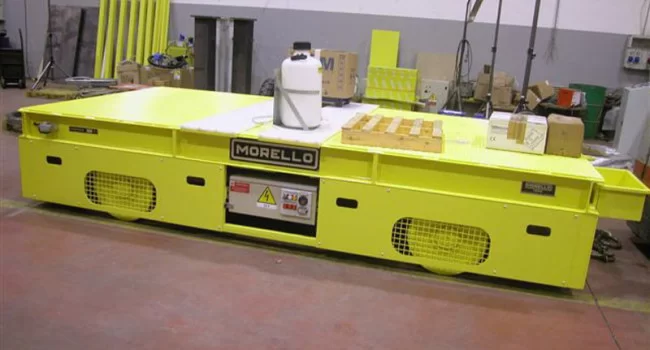
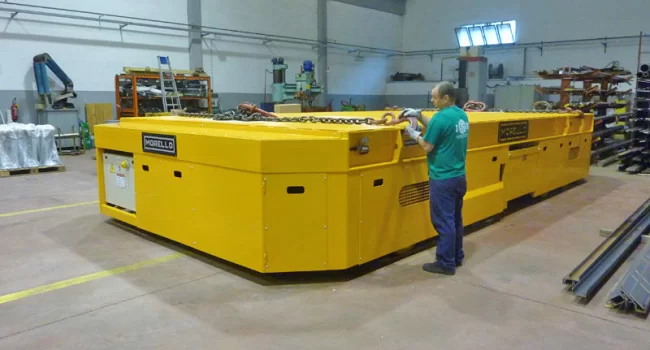
In modern industrial environments, efficiency and safety in material handling are paramount concerns for operational managers and engineers. Motorized carts for light industrial loads represent an optimal solution for transporting materials weighing up to several tons with precision and reliability. These battery-powered vehicles combine maneuverability with robust performance, making them ideal for facilities where space optimization is crucial and traditional forklifts or manual handling methods prove impractical. MORELLO’s motorized carts are specifically engineered to address the challenges of light to medium-weight transport applications across manufacturing plants, warehouses, and production facilities. With customizable platforms and intuitive control systems, these motorized transport solutions enhance workflow productivity while reducing physical strain on workers. Whether you’re managing a steel production facility, assembly line, or logistics operation, understanding the capabilities and advantages of these specialized transport vehicles can significantly impact your operational efficiency.

Advantages of motorized carts for light industrial loads

When operations require the movement of materials weighing between 1-5 tons, motorized carts offer significant advantages over traditional material handling equipment. These battery-powered transport solutions excel in environments where maneuverability and precision are essential. Unlike fixed conveyor systems or large forklifts, motorized carts for light industrial loads can navigate through narrow aisles and tight spaces with remarkable agility.

The battery propulsion system eliminates emissions, making these carts ideal for indoor operations where air quality is a concern. This clean operation also reduces noise pollution, creating a more comfortable working environment. For plant managers and engineers concerned with operational efficiency, these carts deliver measurable improvements by reducing transport time and minimizing manual handling requirements.

Safety represents another critical advantage. With proper training, operators can precisely control movement speed (typically up to 5 km/h under full load), reducing the risk of collisions or product damage. The ergonomic design minimizes operator fatigue during extended use periods, while the electric braking systems ensure reliable stopping power even when transporting materials at maximum capacity.

From an economic perspective, motorized carts offer lower long-term operational costs compared to combustion-powered alternatives. The reduced maintenance requirements, elimination of fuel costs, and longer service life translate to a compelling return on investment for facilities that implement these specialized transport solutions.

Key features and technical specifications of battery-powered transport carts

MORELLO’s motorized carts for light industrial loads incorporate advanced engineering elements that ensure reliable performance in demanding industrial environments. At the core of these transport solutions is the AC motor technology, which delivers consistent power while optimizing battery life. This propulsion system allows for precise speed control, typically offering travel speeds up to 5 km/h when carrying full loads.

The wheel configuration plays a crucial role in the cart’s maneuverability. Most models feature a combination of solid drive tires and polyurethane support wheels. This hybrid approach provides excellent traction on industrial floors while reducing wear and minimizing maintenance requirements. For instance, a standard configuration might include one solid drive tire complemented by three polyurethane support wheels, creating an optimal balance between stability and maneuverability.

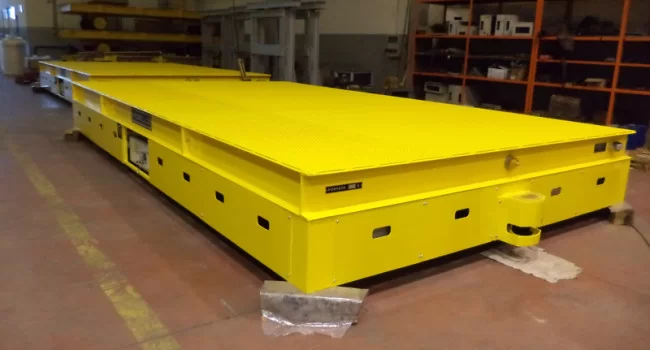
The loading platform represents another key technical aspect. Standard dimensions typically range from 1,000mm to 1,500mm in length and width, though MORELLO offers customized dimensions based on specific material handling requirements. Load capacities generally range from 2 to 5 tons for light industrial applications, with reinforced chassis designs for heavier-duty needs.

Power management systems include deep-cycle industrial batteries with extended operational cycles, smart charging technology to prevent overcharging, and battery status indicators that provide operators with real-time information about remaining power. For facilities with specialized requirements, these motorized carts can be manufactured to ATEX or IEC Ex standards for use in potentially explosive atmospheres.

Applications and industries benefiting from motorized material transport

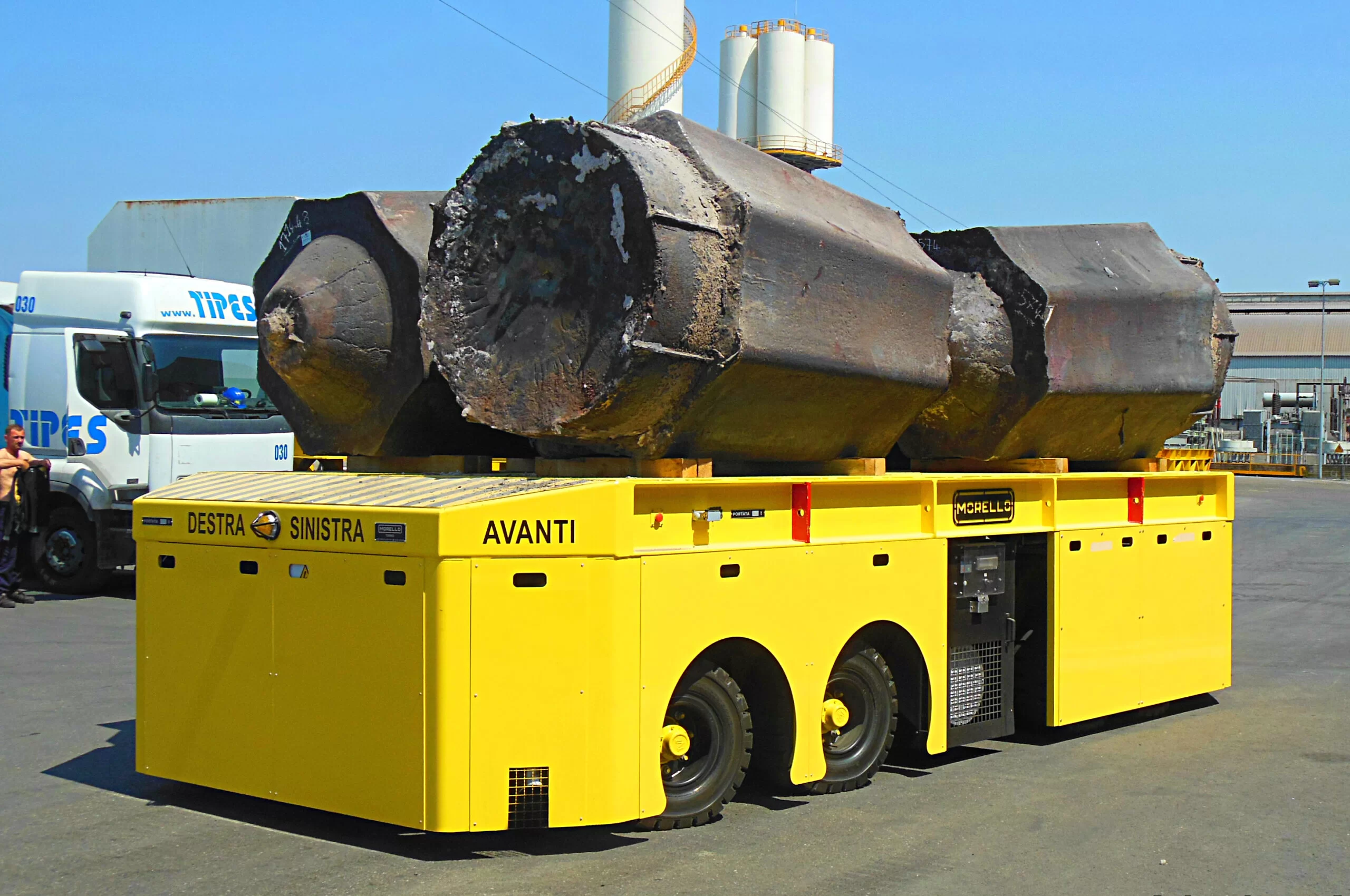
Motorized carts for light industrial loads have proven invaluable across numerous sectors where efficient material movement directly impacts productivity and safety. The steel manufacturing industry represents a prime application area, where these carts transport hot products between processing stations. Their maneuverability allows operators to navigate complex factory layouts while maintaining safe distances from high-temperature materials.

In automotive assembly plants, motorized material transport solutions move components between workstations with precision timing. The ability to customize loading platforms accommodates oddly-shaped parts or specialized fixtures that wouldn’t be suitable for standard conveyor systems. Similarly, aerospace manufacturing facilities utilize these carts to transport sensitive components that require careful handling and positioning during the assembly process.

The precast concrete industry benefits from motorized carts’ ability to transport heavy molds and finished products across production yards. Their electric propulsion provides sufficient torque for these demanding applications while eliminating exhaust emissions that could compromise product quality in enclosed curing environments.

Logistics and warehousing operations increasingly implement motorized carts as part of their material flow optimization strategies. These transport solutions bridge the gap between static storage systems and distribution points, particularly in facilities where traditional forklifts face space constraints. For electronics manufacturing, the vibration-dampening characteristics of properly designed motorized carts protect sensitive components during transport between clean rooms and testing facilities.

Customization options for specialized transport requirements

One of MORELLO’s core strengths lies in tailoring motorized carts for light industrial loads to meet specific operational challenges. While standard configurations serve many applications effectively, specialized environments often demand custom solutions. The loading platform represents the primary customization point, with options ranging from flat surfaces to complex superstructures designed for specific cargo types.

For industries handling delicate materials, vibration dampening systems can be integrated into the cart’s structure. These modifications might include specialized suspension components or cushioned mounting points that isolate the cargo from operational vibrations. Temperature-sensitive materials benefit from insulated platforms or even active temperature control systems that maintain optimal conditions during transport.

Control systems offer another dimension of customization. While manual steering provides excellent maneuverability in many contexts, some applications benefit from programmable routing capabilities or remote operation features. For facilities with varying load profiles, adjustable speed controls and dynamic braking systems ensure safe operation regardless of cargo weight.

Safety enhancements represent critical customization options, particularly in high-traffic environments. These might include:

  • Proximity sensors that detect obstacles and automatically adjust speed
  • Warning lights and audible signals that activate during movement
  • Emergency stop systems accessible from multiple positions
  • Anti-tip mechanisms for applications with higher centers of gravity

For environments with specialized compliance requirements, MORELLO engineers develop transport solutions that meet ATEX standards for explosive atmospheres or incorporate stainless steel components for food-grade or pharmaceutical applications. This collaborative engineering approach ensures each motorized cart precisely matches the operational requirements while maintaining reliability and efficiency.

Maintenance and operational considerations for maximum efficiency

Implementing a structured maintenance program for motorized carts ensures optimal performance and extends operational lifespan. Battery management represents the most critical maintenance aspect for these electric transport solutions. Establishing consistent charging protocols prevents deep discharge cycles that can permanently damage battery cells. Most modern motorized carts for light industrial loads utilize maintenance-free batteries, but regular inspection of connection points and charging systems remains essential.

Drive components require periodic attention, with particular focus on the motor brushes, gear mechanisms, and drive wheels. The solid tires typically found on industrial carts should be inspected regularly for wear patterns that might indicate alignment issues. Polyurethane support wheels may require more frequent replacement depending on floor conditions and load profiles.

Operational efficiency extends beyond mechanical maintenance to include operator training and workflow integration. Developing standardized loading procedures ensures that weight distribution remains within design parameters, preventing premature component wear. Similarly, establishing designated travel paths through facilities minimizes collision risks and optimizes transport times.

Environmental factors significantly impact motorized cart performance. Operating these transport solutions in extreme temperature conditions may require adjustments to charging cycles or load capacities. Particularly dusty or corrosive environments necessitate more frequent cleaning of electrical components and may justify upgraded protection for sensitive systems.

Implementing a digital maintenance tracking system allows operations managers to identify patterns in component wear or performance issues before they result in unplanned downtime. This proactive approach to maintenance, combined with MORELLO’s responsive support services, ensures that motorized carts for material transport deliver consistent performance throughout their operational lifecycle.

Enhancing productivity with the right motorized transport solution

Motorized carts for light industrial loads represent a strategic investment for operations seeking to optimize material flow while maintaining flexibility. These specialized transport solutions bridge the gap between manual handling methods and larger automated systems, providing an ideal balance of capacity, maneuverability, and operational efficiency. By carefully evaluating your specific material handling requirements and working with experienced engineers, you can implement a transport solution that addresses current challenges while accommodating future growth.

MORELLO’s decades of experience designing and manufacturing customized material handling equipment ensures that each motorized cart delivers reliable performance in demanding industrial environments. Our engineering team works closely with clients to understand their unique operational requirements, developing transport solutions that enhance productivity while prioritizing safety and reliability. If your facility faces challenges with light to medium-weight material transport, contact our technical specialists to explore how our motorized carts can transform your material handling processes.

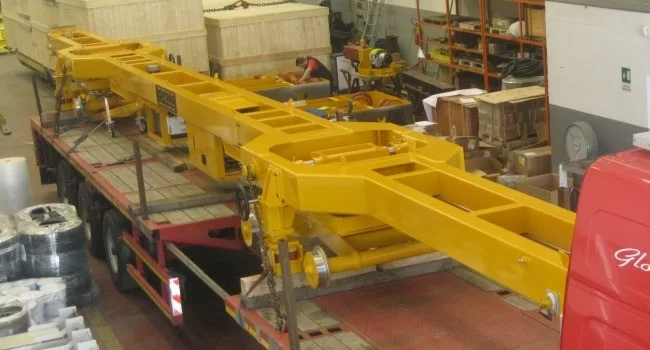
Self-loading motor-driven trolleys: transform heavy load handling

In today’s industrial landscape, the efficient movement of heavy loads is a critical challenge for operations managers and engineers across sectors like energy, construction, and logistics. The self-loading motor-driven trolley represents a significant advancement in material handling technology, offering a robust solution for transporting substantial weights with precision and safety. These specialized vehicles combine powerful motorized drive systems with intelligent self-loading capabilities, eliminating the need for additional lifting equipment while streamlining operations in complex industrial environments. MORELLO‘s self-loading motor-driven trolleys are engineered to handle loads exceeding 100 tons, providing unmatched versatility in confined spaces where traditional handling equipment falls short. This article explores the technical specifications, operational benefits, and practical applications of these sophisticated industrial trolleys, demonstrating why they’ve become indispensable assets for companies managing heavy-duty material transport in foundries, manufacturing facilities, and large-scale industrial operations worldwide.

Technical specifications of self-loading motor-driven trolleys

MORELLO’s self-loading motor-driven trolleys represent the pinnacle of heavy-duty material handling engineering. The flagship SGAI VCP3-E model exemplifies this advanced technology with its impressive 110-ton capacity and substantial platform dimensions of 4820 x 2300 mm. This robust design allows for the transport of exceptionally heavy components while maintaining a relatively compact footprint compared to alternative handling solutions.

The trolley’s lifting mechanism provides a stroke distance of 200 mm, sufficient for clearing floor obstacles and facilitating smooth loading operations. This vertical travel capability eliminates the need for external cranes or lifting equipment in many applications, streamlining workflow and reducing capital equipment requirements for industrial facilities.

A critical design element in these specialized trolleys is the solid wheel construction, engineered to support extreme weights while providing the durability required for industrial environments. The hydraulic engine system delivers reliable power with excellent torque characteristics, making it ideal for applications requiring controlled starts and precise positioning of substantial loads.

Perhaps most impressive is the all-wheels steering system, which provides exceptional maneuverability in confined spaces where traditional heavy transport solutions would be impractical. This feature allows operators to navigate complex factory layouts, tight corners, and congested production areas with remarkable precision, maximizing the utility of available floor space in manufacturing environments.

Operational advantages in industrial environments

Self-loading motor-driven trolleys deliver transformative operational benefits across diverse industrial settings. Their integrated functionality represents a paradigm shift in how heavy materials are handled, particularly in environments like foundries, manufacturing plants, and energy facilities where space optimization and workflow efficiency are critical concerns.

The most significant advantage comes from the consolidation of lifting and transport functions into a single unit. This integration eliminates transfer points between separate pieces of equipment, reducing handling time by up to 40% compared to conventional methods that require cranes for loading and separate vehicles for transport. For operations managers facing tight production schedules, this streamlined approach translates directly to improved throughput and reduced cycle times.

The remote control capability of these industrial motorized trolleys with self-loading capabilities provides operators with unprecedented visibility and control during material movement. Standing at a safe distance with an optimal vantage point, personnel can maneuver loads with precision impossible to achieve from a fixed operator’s seat, enhancing both safety and accuracy during critical positioning tasks.

Maintenance requirements represent another key operational advantage. The hydraulic systems employed in self-loading trolleys typically require servicing intervals 2-3 times longer than electric alternatives when operating under heavy load conditions. This extended maintenance schedule minimizes downtime and reduces lifetime operating costs, making these specialized vehicles particularly attractive for facilities running continuous operations.

Perhaps most valuable is the space efficiency these trolleys provide. Their ability to move laterally, rotate in place, and navigate tight corners means facilities can design more compact production layouts, maximizing valuable floor space while maintaining efficient material flow throughout the operation.

The hydraulic lifting mechanism explained

At the heart of every self-loading motor-driven trolley lies a sophisticated hydraulic lifting system that enables its remarkable capabilities. MORELLO’s engineering approach to this critical component represents decades of refinement in heavy material handling technology.

The lifting mechanism employs a multi-stage hydraulic cylinder arrangement that provides exceptional stability even when handling off-center loads. Unlike conventional lifting systems that may experience platform tilting under uneven weight distribution, these specialized cylinders work in synchronized harmony, maintaining perfect platform levelness throughout the vertical travel range of approximately 200 mm.

Pressure compensation technology within the hydraulic circuit ensures consistent lifting performance regardless of load weight variations. This adaptive system automatically adjusts fluid pressure based on resistance encountered, providing smooth operation whether handling a 110-ton maximum capacity load or moving the platform unloaded during positioning maneuvers.

The hydraulic power unit that drives this system incorporates redundant pumps and filters to ensure operational reliability in demanding industrial environments. This design philosophy prioritizes continuous operation capabilities, with backup systems engaging automatically if primary components encounter performance issues.

Safety features integrated into the hydraulic lifting mechanism include pressure relief valves that prevent overloading, check valves that maintain platform position even during complete hydraulic pressure loss, and emergency manual lowering capabilities that allow safe load placement during power failures. These engineering considerations reflect MORELLO’s commitment to creating industrial equipment that performs reliably under all operating conditions while maintaining the highest safety standards for personnel working around these powerful machines.

Remote control systems and safety features

MORELLO’s self-loading motor-driven trolleys incorporate advanced remote control technology that revolutionizes how operators interact with heavy material handling equipment. These sophisticated control systems provide unprecedented precision while maintaining operator safety through thoughtful design and engineering.

The wireless remote controller features an ergonomic layout with proportional joysticks that deliver intuitive control over movement speed and direction. This precision allows operators to execute delicate positioning maneuvers even when handling loads approaching the 110-ton capacity limit. The controller’s digital display provides real-time feedback on critical system parameters including hydraulic pressure, battery status, and load weight distribution across the platform.

Safety remains paramount in these remote systems, with multiple redundant communication channels ensuring uninterrupted control even in electromagnetically noisy industrial environments. The emergency stop function operates on an independent circuit with direct hardwired connection to critical systems, guaranteeing immediate response regardless of other system conditions.

Beyond the remote control technology, these trolleys incorporate comprehensive safety systems including:

  • Proximity sensors that automatically reduce speed when approaching obstacles or personnel
  • Load monitoring systems that prevent movement if weight distribution exceeds safe parameters
  • Audible warning signals that activate during movement to alert nearby workers
  • Automatic braking systems that engage immediately when controls are released

The integration of these safety features with the remote control capability creates a material handling solution that prioritizes both operational efficiency and workplace safety. Operators gain improved visibility of the surrounding environment while maintaining complete control over the trolley’s movement and lifting functions from a safe distance, dramatically reducing the risk of accidents during complex material handling operations.

Applications across diverse industrial sectors

Self-loading motor-driven trolleys have proven their exceptional versatility across numerous industrial applications, demonstrating their value in environments where traditional material handling approaches fall short. These specialized vehicles excel in situations requiring both lifting and transport capabilities for extremely heavy components.

In foundry operations, these trolleys have transformed the movement of massive molds, dies, and castings. Their ability to navigate between production stations while handling loads exceeding 100 tons eliminates the need for overhead cranes in many applications, allowing facilities to operate with lower ceiling heights and reducing building construction costs significantly. One Italian foundry implemented MORELLO’s self-loading trolley system and reported a 35% improvement in production flow efficiency.

The energy sector utilizes these trolleys for transporting turbine components, generator assemblies, and transformer units during both manufacturing and maintenance operations. Their precise positioning capabilities prove invaluable when aligning heavy components during assembly processes where millimeter accuracy is essential.

Precast concrete manufacturers employ self-loading trolleys to transport finished elements from production areas to curing zones and loading docks. The self-loading capability eliminates the need for separate cranes at each transfer point, streamlining operations and reducing capital equipment requirements.

In aerospace manufacturing, these specialized vehicles transport wing assemblies, fuselage sections, and landing gear components between production stations. Their omnidirectional steering capabilities allow for precise positioning in space-constrained assembly areas where conventional material handling equipment cannot operate effectively.

The shipbuilding industry has similarly embraced this technology for moving propulsion systems, bulkhead sections, and other massive components through complex shipyard layouts. The ability to navigate narrow passages while carrying extreme weights makes these trolleys indispensable tools in modern shipyard operations.

Revolutionizing industrial material handling with advanced trolley technology

The self-loading motor-driven trolley represents a significant advancement in heavy material handling technology, offering industrial operations managers and engineers a versatile solution that combines lifting and transport functions in a single robust platform. With load capacities exceeding 100 tons, advanced hydraulic systems, remote control capabilities, and comprehensive safety features, these specialized vehicles deliver exceptional value across foundries, energy facilities, manufacturing plants, and other industrial environments where conventional handling methods prove inadequate.

MORELLO’s decades of engineering expertise in developing customized material handling solutions has positioned the company as a global leader in this specialized field. Our commitment to innovation, quality, and customer-focused design ensures that each self-loading trolley we produce meets the exact requirements of the industrial challenges it will address.

Ready to transform your heavy load handling operations? Explore our complete range of self-propelled industrial trolleys and discover how MORELLO’s customized solutions can optimize your material flow while enhancing safety and efficiency.

Industrial trailers for railway cable carriers: expert solutions

In the specialized world of railway maintenance and infrastructure, precision equipment plays a crucial role in ensuring operational efficiency. Industrial trailers for positioning railway cable carriers represent a sophisticated solution designed specifically for the complex challenges of railway operations. These specialized vehicles enable maintenance teams to accurately position and install cable carriers beneath railway carriages with minimal disruption to operations. At MORELLO, we’ve engineered advanced self-propelled trailers that combine robust load capacity with precise maneuverability to address the unique requirements of railway maintenance operations. Our industrial trailers feature hydraulic-lifting platforms and rail-specific design elements that streamline the positioning of critical cable carrier systems. This article explores how these purpose-built industrial trailers revolutionize railway maintenance procedures while enhancing safety, efficiency, and operational reliability for railway infrastructure managers and maintenance teams.

Advanced features of industrial trailers for railway cable carrier positioning

Industrial trailers designed for positioning railway cable carriers incorporate several sophisticated features that set them apart from standard transportation equipment. The SBA-8R/SP self-propelled trailer exemplifies this engineering excellence through its precision-focused design elements.

At the core of these specialized trailers is the hydraulic-lifting loading platform, which provides controlled vertical movement essential for accurate positioning of cable carriers beneath railway carriages. This system can be operated in two distinct modes: synchronized lifting between multiple points for perfectly level elevation, or independent actuation when uneven positioning is required for specific installation scenarios.

Mobility versatility represents another critical advancement in these industrial trailers. While primarily designed to operate on rails with loads up to 5.5 tons, these units are equipped with secondary idle wheels that enable off-rail movement. This dual-mode capability allows maintenance teams to navigate both dedicated railway tracks and maintenance facilities without requiring additional equipment transfers.

The propulsion system delivers impressive performance specifications, maintaining speeds of up to 60 meters per minute even when fully loaded. This efficiency significantly reduces positioning time while maintaining the precision necessary for cable carrier installation. Battery-powered operation eliminates emissions concerns in enclosed railway maintenance facilities while providing the necessary torque for heavy-duty applications.

These advanced features combine to create industrial trailers specifically optimized for the unique challenges of railway cable carrier positioning, where precision, reliability, and operational efficiency directly impact maintenance schedules and railway system uptime.

Technical specifications and capabilities of self-propelled railway trailers

Understanding the technical specifications of industrial trailers for railway cable carrier positioning is essential for operational planning and implementation. MORELLO’s self-propelled railway trailers are engineered with precise technical parameters to meet the demanding requirements of railway maintenance operations.

The load capacity represents a critical specification, with models like the SBA-8R/SP capable of handling up to 5.5 tons of equipment. This capacity is specifically calibrated to accommodate standard railway cable carrier systems and their associated components without compromising operational safety or performance.

Platform dimensions play a crucial role in equipment functionality, with typical configurations featuring dimensions of approximately 19,000 x 600 mm. This elongated design provides sufficient space for positioning multiple cable carriers simultaneously while maintaining a narrow profile necessary for operating within the confined spaces of railway maintenance facilities.

The vertical stroke capability of 900 mm enables precise positioning at various heights, accommodating different railway carriage designs and maintenance requirements. This vertical range ensures that maintenance teams can access the exact installation points without requiring additional lifting equipment or compromising worker safety.

Power systems in these specialized trailers typically feature advanced battery technology that balances operational runtime with power output requirements. The electric drive systems deliver sufficient torque for moving heavy loads while maintaining the precise control necessary for alignment operations. This battery-powered approach eliminates emissions concerns in enclosed maintenance facilities while reducing the operational noise typically associated with diesel-powered alternatives.

These technical specifications collectively enable railway maintenance teams to perform cable carrier positioning with unprecedented efficiency and precision, directly impacting maintenance schedules and operational reliability.

Operational benefits of specialized positioning systems for cable carriers

Implementing industrial trailers specifically designed for railway cable carrier positioning delivers substantial operational advantages that directly impact maintenance efficiency and railway system availability. These specialized systems transform what was once a labor-intensive, time-consuming process into a streamlined operation with measurable benefits.

The most significant operational advantage comes from the dramatic reduction in maintenance downtime. Traditional methods of positioning cable carriers often required multiple pieces of equipment and extensive manual labor, resulting in extended railway service interruptions. With MORELLO’s purpose-built positioning trailers, maintenance teams can complete the same tasks in a fraction of the time, minimizing service disruptions and maximizing railway availability.

Labor efficiency represents another critical benefit, as these specialized systems reduce the number of personnel required for cable carrier positioning operations. What previously might have required a team of 4-6 maintenance workers can now be accomplished with just 2-3 operators, allowing railway maintenance departments to optimize their workforce allocation and focus additional resources on other critical tasks.

The precision control afforded by these positioning systems also significantly reduces the risk of installation errors. The hydraulic lifting platforms with synchronized or independent operation ensure perfect alignment of cable carriers, virtually eliminating the need for readjustments or corrections that plague less specialized approaches. This precision directly translates to enhanced reliability of the installed systems and reduced follow-up maintenance requirements.

Additionally, these specialized trailers support improved maintenance scheduling flexibility. Their self-propelled nature and dual-mode operation capabilities allow maintenance teams to quickly respond to emerging needs without extensive logistical planning, enabling more responsive and adaptive maintenance operations across the railway network.

Safety innovations in railway maintenance equipment

Safety represents a paramount concern in railway maintenance operations, and industrial trailers for cable carrier positioning incorporate multiple innovations specifically designed to protect both operators and equipment. MORELLO has pioneered several safety-focused design elements that set new standards for railway maintenance equipment.

Precision control systems stand at the forefront of these safety innovations. The hydraulic lifting mechanisms feature multiple redundant safety circuits that prevent unintended platform movement, even in cases of hydraulic pressure loss or electrical system interruptions. This fail-safe approach ensures that loads remain secure throughout the positioning process, protecting both valuable equipment and maintenance personnel working in proximity to the trailer.

Load stability enhancements represent another critical safety advancement. The platform design incorporates specialized load distribution technology that maintains stability even when handling asymmetrical cable carrier components. This stability is further enhanced by automatic leveling systems that compensate for minor rail irregularities, virtually eliminating the risk of load shifts during positioning operations.

Operator protection features include comprehensive emergency stop systems accessible from multiple positions around the trailer. These systems instantly halt all mechanical operations when activated, providing immediate response capability in potential emergency situations. Additionally, modern industrial trailers incorporate proximity detection technology that automatically adjusts operational parameters when personnel are detected within designated safety zones.

The battery-powered operation of these specialized trailers eliminates the safety concerns associated with internal combustion engines, including exhaust emissions and fuel handling risks in enclosed railway maintenance facilities. This electric approach creates a safer working environment while maintaining the power necessary for demanding positioning tasks.

These integrated safety innovations collectively transform railway cable carrier positioning from a potentially hazardous operation into a controlled, secure process that protects both valuable equipment and essential maintenance personnel.

Custom solutions for complex railway infrastructure challenges

Railway infrastructure presents unique challenges that often require specialized equipment beyond standard industrial offerings. MORELLO’s approach to developing industrial trailers for railway cable carrier positioning emphasizes customization capabilities that address these complex operational requirements.

The foundation of effective customization begins with collaborative engineering processes. Rather than offering only standardized solutions, MORELLO engages directly with railway maintenance teams to understand their specific operational environments, maintenance procedures, and infrastructure constraints. This collaborative approach ensures that each industrial trailer is precisely tailored to the unique requirements of the railway system it will serve.

Dimensional customization represents a critical aspect of this process. Railway infrastructure varies significantly across different networks, with tunnel clearances, platform heights, and track configurations presenting distinct challenges. MORELLO’s engineering team modifies trailer dimensions, platform heights, and operational parameters to ensure compatibility with these specific infrastructure constraints while maintaining full functionality.

Control system adaptations provide another layer of customization. Some railway operations require integration with existing maintenance management systems or specific operational protocols. Custom control interfaces, remote operation capabilities, and specialized monitoring systems can be incorporated to align with these requirements, creating seamless operational integration.

Load handling adaptations address the variety of cable carrier designs encountered across different railway systems. Custom attachment points, specialized securing mechanisms, and adjustable positioning features ensure that each trailer can effectively handle the specific cable carrier designs used in a particular railway network.

This commitment to customization enables railway maintenance teams to overcome the complex challenges presented by their unique infrastructure environments. Rather than adapting their procedures to accommodate standardized equipment limitations, they can deploy precisely tailored industrial trailers that enhance operational efficiency while addressing their specific railway cable carrier positioning requirements.

Transforming railway maintenance with specialized positioning solutions

Industrial trailers for railway cable carrier positioning represent a specialized solution to one of the most challenging aspects of railway maintenance operations. Through advanced engineering, precise technical specifications, and a focus on operational efficiency and safety, these purpose-built systems transform complex positioning tasks into streamlined, reliable procedures. MORELLO’s commitment to developing customized solutions ensures that each railway operation can implement equipment perfectly aligned with their unique infrastructure requirements and maintenance protocols.

As railway systems continue to evolve with increasing demands for reliability and efficiency, specialized maintenance equipment becomes an essential investment rather than an optional enhancement. By implementing purpose-built industrial trailers for cable carrier positioning, railway operators can significantly reduce maintenance downtime, optimize workforce allocation, and enhance overall system reliability.

Ready to revolutionize your railway maintenance operations? Explore MORELLO’s custom industrial trailer solutions designed specifically for your unique railway infrastructure challenges.

Battery-powered steerable transfer trolleys: revolutionizing heavy transport

Battery-powered steerable transfer trolleys represent the pinnacle of modern material handling technology for industrial environments where precision movement of exceptionally heavy loads is critical. These sophisticated transport solutions combine robust lifting capacity with remarkable maneuverability, allowing operations teams to navigate complex facility layouts while maintaining complete control over valuable cargo. Designed specifically for industries that require the transportation of massive components—such as railway carriages, aerospace parts, or heavy machinery—these self-propelled trolleys eliminate the limitations of traditional towing systems.

MORELLO has engineered these systems to provide industrial operations with unparalleled flexibility, safety, and efficiency. By integrating advanced steering capabilities with battery-powered operation, these transfer trolleys deliver environmentally responsible performance without sacrificing power or reliability. For manufacturing facilities and industrial complexes facing increasingly complex material movement challenges, these purpose-built solutions transform what’s possible in heavy load transportation.

Advanced capabilities of battery-powered steerable transfer trolleys

MORELLO’s battery-powered steerable transfer trolleys represent a significant leap forward in heavy material handling technology. With impressive load capacities of up to 26 tons per unit, these specialized transport solutions are engineered to handle industrial-scale components with precision and reliability. The self-loading functionality eliminates the need for supplementary lifting equipment, streamlining operations and reducing the overall equipment footprint in manufacturing environments.

What truly sets these transfer trolleys apart is their autonomous power system. The brushless motor technology, powered by high-capacity batteries, delivers consistent performance throughout extended operational periods without the limitations of tethered power sources. This independence allows for complete freedom of movement throughout industrial facilities, with no emissions or power cables to restrict operational range.

Remote control capability provides operators with comprehensive command over trolley functions from a safe distance, enhancing workplace safety during the transport of massive components. The intuitive control interface allows for precise adjustments to speed, direction, and lifting operations, ensuring that even the most delicate positioning tasks can be accomplished with confidence.

The polyurethane wheel system delivers exceptional floor protection while maintaining the load-bearing capacity needed for extreme weights. This balance between surface preservation and performance is crucial in manufacturing environments where floor integrity must be maintained despite the frequent movement of heavy materials.

Technical specifications and operational versatility

The engineering excellence behind MORELLO’s battery-powered steerable transfer trolleys is evident in their technical specifications. Each unit features a robust platform measuring 2,800 x 1,770 mm, providing substantial surface area for load distribution while maintaining a compact footprint relative to their carrying capacity. The integrated lifting system offers a 100mm stroke height—sufficient to clear floor obstacles and facilitate precise positioning during loading and unloading operations.

The trolleys’ power system centers around advanced brushless motor technology, which delivers several operational advantages over traditional motor systems. These include enhanced torque control, improved energy efficiency, and significantly reduced maintenance requirements. The elimination of brushes and commutators results in fewer wear components, extending service intervals and increasing overall system reliability in demanding industrial environments.

Polyurethane wheels represent a critical design choice, offering the optimal balance between load-bearing capacity and floor protection. Unlike steel wheels that can damage concrete surfaces or rubber compounds that might deform under extreme weight, the engineered polyurethane compound maintains structural integrity while distributing pressure effectively across contact surfaces.

The self-loading capability eliminates dependency on external lifting equipment, streamlining logistics workflows and reducing operational complexity. This integrated functionality allows a single operator to manage the entire transport process from initial pickup through final positioning, enhancing efficiency and reducing labor requirements for material movement tasks involving heavy components.

Collaborative functionality for railway carriage transport

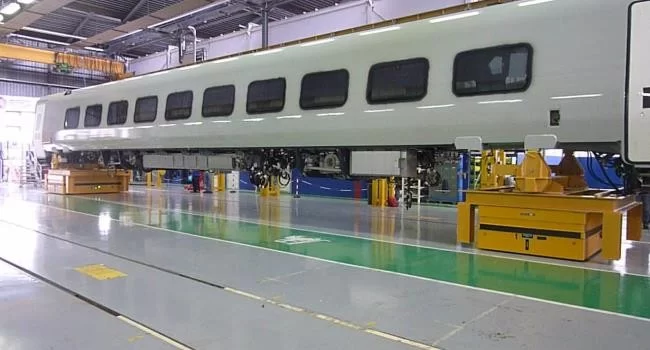
One of the most impressive capabilities of MORELLO’s battery-powered steerable transfer trolleys is their ability to function as a synchronized system for railway carriage transport. While each unit can operate independently for standard material handling tasks, their true potential emerges when deployed as a coordinated pair. This collaborative functionality allows for the safe and precise movement of elongated loads like railway carriages that would be impossible to transport with a single unit.

The synchronized operation begins with the strategic positioning of two trolleys beneath the support pallets that cradle the railway carriage. Once in position, both units activate their lifting mechanisms simultaneously, elevating the carriage and its support structure in perfect coordination. The remote control system enables a single operator to command both units as a unified system, ensuring perfect synchronization throughout the transport process.

This paired functionality effectively doubles the system’s carrying capacity to 52 tons, making it suitable for even the heaviest railway components. More importantly, it maintains the precise alignment necessary when transporting elongated loads between production stations or onto different tracks within manufacturing facilities. The dual-trolley configuration distributes weight evenly across both units, preventing structural stress on the transported carriage while maintaining optimal balance throughout the movement process.

For train manufacturers and railway maintenance facilities, this collaborative capability transforms internal logistics, eliminating the need for overhead crane systems or fixed-rail transfer equipment that would otherwise limit operational flexibility and facility layout options.

Steering innovations that transform industrial mobility

The revolutionary steering capabilities of MORELLO’s battery-powered transfer trolleys represent perhaps their most significant technological advancement. When operating as a synchronized pair, these systems offer multiple steering modes that provide unprecedented maneuverability for loads that would otherwise require complex handling procedures. The sophisticated control system allows operators to select from several movement patterns optimized for different spatial constraints and positioning requirements.

The corrected steering mode utilizes the rear axle with center-corrected vault steering to provide smooth, predictable movement along curved paths while maintaining proper alignment between both trolleys. For navigating tight corners, the 90-degree steering mode enables sharp turns without the wide turning radius typically required for long loads. When lateral movement is necessary, diagonal steering allows the entire system to move sideways—an invaluable capability when positioning railway carriages in confined spaces.

Perhaps most impressive is the carousel steering mode, which enables the paired trolleys to rotate the entire load around its central axis. This capability allows operators to completely reorient railway carriages or other elongated components without requiring additional space for conventional turning maneuvers. The compass steering mode further enhances positioning precision by enabling incremental rotational adjustments during final placement operations.

These advanced steering capabilities effectively eliminate the spatial constraints that typically limit heavy material handling operations. Manufacturing facilities can optimize floor layouts for production efficiency rather than accommodating the turning radius requirements of traditional transport equipment, fundamentally transforming how industrial spaces can be utilized.

Practical applications and efficiency gains in heavy manufacturing

The implementation of battery-powered steerable transfer trolleys delivers substantial operational benefits across various heavy manufacturing sectors. In railway manufacturing facilities, these systems have transformed production logistics by enabling the efficient movement of carriages between assembly stations without the infrastructure limitations of fixed-rail transfer systems. This flexibility allows manufacturers to reconfigure production layouts as needed, adapting to changing product specifications or production volumes without costly facility modifications.

Aerospace manufacturing operations benefit similarly when moving large fuselage sections or wing assemblies through production facilities. The precision steering capabilities ensure that these high-value components can be transported without risk of collision or damage, even in congested manufacturing environments. The remote operation functionality keeps personnel at a safe distance during movement operations, enhancing workplace safety when handling these massive structures.

Heavy equipment manufacturers utilize these trolley systems to transport partially completed assemblies between work cells, eliminating production bottlenecks that occur when waiting for overhead crane availability. The self-loading capability further streamlines operations by reducing handling steps and minimizing the equipment and personnel required for transport tasks.

Beyond manufacturing, these versatile systems find applications in power generation facilities for turbine component handling, in shipyards for modular construction transport, and in large-scale construction projects for positioning prefabricated structural elements. The operational efficiency gains extend beyond simple transport improvements—they enable fundamental changes to production methodologies, supporting modular manufacturing approaches that would be impractical with less capable material handling systems.

Elevating industrial transport with MORELLO’s engineered solutions

Battery-powered steerable transfer trolleys represent a critical evolution in heavy material handling technology, offering manufacturing operations unprecedented flexibility, precision, and efficiency. These sophisticated transport solutions eliminate the limitations of traditional material movement systems, enabling new approaches to production layout and workflow optimization. For facilities managing railway carriages, aerospace components, or other massive industrial elements, these trolleys deliver the perfect balance of power, control, and operational simplicity.

MORELLO’s engineering expertise in custom material handling solutions ensures that each trolley system is optimized for its specific application environment, with configurations tailored to unique operational requirements. The combination of self-loading capability, advanced steering modes, and synchronized operation delivers performance that transforms what’s possible in industrial logistics.

Ready to revolutionize your heavy transport operations? Contact MORELLO today to discuss how our battery-powered steerable transfer trolleys can optimize your material handling processes and unlock new efficiencies in your manufacturing operations.

Precision leveled lifting systems for heavy armoured trucks: 80-ton power

Military operations and maintenance procedures demand specialized equipment that can handle extreme weights with precision and reliability. The leveled lifting system for heavy armoured trucks represents a critical advancement in defense logistics and maintenance capabilities. Designed specifically for military armoured vehicles weighing up to 80 tons, these systems provide the perfect solution for maintenance crews and military engineers who require stable, controlled lifting in various environments.

MORELLO has engineered these transportable lifting systems to meet the rigorous demands of military applications, ensuring that even the heaviest armoured vehicles can be safely elevated for maintenance, repairs, or component replacement. With a 500mm stroke capacity and precise leveling capabilities, these systems deliver the performance and reliability that defense operations require, whether in established military facilities or deployed in field conditions where conventional lifting infrastructure is unavailable.

Engineering challenges in heavy armoured vehicle maintenance

Maintaining heavy armoured vehicles presents unique engineering challenges that conventional lifting equipment simply cannot address. These military-grade vehicles often weigh between 40 and 80 tons—significantly heavier than standard commercial vehicles—requiring specialized lifting solutions with extraordinary load capacity and stability.

The complex underbody architecture of armoured vehicles, designed to withstand explosive forces and provide ballistic protection, creates additional complications for maintenance crews. Access points are limited, weight distribution is often asymmetrical, and critical components require precise alignment during servicing operations.

Furthermore, these vehicles frequently need maintenance in various environments—from controlled military depots to forward operating bases—where permanent infrastructure may be unavailable. This necessitates transportable systems that can be rapidly deployed and provide consistent performance across different terrains and conditions.

Perhaps most challenging is the requirement for absolutely level lifting. Even minor deviations in lifting angle can damage sensitive components, compromise structural integrity, or create dangerous working conditions for maintenance personnel. The leveled lifting system for heavy armoured trucks must maintain perfect horizontal positioning throughout the entire lifting operation, regardless of the vehicle’s weight distribution or the surface conditions beneath the system.

These engineering challenges demand innovative solutions that combine robust mechanical design, precise hydraulic systems, and intelligent control mechanisms—all while meeting strict military specifications for reliability and durability in extreme conditions.

Advanced technology behind leveled lifting systems

The engineering excellence of a leveled lifting system relies on several sophisticated technologies working in harmony. At the core of these systems is a network of synchronized hydraulic cylinders that distribute lifting force evenly across multiple contact points. This synchronization is critical—even a slight imbalance when lifting an 80-ton armoured vehicle could result in catastrophic equipment failure or safety hazards.

MORELLO’s lifting systems incorporate precision sensors that continuously monitor pressure, position, and load distribution throughout the lifting operation. These sensors feed data to advanced control systems that make micro-adjustments in real-time, ensuring the platform remains perfectly level despite shifting weight distributions or uneven terrain.

The structural components of these systems utilize high-tensile steel alloys specifically selected for their exceptional strength-to-weight ratio. This material engineering allows the lifting system to remain transportable while handling extreme loads. The load-bearing surfaces feature specialized coatings that resist wear while providing optimal friction coefficients for stable vehicle positioning.

Another technological breakthrough in modern lifting system for armoured vehicle maintenance is the implementation of modular design principles. These systems can be rapidly assembled or reconfigured to accommodate different vehicle types—from light tactical vehicles to main battle tanks—without compromising operational integrity.

The hydraulic power units driving these systems deliver remarkable performance metrics, with pressure capabilities exceeding 5,000 psi while maintaining precise flow control. This combination of raw power and fine regulation enables the 500mm stroke to be executed with millimeter-level precision, essential when working with complex military hardware.

Key features and capabilities of MORELLO’s 80-ton lifting solution

MORELLO’s leveled lifting system stands out in the defense industry with its exceptional performance specifications and thoughtful design. The system’s 80-ton capacity places it among the most powerful portable lifting solutions available for military applications, capable of elevating even the heaviest main battle tanks and armoured personnel carriers with confidence.

The system’s 500mm stroke provides maintenance teams with ample working clearance beneath vehicles, enabling comprehensive access to drivetrain components, armor plating, and other critical systems that require regular inspection or repair. This vertical range is precisely controlled throughout the lifting operation, maintaining stability even at maximum extension.

One of the most valuable features of MORELLO’s solution is its transportability. Unlike fixed maintenance bays that require permanent installation, these systems can be disassembled, transported, and reassembled wherever needed—whether at forward operating bases, temporary maintenance facilities, or during field exercises. This mobility dramatically extends the operational range of maintenance capabilities for military units.

The control interface has been engineered with military operators in mind, featuring intuitive controls that can be operated even in adverse conditions or while wearing protective gear. Safety redundancies are built into every aspect of the system, from mechanical load-locking mechanisms to emergency lowering procedures that function even during power loss.

MORELLO’s lifting systems also feature adjustable support points that can be configured to match the specific contact requirements of different vehicle chassis designs, ensuring optimal load distribution and preventing damage to sensitive components during maintenance procedures.

Implementation and deployment in military environments

Implementing leveled lifting systems for heavy armoured trucks in military settings requires careful planning and coordination. These sophisticated systems are designed to integrate seamlessly into existing maintenance workflows while enhancing operational capabilities in various scenarios.

Military logistics teams typically deploy these systems in three primary contexts:

  • Fixed maintenance facilities – Where the lifting systems serve as primary maintenance equipment for routine servicing and major overhauls of armoured fleets
  • Field deployment scenarios – Where rapid assembly and operation enable critical repairs in forward operating locations
  • Training environments – Where the systems facilitate technical instruction and maintenance procedure practice

The modular design of MORELLO’s lifting solutions allows for transport via standard military logistics vehicles. Components are engineered to withstand the rigors of military transport across rough terrain while maintaining precise tolerances necessary for proper operation. Setup procedures have been streamlined to require minimal specialized tools, allowing maintenance crews to establish operational lifting capabilities within hours of arrival.

Power requirements have been optimized to function with standard military generators or existing power infrastructure, eliminating the need for specialized power sources. The control systems are hardened against electromagnetic interference—a critical feature in modern battlefield environments where electronic warfare is prevalent.

MORELLO’s implementation process includes comprehensive training programs for military maintenance personnel, ensuring operators understand not only basic operation but also advanced techniques for handling specific vehicle types and troubleshooting procedures. This training emphasis maximizes system effectiveness while minimizing downtime during critical operations.

Safety protocols and operational advantages

Working beneath an 80-ton armoured vehicle demands uncompromising safety standards. MORELLO’s leveled lifting system incorporates multiple layers of protection to safeguard maintenance personnel and valuable military assets. Each system features mechanical safety locks that automatically engage at predetermined heights, preventing accidental descent even in the event of hydraulic pressure loss.

The control systems incorporate pressure monitoring that detects uneven loading conditions and alerts operators before potentially dangerous situations develop. Visual and audible warnings activate when approaching maximum capacity or when the system detects improper weight distribution across lifting points.

Beyond safety, these lifting systems deliver significant operational advantages to military maintenance operations. The perfect leveling capability allows for precision alignment work that would be impossible with conventional jacks or lifts. This precision translates directly into improved maintenance quality, reduced component wear, and extended vehicle service life.

The systems also dramatically improve maintenance efficiency. Tasks that previously required multiple lifting operations can now be completed in a single session, with full undercarriage access. This efficiency reduces vehicle downtime—a critical factor in maintaining combat readiness for military units.

Personnel safety is further enhanced through improved ergonomics. Maintenance technicians can work in upright positions rather than cramped under-vehicle postures, reducing fatigue and injury risk during extended maintenance procedures. The increased working clearance also improves ventilation and reduces exposure to harmful fumes or particulates that can accumulate beneath vehicles during maintenance operations.

These combined advantages—enhanced safety protocols and operational efficiencies—make MORELLO’s lifting systems invaluable assets for military maintenance operations where equipment reliability directly impacts mission success and personnel safety.

Advancing military maintenance capabilities with precision engineering

The leveled lifting system for heavy armoured trucks represents a critical advancement in military maintenance technology, addressing the unique challenges posed by these massive tactical vehicles. MORELLO’s 80-ton capacity solution delivers the perfect combination of raw lifting power, precise leveling capability, and operational flexibility required by modern defense forces. By enabling safer, more efficient maintenance procedures, these systems directly contribute to improved fleet readiness and extended vehicle service life.

As military vehicles continue to evolve with increasingly complex systems and protective features, the importance of specialized maintenance equipment grows accordingly. MORELLO remains at the forefront of this evolution, continuously refining our lifting systems to meet emerging requirements.

Ready to enhance your armoured vehicle maintenance capabilities? Contact MORELLO today to discuss how our custom-engineered lifting systems for armoured vehicle maintenance can be tailored to your specific operational requirements and improve your maintenance efficiency.

90-degree load tilting solutions: revolutionizing manufacturing

In modern manufacturing environments, efficient material handling is crucial for maintaining productivity and ensuring worker safety. Among the various solutions available, 90-degree load tilting systems have emerged as essential equipment for operations involving heavy loads. These specialized upenders allow manufacturing facilities to reorient large, unwieldy materials quickly and safely, eliminating the risks associated with manual handling or suspended load operations.

MORELLO has established itself as an industry leader in designing and manufacturing custom load tilting solutions that address the specific challenges faced by global industrial operations. Our electro-hydraulic upenders are engineered to handle extreme weights—ranging from 80 to over 500 tons—while maintaining precision control and operational reliability. This article explores how these specialized tilting systems are transforming manufacturing processes across industries, from steel production to heavy equipment assembly, by providing safer, more efficient alternatives to traditional material handling methods.

Understanding the mechanics of industrial load upenders

Industrial load upenders, also known as load tilters or 90-degree tilting solutions, operate on fundamental mechanical principles that enable them to safely reposition massive objects. At their core, these systems utilize a powerful force multiplication mechanism to transform horizontal loads into vertical orientations—or vice versa—without requiring suspension from overhead cranes.

The primary components of a modern load upender include a robust loading platform, a reinforced tilting frame, and a powerful actuation system. In MORELLO’s advanced designs, the actuation typically consists of multiple high-capacity hydraulic cylinders working in synchronized harmony. These cylinders provide the necessary force to overcome the gravitational resistance of heavy loads, which can exceed 80 tons in standard configurations.

What distinguishes industrial-grade upenders from simpler tilting mechanisms is their precision control systems. These incorporate pressure-compensated flow control valves that ensure smooth, consistent movement regardless of load variations. This is crucial when handling delicate or unevenly balanced materials that might shift during the tilting process.

The load platform itself requires careful engineering, often featuring reinforced steel plates up to 50mm thick to withstand repeated stress cycles without deformation. This platform is typically equipped with load retention mechanisms—such as adjustable stops or clamps—that secure materials during the tilting operation to prevent sliding or shifting.

Modern 90-degree tilting solutions also incorporate sophisticated balance calculations to determine the optimal pivot point for different load configurations, ensuring that the center of gravity remains within safe operational parameters throughout the entire tilting cycle.

Engineering considerations for custom load upender designs for heavy loads

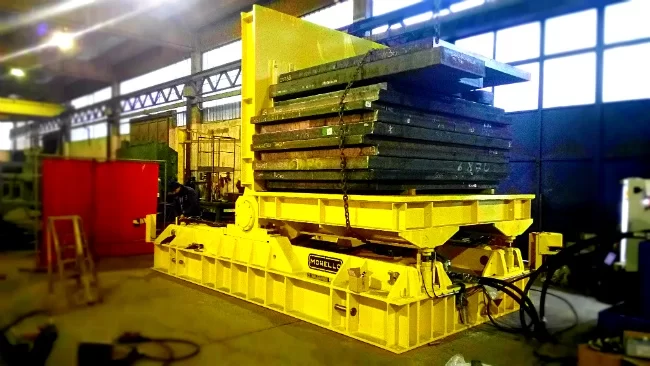
Designing custom load upender solutions for extreme manufacturing environments requires meticulous engineering considerations that go far beyond standard equipment specifications. When MORELLO’s engineers approach a new project—such as the 80-ton upender created for a German steel mill—multiple critical factors must be evaluated to ensure optimal performance and safety.

The structural integrity forms the foundation of any heavy-duty upender design. For installations handling loads of 80 tons or more, the machine itself typically requires a substantial dead weight—often exceeding 30 tons—to provide the necessary stability during operation. This includes reinforced base frames calculated to resist both static and dynamic forces without deflection.

Power requirements represent another crucial consideration. Heavy-load upenders demand substantial energy to function efficiently. MORELLO’s high-capacity systems often utilize multiple motors—such as dual Siemens units providing up to 60 kW of combined power—with redundancy features allowing continued operation at reduced speed even if one motor fails.

The hydraulic system design must address several complex variables:

  • Cylinder sizing and placement to ensure balanced force distribution
  • Pressure management to maintain precise control throughout the tilting cycle
  • Oil cooling capacity for continuous operation in demanding environments
  • Component quality selection (typically featuring Bosch Rexroth equipment) for reliability

Environmental factors also significantly impact custom upender designs. For harsh industrial settings like steel mills, additional considerations include thermal resistance, protection against contaminants, and the potential need for ATEX/IEC Ex certification in environments with explosive atmospheres.

Safety innovations in 90-degree tilting technology

Safety represents the paramount concern in industrial load handling, particularly when manipulating massive objects weighing up to 80 tons or more. MORELLO’s 90-degree tilting solutions incorporate multiple advanced safety innovations designed specifically to protect both operators and valuable materials during critical tilting operations.

Among the most significant safety advancements is the implementation of perimeter protection systems using advanced laser scanning technology. These high-precision safety scanners—featuring wide reading angles of up to 270°—create invisible safety zones around the equipment. When a person or object enters these predefined safety perimeters during operation, the system automatically triggers an immediate controlled stop, preventing potential accidents before they occur.

Redundant control systems provide another critical safety layer. Modern upenders typically offer multiple control interfaces, including both remote controllers and wired pendant panels, allowing operators to maintain safe distances during tilting operations while retaining precise control. These systems incorporate emergency stop functions accessible from multiple positions around the equipment.

Hydraulic safety features include pressure relief valves that prevent system overloads, velocity fuses that halt movement in case of hydraulic line failure, and controlled descent mechanisms that prevent unintended movement even during power loss scenarios. Additionally, properly sized oil collection systems ensure environmental protection against potential leaks.

Load security mechanisms represent another essential safety element, with adjustable stops and retention systems preventing load shifts during the tilting process. These systems are engineered with sufficient overcapacity to handle even unbalanced loads safely. The entire safety architecture complies with rigorous international standards, with options for specialized certifications like ATEX/IEC Ex for hazardous environments where explosive atmospheres may be present.

Performance optimization in electro-hydraulic tilting systems

Beyond basic functionality, modern manufacturing environments demand exceptional performance from 90-degree tilting solutions. MORELLO’s electro-hydraulic systems achieve remarkable efficiency through several key optimization strategies that enhance speed, precision, and operational reliability.

Cycle time represents a critical performance metric in production environments. Advanced upenders can complete a full 90-degree tilt cycle with an 80-ton load in approximately 60 seconds—a remarkable achievement considering the massive forces involved. This speed optimization comes from carefully calculated hydraulic flow rates and precision-sized components that balance power consumption with operational efficiency.

Motor configuration plays a crucial role in performance optimization. High-capacity systems typically employ multiple motors in parallel configurations, providing not just increased power but also built-in redundancy. This design philosophy ensures that operations can continue—albeit at reduced speed—even if one motor experiences issues, dramatically reducing costly production downtime.

Precision control represents another performance dimension where modern systems excel. Through proportional hydraulic technology and advanced electronic controls, operators can achieve millimeter-level positioning accuracy even when handling massive loads. This precision becomes particularly valuable when aligning components for subsequent manufacturing processes.

Durability under extreme conditions further distinguishes premium tilting solutions. Manufacturing environments often subject equipment to harsh conditions including temperature fluctuations, contamination from industrial processes, and continuous heavy-duty operation. MORELLO’s systems incorporate oversized hydraulic cylinders, industrial-grade components from suppliers like Bosch Rexroth, and reinforced structural elements designed specifically for these challenging environments.

The integration of these performance optimizations results in tilting systems that not only handle extreme weights but do so with exceptional efficiency, precision, and reliability—critical factors in maintaining productivity in demanding manufacturing operations.

Industry applications and customization options

The versatility of 90-degree load tilting solutions has led to their adoption across diverse industrial sectors worldwide. MORELLO’s custom upender designs have found applications in numerous manufacturing environments, each with unique requirements that demand specialized configurations.

In steel production facilities, upenders handle massive coils, plates, and structural components weighing up to 80 tons or more. These installations typically feature reinforced loading decks with thick steel plates to withstand the abrasive nature of raw steel products and the extreme concentrated weights involved. The system demonstrated in the German steel mill exemplifies this application, providing rapid reorientation capabilities for large steel components.

The aerospace industry utilizes specialized upenders for positioning aircraft components during assembly processes. These applications often require exceptional precision and gentle handling despite substantial component sizes, with custom padding and specialized securing mechanisms to protect sensitive surfaces.

Energy sector applications include the manipulation of massive turbine components, generator housings, and structural elements for power generation facilities. These implementations frequently require explosion-proof certifications (ATEX/IEC Ex) and specialized control systems for operation in potentially hazardous environments.

Customization options extend to virtually every aspect of the upender design:

  • Dimensional customization allows for loading platforms sized precisely to the materials being handled, with standard platforms starting at 2,500 x 2,500 mm but expandable to accommodate specific requirements.
  • Control interfaces can be adapted to integrate with facility-wide automation systems, including options for remote operation, programmable positioning, and integration with production management software.
  • Specialized safety features can be implemented based on specific facility requirements, from expanded detection zones to customized operator interfaces designed for specific workflow patterns.

MORELLO provides these customized 90-degree tilting solutions globally, with implementations across North America, Europe, Asia, and beyond, adapting designs to meet local regulatory requirements while maintaining consistent performance standards.

Transforming manufacturing through advanced tilting technology

The implementation of 90-degree load tilting solutions represents a significant advancement in manufacturing material handling. These sophisticated systems eliminate dangerous load suspension operations while dramatically improving efficiency and workplace safety. MORELLO’s custom-engineered upenders exemplify how thoughtful design and robust engineering can transform challenging manufacturing processes into streamlined operations.

From steel mills to aerospace facilities, the versatility and adaptability of these tilting systems continue to prove their value across diverse industrial applications. With capacities reaching 500+ tons and customization options spanning every aspect of design, today’s electro-hydraulic tilting solutions offer unprecedented capabilities for handling even the most challenging materials.

Is your manufacturing operation facing challenges with heavy load reorientation? Explore MORELLO’s complete range of custom load upender solutions to discover how our specialized 90-degree tilting technology can enhance your facility’s safety, efficiency, and production capabilities.

Battery-powered transfer trolleys: revolutionizing industrial loads

In modern industrial environments, efficient material handling is crucial for maintaining productivity and operational flow. Battery-powered transfer trolleys have emerged as a game-changing solution for moving heavy industrial loads across manufacturing facilities, warehouses, and production plants. These sophisticated pieces of equipment eliminate the need for overhead cranes, offering a more flexible, efficient, and safer alternative for transporting substantial weights.

MORELLO‘s battery-powered transfer trolleys represent the pinnacle of innovation in this field, combining robust load capacity with advanced technological features. Designed specifically for industrial applications where reliability and precision are non-negotiable, these transfer systems provide unmatched performance for operations handling loads ranging from 50 tons to over 500 tons. By integrating fully electric drive and steering systems, these trolleys deliver exceptional maneuverability in confined spaces while maintaining complete control over heavy industrial materials.

Advanced features of battery-powered transfer trolleys for industrial environments

MORELLO’s battery-powered transfer trolleys represent a significant advancement in industrial material handling technology. The fully electric drive and steering system, completely managed by a sophisticated PLC through proprietary software developed in-house, delivers unprecedented precision in load movement. This innovative approach eliminates the need for hydraulic systems, resulting in multiple operational benefits that industrial engineers and operations directors immediately recognize.

The absence of hydraulics translates to substantial advantages in daily operations:

  • Reduced maintenance requirements – Both routine and extraordinary maintenance needs decrease significantly
  • Enhanced workplace cleanliness – No hydraulic fluid means no leaks or contamination risks
  • Improved energy efficiency – Battery consumption reduces by 20-30% compared to hydraulic alternatives
  • Superior control precision – Electric systems provide more accurate positioning capabilities
  • Quieter operation – Dramatically lower noise levels improve the working environment

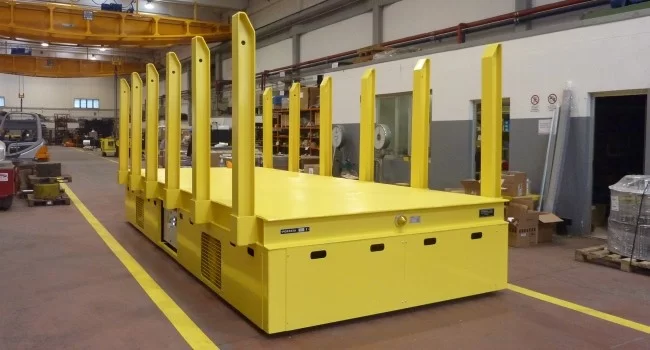
These battery-powered transfer trolleys also feature exceptional maneuverability thanks to dual steering axles, enabling navigation through tight spaces that would be inaccessible to conventional material handling equipment. The intelligent design includes removable containment beams on each long side, offering versatility between secure load containment and a fully flat deck configuration. This adaptability makes these trolleys suitable for transporting virtually any type of industrial load, regardless of shape or weight distribution.

Engineering excellence: how heavy-duty battery trolleys transform material transport

The transformative impact of heavy-duty battery trolleys on industrial material transport cannot be overstated. In traditional manufacturing environments, overhead cranes have long been the default solution for moving substantial loads. However, these systems come with inherent limitations: they require fixed infrastructure, create bottlenecks when multiple lifting operations are needed simultaneously, and often necessitate production line reconfiguration to accommodate their movement paths.

MORELLO’s battery-powered transfer trolleys fundamentally reshape this paradigm. By bringing mobility to the ground level, these sophisticated machines enable a more fluid workflow throughout manufacturing facilities. Consider a valve manufacturing operation where components weighing several tons must move between various production stations. Rather than scheduling crane time and potentially halting other processes, a battery-powered trolley can transport these components on-demand, following optimal routes that minimize travel distance and time.

The engineering excellence behind these systems lies in their balanced integration of power, control, and durability. AC motors power both drive and steering functions, delivering consistent performance even under maximum load conditions. The electronic control systems maintain precise speed regulation regardless of floor conditions or load distribution variations, ensuring safe transport at speeds up to 20 meters per minute with full capacity.

Perhaps most impressive is how these heavy-duty trolleys maintain their performance characteristics while operating solely on battery power. Advanced power management systems optimize energy consumption, allowing for extended operational periods between charging cycles—typically four hours of continuous use, with options for extended battery life available for more demanding applications.

Customization options for battery-powered transfer solutions

What truly sets MORELLO’s battery-powered transfer trolleys apart is their exceptional adaptability to specific industrial requirements. Understanding that no two manufacturing operations face identical material handling challenges, MORELLO approaches each project with a blank slate, ready to engineer solutions that precisely match the client’s needs.

The dimensional flexibility of these transfer systems is particularly noteworthy. While standard models feature platforms measuring approximately 6,000 x 2,500 mm, MORELLO can design and manufacture trolleys with custom dimensions optimized for specific load profiles or facility constraints. This adaptability extends to the superstructure design as well, where the standard configuration of removable containment beams can be modified or enhanced with specialized fixtures to secure particular load types.

Performance characteristics are equally customizable. Though the standard travel speed of 20 meters per minute with full load is sufficient for most applications, operations with more demanding throughput requirements can specify increased velocity capabilities. Similarly, the standard polyurethane wheels can be substituted with rubber alternatives when floor conditions or noise considerations dictate such a change.

Power supply customization represents another critical area where MORELLO excels. Different battery technologies can be selected based on the specific operational profile—whether that means optimizing for longer runtime between charges, faster recharging capabilities, or compatibility with existing charging infrastructure. For facilities with specialized environmental requirements, MORELLO offers ATEX, IEC Ex, and Hazloc conforming models suitable for potentially explosive atmospheres.

This commitment to customization ensures that each battery-powered transfer trolley not only meets but exceeds the specific operational requirements of its intended application, delivering maximum value and performance in industrial load transport scenarios.

Technical specifications and performance metrics of industrial transfer trolleys

When evaluating battery-powered transfer trolleys for industrial applications, understanding the technical specifications and performance metrics is essential for making informed procurement decisions. MORELLO’s industrial transfer trolleys offer impressive capabilities that establish new benchmarks in the material handling sector.

The standard model exemplifies what’s possible in modern electric transfer systems. With a capacity rating of 50 tons—expandable to over 500 tons for specialized applications—these trolleys handle loads that previously required fixed infrastructure solutions. The robust construction combines high-strength steel frameworks with precision-engineered components to ensure structural integrity even under maximum load conditions.

Power delivery comes from AC motors for both drive and steering functions. This motor configuration provides several advantages over DC alternatives, including superior torque characteristics, enhanced control precision, and reduced maintenance requirements. The electric propulsion system delivers a standard travel speed of 20 meters per minute under full load conditions—a rate that optimizes the balance between efficient material movement and operational safety.

The battery system deserves particular attention, as it represents a critical component in these autonomous transport solutions. Standard configurations provide approximately four hours of continuous operation, though extended-capacity options are available for more demanding use cases. The power management system incorporates intelligent load sensing and variable power delivery to maximize battery efficiency across different operational states.

Maneuverability specifications are equally impressive, with dual steering axles enabling navigation through congested production environments. The wheel system typically features four polyurethane wheels, selected for their optimal combination of load capacity, floor protection, and rolling resistance characteristics. For applications with specific floor surface considerations, rubber wheel alternatives can be specified without compromising performance metrics.

Safety innovations and operational advantages of electric transfer systems

Safety considerations are paramount when handling industrial loads weighing dozens of tons, and MORELLO’s battery-powered transfer trolleys incorporate multiple safety innovations that protect both personnel and materials. The fully electric architecture itself represents a significant safety advancement, eliminating the potential hazards associated with hydraulic systems such as high-pressure fluid leaks or line ruptures.

The intelligent control system continuously monitors operational parameters including speed, load distribution, and battery status. This monitoring enables automatic intervention when conditions approach predetermined safety thresholds. For instance, the system can automatically reduce speed when navigating turns with heavy loads, preventing potential tipping scenarios before they develop.

Operator interfaces are designed with both functionality and safety in mind. Control panels feature intuitive layouts with emergency stop capabilities readily accessible. For facilities requiring enhanced safety protocols, remote operation capabilities can be implemented, allowing operators to control the trolley from a safe distance during particularly challenging maneuvers.

The operational advantages extend beyond safety considerations. By transitioning from overhead crane systems to floor-based transfer trolleys, facilities gain tremendous flexibility in production layout and material flow. Unlike fixed infrastructure solutions, these mobile platforms can adapt to changing production requirements without costly facility modifications.

The environmental benefits are equally significant. The absence of internal combustion engines eliminates exhaust emissions, making these trolleys suitable for indoor operations where air quality is critical. The electric drive system’s quiet operation reduces noise pollution, creating a more comfortable working environment while potentially reducing the need for hearing protection equipment in certain applications.

For facilities operating in regulated industries, MORELLO’s compliance with international safety standards—including options for ATEX, IEC Ex, and Hazloc certification—ensures these transfer systems can be deployed even in potentially explosive atmospheres while maintaining full regulatory compliance.

Elevating industrial material handling with advanced transfer technology

Battery-powered transfer trolleys represent a significant leap forward in industrial material handling capabilities. By combining robust load capacity, exceptional maneuverability, and advanced safety features in a fully electric package, these systems deliver operational advantages that traditional material handling solutions simply cannot match. MORELLO’s commitment to engineering excellence and customization ensures that each transfer trolley perfectly aligns with the specific requirements of its intended application, whether that involves transporting valve components in a manufacturing facility or moving massive structural elements in a construction environment.

As industrial operations continue to evolve toward greater efficiency and sustainability, battery-powered transfer solutions will play an increasingly central role in optimizing material flow and maximizing productivity. If your operation handles heavy industrial loads and you’re looking for a more flexible, efficient alternative to traditional overhead crane systems, explore MORELLO’s innovative battery-powered transfer trolley solutions designed specifically for the most demanding material transport challenges.

50-ton self-propelled trailers: transform your industrial transport

In today’s demanding industrial environments, efficient material handling is critical for operational success. The 50-ton self-propelled trailer represents a significant advancement in heavy-load transportation technology, offering unparalleled flexibility and power for the most challenging industrial applications. These specialized vehicles are engineered to transport exceptional weights across manufacturing facilities, energy plants, construction sites, and logistics centers with precision and safety. Unlike conventional towing systems, self-propelled trailers combine robust load capacity with independent movement capabilities, eliminating the need for separate tractor units and maximizing maneuverability in confined spaces.

For operations managers and industrial engineers facing complex material handling challenges, these high-capacity transport solutions provide the perfect balance of strength, control, and operational efficiency. MORELLO’s innovative approach to designing and manufacturing these powerful transportation systems has revolutionized how industries approach the movement of substantial loads in diverse operational environments.

Engineering excellence behind self-propelled trailers

The remarkable capabilities of 50-ton self-propelled trailers stem from sophisticated engineering principles designed to handle extreme loads while maintaining precision control. At the core of these industrial transport solutions is a robust power system, typically featuring high-torque hydraulic or electric drive motors strategically positioned to distribute power evenly across multiple axles. This design ensures optimal weight distribution and prevents structural stress points even when carrying maximum loads.

The chassis construction employs high-tensile steel alloys specifically selected for their superior strength-to-weight ratio, allowing the trailer to support massive industrial components without excessive structural weight. The suspension systems are equally impressive, utilizing hydraulic cylinders with integrated dampening technology that absorbs shocks and maintains load stability across uneven surfaces.

What truly distinguishes these engineering marvels is their propulsion and steering mechanisms. Unlike conventional trailers, these 50-ton units feature independent wheel control, enabling precise movements in multiple directions. The sophisticated electronic control systems allow operators to execute complex maneuvers with millimeter precision, critical when positioning heavy components in manufacturing environments where space is limited and tolerances are tight.

MORELLO’s engineering approach incorporates modular design principles, allowing for customization of the drive system, load deck configuration, and control interfaces to match specific industrial requirements while maintaining the core structural integrity necessary for safe heavy load transport.

Key operational advantages for industrial material handling

The implementation of 50-ton self-propelled trailers delivers transformative benefits across industrial operations where heavy material transport is essential. These specialized vehicles provide operational advantages that conventional transport methods simply cannot match.

Perhaps the most significant benefit is the elimination of complex multi-vehicle systems. Traditional heavy transport often requires separate towing vehicles, multiple operators, and complex coordination. Self-propelled trailers consolidate these functions into a single unit, allowing one operator to execute precise movements of massive loads with intuitive controls.

Space utilization represents another critical advantage. In manufacturing facilities where floor space commands premium value, these self-propelled solutions offer superior maneuverability in confined areas. Their ability to move laterally, rotate in place, or navigate tight corners means production layouts can be optimized for process efficiency rather than transport limitations.

From a labor perspective, the operational efficiency gains are substantial. Tasks that previously required multiple personnel for spotting, guiding, and operating separate vehicles can now be accomplished by smaller teams. This reduction in labor requirements translates directly to operational cost savings while improving safety by minimizing personnel exposure to moving heavy equipment.

The versatility of these systems also enables continuous workflow optimization. Unlike fixed material handling infrastructure such as overhead cranes or rail systems, self-propelled trailers can adapt to changing production requirements without significant reconfiguration of facility layouts, providing long-term operational flexibility as manufacturing processes evolve.

Customization options for specific industry applications

The versatility of 50-ton self-propelled trailers stems from their highly adaptable design, allowing for extensive customization to meet the unique requirements of diverse industrial sectors. MORELLO’s approach to customization focuses on addressing specific operational challenges while maintaining the core capabilities that make these transport solutions exceptional.

For the energy sector, trailers can be equipped with specialized load decks designed to accommodate turbine components, generator housings, and transformer units. These customizations often include adjustable securing mechanisms that adapt to irregular component shapes while maintaining precise load balance during transport.

Manufacturing facilities benefit from deck configurations optimized for production line integration. This includes height-adjustable platforms that align perfectly with assembly stations, eliminating the need for additional lifting equipment when transferring heavy components between processes.

In aerospace applications, where component sensitivity is paramount, customization options include enhanced suspension systems with active dampening technology to minimize vibration during transport. Additionally, specialized surface materials on the load deck prevent surface damage to high-value components.

Control systems represent another significant area of customization. Options range from basic manual controls to sophisticated remote operation systems with integrated obstacle detection and automated path following capabilities. For facilities transitioning toward automation, semi-autonomous operation modes can be implemented, allowing the trailer to follow predetermined routes while maintaining human oversight for critical operations.

Environmental adaptations are also available for facilities with special requirements, including explosion-proof electrical systems for hazardous environments and corrosion-resistant materials for chemical processing facilities or marine applications.

Safety features and compliance standards in heavy load transport

When managing loads of up to 50 tons, safety becomes not just a priority but an absolute necessity. MORELLO’s self-propelled trailers incorporate comprehensive safety systems designed to protect operators, surrounding personnel, and valuable cargo during all phases of industrial transport operations.

At the foundation of these safety systems is the integrated stability control technology that continuously monitors load distribution and center of gravity. This system actively prevents tipping hazards by limiting speed and turn angles based on real-time load conditions. Should a potential stability issue be detected, the system automatically engages corrective measures or alerts the operator before a dangerous situation develops.

Perimeter protection features include proximity sensors with configurable safety zones that can automatically slow or stop the trailer when personnel or obstacles enter the detection field. These systems are complemented by high-visibility LED warning lights and directional movement alarms that activate during operation to alert nearby workers.

Emergency response capabilities are equally robust, featuring redundant emergency stop systems accessible from multiple positions around the trailer and remote shutdown options for supervisory personnel. The hydraulic and electrical systems incorporate fail-safe designs that default to a secure state in the event of component failure or power loss.

These safety features are developed in compliance with international industrial equipment standards including ISO 13849 for safety-related control systems and ANSI B56.9 for powered industrial transport. MORELLO’s commitment to safety extends beyond minimum compliance to embrace best practices developed through decades of industrial transport experience, ensuring that every 50-ton capacity self-propelled trailer delivers not just exceptional performance but industry-leading safety protection.

Real-world implementation: efficiency gains and ROI considerations

The transition to 50-ton self-propelled trailers represents a significant investment for industrial operations, making a clear understanding of efficiency gains and return on investment crucial for decision-makers. When properly implemented, these specialized transport solutions deliver measurable improvements across multiple operational metrics.

In practical applications, operations that have integrated MORELLO’s self-propelled trailers report cycle time reductions averaging 30-40% compared to traditional towing methods. This efficiency gain stems from eliminating the coupling/decoupling process and reducing the complexity of maneuvering heavy loads through production facilities. For manufacturing operations where material flow directly impacts production capacity, these time savings translate to substantial throughput improvements.

Labor utilization data shows equally impressive results, with personnel requirements typically reduced by 50-60% for equivalent transport tasks. A single operator can now accomplish what previously required a team of 3-4 workers, allowing organizations to reallocate skilled personnel to higher-value activities while maintaining or increasing transport capacity.

From an infrastructure perspective, the implementation of self-propelled trailers often eliminates the need for dedicated towing vehicles, reducing both capital expenditure and maintenance costs associated with multiple equipment types. The consolidated maintenance approach for a unified transport solution typically results in 20-25% lower lifetime maintenance costs compared to traditional multi-vehicle systems.

When evaluating ROI timelines, companies implementing 50-ton self-propelled trailers generally experience payback periods of 18-36 months, depending on utilization rates and specific operational conditions. This favorable return profile is enhanced by the extended service life of these robust systems, which regularly exceed 15 years of productive operation when maintained according to manufacturer specifications.

Transforming industrial transport through engineered excellence

The 50-ton self-propelled trailer represents the pinnacle of industrial transport engineering, offering unmatched capabilities for operations handling substantial loads. By combining robust capacity with precision control, these specialized vehicles address the complex challenges faced by modern industrial facilities while delivering measurable operational advantages. From enhanced maneuverability in confined spaces to comprehensive safety systems and customization options tailored to specific industry requirements, MORELLO‘s self-propelled trailers provide a complete solution for demanding material handling needs.

As industrial processes continue to evolve toward greater efficiency and flexibility, the implementation of advanced transport solutions becomes increasingly critical for maintaining competitive advantage. If your operation requires moving substantial loads with precision and safety, contact MORELLO’s engineering team today to discuss how our custom-designed self-propelled trailers can transform your material handling capabilities and deliver sustainable operational improvements for your specific industrial application.

Coil handling equipment: advanced solutions for heavy steel transport

In the demanding world of steel manufacturing and processing, efficient material handling is not just a convenience—it’s a critical operational necessity. Coil handling equipment represents the backbone of modern steel logistics, enabling the safe and efficient movement of massive steel coils throughout production facilities. At MORELLO, we’ve dedicated decades to perfecting customized solutions for the steel industry’s most challenging material handling requirements.

Our specialized coil handling equipment is engineered to address the unique challenges faced by steel foundries, fabricators, and processors operating in extreme environments with loads ranging from 10 to hundreds of tons. Understanding the complexities of steel intralogistics has positioned us as a trusted partner for industrial operations worldwide, where productivity, safety, and operational efficiency cannot be compromised.

Understanding modern handling equipment in steel operations

The steel industry presents unique challenges when it comes to material handling, particularly with heavy steel coils that can weigh anywhere from 10 to 35 tons or more. Modern coil handling equipment has evolved significantly to address these demanding requirements, incorporating advanced safety features, precision control systems, and robust structural designs. At its core, effective coil handling equipment must provide secure transport while preventing damage to valuable materials.

Steel coil cars, saddle-rest systems, and specialized lifting mechanisms form the foundation of comprehensive coil handling solutions. These systems must operate reliably in harsh environments characterized by extreme temperatures, metallic dust, and continuous operation schedules. The integration of these handling systems with plant-wide logistics networks has become increasingly important as manufacturers seek to optimize production flow and minimize downtime.

For steel processors and fabricators, the selection of appropriate coil handling equipment directly impacts operational efficiency, worker safety, and product quality. Modern systems incorporate features such as:

  • Precision positioning capabilities for exact coil placement
  • Adjustable saddle configurations to accommodate various coil dimensions
  • Integrated safety systems with redundant protection mechanisms
  • Software integration with plant management systems for coordinated logistics

As steel manufacturing facilities continue to prioritize operational efficiency and workplace safety, the demand for sophisticated coil handling equipment has grown substantially. These systems represent a critical link in the production chain, enabling the smooth flow of materials through processing stages while minimizing handling damage and operational interruptions.

Key challenges in steel coil logistics and their solutions

The steel industry faces several critical challenges when managing coil logistics within manufacturing environments. According to industry experts, unsecured material handling ranks among the top supply chain concerns, alongside material shortages, demand fluctuations, and rising operational costs. These challenges directly impact productivity, safety, and ultimately, profitability.

Steel coils present unique handling difficulties due to their massive weight, cylindrical shape, and susceptibility to damage. A single steel coil can weigh between 10-35 tons, making proper support and balance essential during transport. Even minor mishandling can result in costly material damage or, worse, catastrophic accidents that endanger personnel.

Environmental factors further complicate coil handling operations. Steel facilities typically operate in harsh conditions with extreme temperatures, airborne particulates, and space constraints. Equipment must withstand these challenging environments while maintaining precise operational capabilities.

MORELLO’s approach to addressing these challenges includes:

  • Custom-designed coil cars with specialized saddle rests that securely cradle coils during transport
  • Electric propulsion systems powered by advanced lithium battery technology for emissions-free operation
  • Integrated software solutions that synchronize with facility management systems
  • Structural designs engineered for the specific load requirements and environmental conditions

The implementation of purpose-built coil handling equipment delivers significant operational benefits, including enhanced workplace safety, reduced material damage, improved process flow, and decreased downtime. By addressing these fundamental challenges with engineered solutions, steel manufacturers can optimize their internal logistics while supporting their decarbonization initiatives through electric transport systems.

Advanced technologies in coil handling systems

The evolution of coil handling equipment has been accelerated by the integration of cutting-edge technologies that enhance performance, safety, and operational efficiency. Modern systems now incorporate sophisticated features that transform traditional material handling into intelligent, connected operations that support Industry 4.0 initiatives.

Lithium battery technology represents one of the most significant advancements in coil handling equipment. These power systems enable continuous operation with rapid recharging capabilities, eliminating the downtime associated with traditional power sources. More importantly, they support facility decarbonization efforts by providing zero-emission alternatives to diesel-powered equipment, creating cleaner work environments while reducing the carbon footprint of steel operations.

Software integration has become equally crucial in advanced coil handling systems. RFID transponders, real-time location systems, and automated routing protocols allow coil cars to navigate precisely to designated positions without manual intervention. This integration extends to plant-wide management systems, creating a seamless flow of information that optimizes material movement throughout the facility.

Precision hydraulic systems now provide exceptional load control, allowing operators to position heavy coils with millimeter accuracy. Omnidirectional movement capabilities enable navigation in tight spaces, eliminating the constraints of traditional fixed-path systems. Enhanced safety features, including proximity sensors, automatic braking systems, and operator warning indicators, have dramatically improved workplace safety standards.

For steel manufacturers seeking to modernize their operations, these technological advancements offer compelling advantages in terms of operational efficiency, workplace safety, and environmental sustainability. The implementation of AGVs in manufacturing environments represents the next frontier, enabling fully autonomous material handling that further reduces labor requirements while enhancing precision.

Case studies: successful coil handling implementations worldwide

MORELLO’s expertise in coil handling equipment is best illustrated through real-world implementations across diverse steel operations worldwide. These case studies demonstrate how customized solutions address specific operational challenges while delivering measurable improvements in efficiency, safety, and productivity.

In Mexico, a major steel coil manufacturing facility faced logistical challenges moving coils weighing up to 35 tons through their production process. MORELLO engineered specialized coil cars with custom saddle rests designed to cradle the cylindrical loads securely during transport. The system’s integration with the plant’s operating software created a synchronized material flow that significantly reduced handling time and eliminated damage incidents. The implementation transformed their internal logistics, creating a seamless process from production to storage.

A different approach was required for a Texas-based steel tube manufacturer that needed to move SRM mill stands weighing up to 65 tons. The solution involved a sophisticated heavy-duty trolley system using rail carts capable of moving multiple mill stands simultaneously in both parallel and perpendicular directions. The integration of RFID technology enabled precise positioning of each component, creating an intelligent material handling system that adapted to changing production requirements.

Steel foundries worldwide have benefited from MORELLO’s electric scrap bucket carts, which represent the cutting edge of steel scrap handling technology. These lithium-battery powered systems operate continuously in extreme foundry environments, eliminating pollution while providing reliable 24/7 material transport. The implementation of these systems has supported decarbonization initiatives while improving operational reliability.

Each case demonstrates how purpose-built coil handling equipment addresses the unique requirements of different steel operations. The common thread across these implementations is the meticulous attention to specific operational needs, environmental conditions, and safety requirements that characterizes MORELLO’s engineering approach.

Engineered excellence: the future of coil handling technology

The evolution of coil handling equipment continues to accelerate as manufacturers like MORELLO push the boundaries of what’s possible in heavy material transport. Looking ahead, several key trends are shaping the future landscape of steel coil handling technology, creating opportunities for unprecedented efficiency and operational excellence.

Autonomous systems represent perhaps the most transformative development in coil handling. The integration of AGVs in manufacturing environments is revolutionizing how steel producers move materials through their facilities. These self-navigating vehicles eliminate the need for dedicated operators while providing consistent, precise material placement. Advanced sensor arrays enable these systems to adapt to changing floor conditions and avoid obstacles, creating a dynamic material handling solution that responds to real-time production requirements.

Sustainability has become equally important in modern coil handling equipment design. Beyond the emissions benefits of electric propulsion, newer systems incorporate energy recovery features that capture braking energy and return it to the battery system. This approach extends operational range while reducing overall energy consumption, supporting broader corporate sustainability initiatives while lowering operational costs.

Predictive maintenance capabilities are transforming equipment reliability. Modern coil handling systems incorporate comprehensive monitoring systems that track component performance, hydraulic pressures, motor temperatures, and battery health. This data feeds into analytical platforms that can predict potential failures before they occur, enabling preventative maintenance that minimizes costly downtime.

For steel manufacturers looking to maintain competitive advantage, investing in these advanced coil handling technologies offers substantial benefits. Beyond the immediate operational improvements, these systems create the foundation for future facility optimization, data-driven decision making, and enhanced workplace safety. As the steel industry continues to evolve, sophisticated coil handling equipment will remain a critical component of successful operations.

Partner with industry leaders for optimal coil handling solutions

The efficient movement of steel coils represents a critical operational challenge for manufacturers worldwide. As we’ve explored, specialized coil handling equipment provides the foundation for safe, efficient, and sustainable material transport in even the most demanding industrial environments. MORELLO’s decades of expertise in designing and manufacturing custom material handling solutions has positioned us as a trusted partner for steel producers facing complex logistical challenges.

Our approach combines engineering excellence with deep industry knowledge, resulting in coil handling systems that deliver measurable operational benefits while supporting broader sustainability goals. Whether you’re managing a steel foundry, fabrication facility, or processing plant, our team can develop a tailored solution that addresses your specific requirements.

Ready to transform your steel coil handling operations? Contact our engineering team today to discuss your challenges and discover how our customized material handling solutions can optimize your facility’s performance, safety, and efficiency.

Self-propelled trailers: revolutionizing heavy-duty load transport

In today’s industrial landscape, the efficient movement of heavy loads represents a critical operational challenge. Self-propelled trailers for heavy-duty loads have emerged as the definitive solution for transporting massive components across manufacturing facilities, construction sites, and logistics centers. These specialized vehicles combine exceptional load capacity with remarkable maneuverability, enabling the safe transportation of components weighing up to 180 tons and beyond. Unlike conventional towing systems that require separate tractors, self-propelled trailers integrate the propulsion system directly into the transport platform, creating a unified solution that maximizes control and efficiency.

For engineers and operations directors in energy, construction, and heavy manufacturing sectors, these advanced transport systems represent not merely equipment but strategic assets that fundamentally transform material handling capabilities. MORELLO’s self-propelled trailers exemplify how innovative engineering can solve the most demanding industrial transport challenges with precision, reliability, and operational excellence.

Engineering excellence: how self-propelled trailers handle extreme loads

The engineering behind self-propelled trailers for heavy-duty loads represents a pinnacle of industrial design innovation. These specialized vehicles incorporate multiple technological systems working in harmony to move extraordinary weights with precision and safety. At the core of their capability is a robust structural framework designed with advanced stress distribution principles, allowing loads of up to 180 tons to be supported without compromising the trailer’s integrity.

The propulsion systems in these trailers utilize high-torque motors connected to specially designed wheel assemblies. This configuration creates exceptional traction while maintaining maneuverability even under extreme weight conditions. The power transmission is engineered with redundant systems to ensure operational reliability, a critical factor when handling valuable industrial components.

What truly distinguishes premium self-propelled trailers is their sophisticated weight distribution technology. Load-sensing hydraulic systems automatically adjust to maintain optimal balance and ground pressure, preventing structural stress and ensuring smooth transport across varying surfaces. This adaptive capability makes these trailers particularly valuable in manufacturing environments where floor loading limitations must be strictly observed.

The steering mechanisms deserve special attention, as they overcome the inherent challenges of directing massive weights. Multi-axle coordination systems allow for precise movements in confined spaces, while electronic control interfaces give operators fingertip command over these powerful machines. This combination of structural strength, distributed propulsion, and intelligent control systems is what enables self-propelled trailers to handle loads that would overwhelm conventional transport equipment.

Key features of industrial self-propelled trailers for heavy-duty applications

Industrial self-propelled trailers designed for heavy-duty applications incorporate several distinctive features that set them apart from conventional transport equipment. Understanding these key elements helps operations directors and engineers select the optimal solution for their specific material handling challenges.

The load capacity of these specialized trailers ranges from 30 to over 200 tons, with MORELLO’s advanced models capable of handling loads up to 180 tons with exceptional stability. This capacity is supported by reinforced chassis designs and specialized load-bearing components manufactured from high-tensile steel alloys.

A defining characteristic is the integrated power system. Unlike towed trailers, self-propelled units feature onboard power plants—either electric battery systems or diesel engines—that drive multiple independently controlled wheels. This configuration eliminates the need for separate towing vehicles while providing superior maneuverability in confined spaces.

The control systems represent another crucial feature. Modern heavy load self-propelled trailers for industrial transport incorporate programmable logic controllers (PLCs) with intuitive human-machine interfaces. These systems allow for precise speed control, load monitoring, and directional adjustments, often with wireless remote operation capabilities for enhanced operator safety.

Customizable platforms address specific transport requirements. These may include adjustable width decks, specialized securing mechanisms, tilt functions, or integration with existing plant systems. The adaptability of self-propelled trailers makes them particularly valuable in manufacturing environments where loads vary in size, shape, and weight distribution.

Finally, advanced safety features include emergency stop systems, overload protection, speed governors, and obstacle detection technology—all essential when moving massive components through active industrial environments.

Battery-powered vs. diesel self-propelled trailers: choosing the right solution

When selecting self-propelled trailers for heavy-duty loads, the power source represents a critical decision point with significant operational implications. The choice between battery-electric and diesel-powered systems depends on several factors specific to your industrial environment and transport requirements.

Battery-powered trailers, like MORELLO’s 180-ton electric model, offer compelling advantages for indoor operations. They produce zero emissions at the point of use, making them ideal for enclosed manufacturing facilities where air quality is a concern. The absence of exhaust fumes also makes them suitable for industries with strict contamination controls, such as electronics or pharmaceutical manufacturing. These electric systems operate with significantly reduced noise levels, creating a more comfortable working environment and reducing noise pollution.

Conversely, diesel-powered self-propelled trailers excel in scenarios requiring extended operational periods without downtime. They eliminate battery charging cycles and can be quickly refueled, making them suitable for multi-shift operations or applications where continuous availability is essential. Diesel systems typically deliver higher torque at lower speeds, which can be advantageous when initiating movement with extremely heavy loads. They also perform reliably in outdoor environments and variable temperature conditions where battery performance might be affected.

Operational range represents another consideration. Battery systems typically provide 6-8 hours of operation before requiring recharging, while diesel units can run continuously with fuel replenishment. However, modern lithium-ion battery technologies are narrowing this gap with faster charging capabilities and extended cycle life.

The long-term cost analysis also differs significantly. Battery systems generally have higher initial acquisition costs but lower operational expenses, while diesel systems offer lower upfront investment but higher lifetime fuel and maintenance costs. Your specific application requirements will ultimately determine which power system delivers the optimal balance of performance, economics, and environmental impact.

Customization options for self-propelled trailers for industrial transport

The true value of self-propelled trailers for heavy-duty loads often lies in their adaptability to specific industrial requirements. MORELLO’s engineering approach centers on creating customized transport solutions that precisely match the unique challenges of each application environment. This customization extends across multiple design elements to optimize performance for particular load types and operational scenarios.

Platform configuration represents a primary customization area. Load platforms can be engineered with specific dimensions, surface treatments, and securing mechanisms designed for particular component shapes. For manufacturing environments handling machine tools, specialized cradles with precise fitment points ensure stability during transport. Similarly, the nuclear industry requires platforms with radiation-resistant materials and specialized containment features.

Directional control systems offer another customization pathway. While standard self-propelled trailers typically provide forward/reverse movement with turning capability, specialized applications may benefit from omnidirectional movement systems. These sophisticated steering arrangements allow the trailer to move sideways, rotate in place, or follow complex paths—particularly valuable when positioning large components in confined spaces.

Integration capabilities with existing factory systems represent an increasingly important customization area. Modern heavy load self-propelled trailers can incorporate communication interfaces that connect with manufacturing execution systems (MES) or warehouse management software. This connectivity enables automated routing, scheduling, and operational monitoring that enhances overall facility efficiency.

Specialized attachments further extend functionality. These may include hydraulic lifting mechanisms, tilting platforms, roll-on/roll-off capabilities, or custom fixtures designed for specific component geometries. When transporting sensitive equipment, customized suspension systems can be incorporated to minimize vibration and protect valuable cargo during movement.

Through these customization pathways, self-propelled trailers transform from general transport equipment into precisely engineered solutions for specific industrial material handling challenges.

Real-world applications of MORELLO’s self-propelled trailer technology

MORELLO’s self-propelled trailers have transformed heavy material handling across diverse industrial sectors, with each application showcasing the versatility and precision of these specialized transport systems. Examining these implementations provides valuable insight into how this technology solves complex logistical challenges.

In heavy manufacturing, MORELLO’s 180-ton self-propelled trailers have revolutionized machine tool transport within production facilities. These battery-powered units navigate between machining stations, assembly areas, and testing facilities, maintaining precise positioning control despite carrying massive metal components. The elimination of overhead cranes for these movements has significantly reduced production bottlenecks while enhancing workplace safety.

The energy sector utilizes these trailers for transporting turbine components, generator assemblies, and transformer units. The precise maneuverability allows positioning of these critical components within millimeter tolerances—essential when aligning connection points during installation. The self-contained power systems eliminate the need for separate towing equipment in restricted spaces like power generation facilities.

Aerospace manufacturing benefits from MORELLO’s customized trailers designed for aircraft component transport. These specialized units feature adaptive securing systems that protect delicate components while providing the structural support needed for large airframe sections. The electric propulsion systems eliminate contamination concerns in clean manufacturing environments.

In precast concrete production, self-propelled trailers transport massive structural elements from casting beds to curing areas and ultimately to shipping zones. The distributed load-bearing design prevents damage to freshly produced components, while precise control systems navigate through production facilities with minimal clearance.

The nuclear industry employs specially shielded MORELLO’s trailers for moving sensitive equipment and materials within controlled environments. These applications demonstrate how self-propelled trailer technology can be adapted to the most demanding safety and regulatory requirements while maintaining exceptional performance characteristics.

Advancing industrial material handling with MORELLO’s engineered solutions

Self-propelled trailers for heavy-duty loads represent a critical advancement in industrial material handling technology, enabling operations that would be impossible with conventional transport methods. As manufacturing and construction processes continue to evolve toward larger components and more complex assemblies, the need for specialized transport solutions becomes increasingly vital. MORELLO’s engineering philosophy—combining robust load capacity with precise control systems and customizable configurations—delivers the performance and reliability demanded by today’s most challenging industrial environments.

Whether your operation requires battery-powered units for indoor use, diesel systems for extended operation, or specialized configurations for unique load profiles, MORELLO’s design expertise ensures an optimal solution for your specific requirements. The proven performance of these self-propelled systems across diverse industrial applications demonstrates their value as strategic assets that enhance productivity, safety, and operational efficiency.

Ready to transform your heavy material handling capabilities? Explore MORELLO’s complete range of self-propelled trailers and discover how our customized transport solutions can address your most challenging movement requirements.

Self-propelled trailers for rail-bound transport: advanced solutions

In the demanding world of industrial material handling, efficient transport solutions are essential for maintaining productivity and operational flow. Self-propelled trailers for rail-bound transport represent one of the most reliable and effective systems for moving heavy loads within industrial facilities. These specialized vehicles combine the stability of rail guidance with the autonomy of self-propulsion, creating an optimal solution for transporting substantial weights with precision and safety.

MORELLO has pioneered advancements in this technology, delivering customized rail-guided self-propelled trailers that address the unique challenges faced by industries dealing with oversized components, heavy machinery, and bulky materials. By eliminating the need for external pulling mechanisms while maintaining the directional stability of rail systems, these trailers offer unparalleled control and efficiency for operations where precise positioning and consistent movement paths are critical. This innovative approach to material handling has revolutionized workflows in manufacturing facilities, energy plants, and logistics centers worldwide.

The evolution of rail-guided transport solutions for industrial applications

Rail-guided transport systems have undergone significant transformation since their industrial inception. Initially developed as simple track-based carts pulled by manual labor or basic mechanical means, these systems have evolved into sophisticated self-propelled trailers for rail-bound transport that combine precision movement with substantial load-bearing capabilities.

The fundamental concept behind rail-guided transport remains consistent: utilizing fixed pathways to ensure predictable, controlled movement of materials. However, modern iterations have integrated advanced propulsion systems, eliminating the need for external traction sources while maintaining the inherent benefits of rail guidance.

This evolution has been driven by industrial demands for:

  • Greater load capacity – Contemporary rail-guided self-propelled trailers can handle loads exceeding 30 tons while maintaining precise positioning capabilities
  • Enhanced safety protocols – Reducing the risk factors associated with transporting heavy or oversized materials
  • Improved operational efficiency – Minimizing the personnel required while maximizing throughput
  • Integration with modern manufacturing systems – Including compatibility with digital monitoring and control systems

The progression from basic rail carts to advanced self-propelled systems represents a response to increasing industrial complexity. Industries dealing with heavy components like steel manufacturing, energy production, and aerospace have particularly benefited from these advancements, as they provide reliable transport solutions for materials that would be challenging to move through conventional means.

How self-propelled trailers enhance efficiency in rail-bound material handling

Self-propelled trailers for rail-bound transport represent a significant advancement in material handling technology, offering substantial efficiency improvements over traditional towed systems. The integration of onboard propulsion systems creates an autonomous transport solution that addresses multiple operational challenges simultaneously.

The efficiency gains of these systems stem from their ability to operate independently while maintaining the directional stability provided by rail guidance. By eliminating the need for separate towing vehicles, facilities can reduce equipment redundancy and streamline their operational footprint. This consolidation of functionality translates directly into space optimization within manufacturing environments where floor space carries premium value.

Battery-powered self-propelled rail trailers, like those engineered by MORELLO, deliver additional efficiency benefits through their zero-emission operation. This characteristic makes them ideal for indoor applications where air quality considerations are paramount, such as in food processing facilities or clean manufacturing environments.

The precision control afforded by these systems also reduces product damage and handling errors. With consistent acceleration, deceleration, and positional accuracy, rail-guided self-propelled trailers minimize the risk of collisions or improper material placement that can lead to costly production delays.

Perhaps most significantly, these trailers can be integrated into semi-automated or fully automated production workflows. Their predictable movement patterns and compatibility with electronic control systems allow them to function as reliable components within larger material handling ecosystems, supporting just-in-time manufacturing processes and continuous production environments where consistent material flow is critical to operational success.

Technical innovations in MORELLO’s rail-guided self-propelled trailers

MORELLO has established itself as an industry leader through continuous technical innovation in rail-guided self-propelled trailers. The company’s SBA-4R model exemplifies this commitment to engineering excellence, offering a 30-ton capacity solution specifically designed for tube handling applications.

What distinguishes MORELLO’s rail-guided self-propelled trailers is their comprehensive integration of advanced technologies that enhance both performance and safety. The propulsion system utilizes high-efficiency electric motors powered by sophisticated battery systems that deliver consistent torque across various load conditions while maintaining extended operational periods between charging cycles.

The control systems incorporate precision speed regulation that allows for smooth acceleration and deceleration, critical when transporting sensitive or unstable loads. This is achieved through variable frequency drives that modulate power delivery based on real-time operational requirements.

MORELLO’s rail trailers also feature customized load-bearing platforms engineered to accommodate specific material handling challenges. For the tube handling application, this includes specialized cradle designs that maintain proper weight distribution while preventing unwanted movement during transport.

The structural engineering of these trailers reflects MORELLO’s expertise in heavy-duty applications, utilizing high-strength steel alloys and precision manufacturing techniques to ensure longevity even under the most demanding industrial conditions. This robust construction, combined with the inherent stability of rail guidance, creates a transport solution that maintains reliable performance throughout extended service lives while requiring minimal maintenance intervention.

Industry applications and case studies of rail-bound transport systems

Self-propelled trailers for rail-bound transport have proven their value across diverse industrial sectors, with each application showcasing the versatility and effectiveness of these specialized material handling solutions. The implementation of these systems has transformed operations in several key industries.

In the energy sector, a major turbine manufacturer implemented MORELLO’s rail-guided self-propelled trailers to transport massive generator components between assembly stations. The precise positioning capabilities allowed technicians to align components with micrometric accuracy, reducing assembly time by approximately 40% while virtually eliminating the risk of damage during transport.

Steel manufacturing facilities represent another prominent application area. A leading steel producer integrated rail-bound transport systems to move heavy steel coils weighing up to 30 tons through their processing facility. The controlled movement path ensured consistent material flow while the self-propelled functionality eliminated the need for dedicated towing vehicles in an already congested production environment.

Aerospace manufacturing has similarly benefited from these systems. One aircraft manufacturer utilizes rail-guided trailers to transport wing assemblies through various production stages. The stability provided by the rail guidance prevents unwanted flexing of these sensitive components, while the self-propelled capability allows for precise speed control during critical alignment operations.

Precast concrete production represents yet another successful implementation. A concrete manufacturer deployed rail-bound transport systems to move large structural elements from forming areas to curing chambers. The high load capacity and smooth acceleration characteristics prevent cracking or structural weakening during the critical early curing phase when concrete remains particularly vulnerable to movement stress.

These diverse applications demonstrate how rail-guided self-propelled trailers provide tailored solutions for industries where precision movement of substantial loads directly impacts production quality and operational efficiency.

Comparing self-propelled rail trailers with traditional material handling solutions

When evaluating material handling options for heavy industrial applications, self-propelled trailers for rail-bound transport offer distinct advantages over conventional solutions. Understanding these comparative benefits helps operational decision-makers select the most appropriate system for their specific requirements.

Overhead crane systems have traditionally dominated heavy material handling environments. While these provide excellent vertical lifting capabilities, they present significant limitations in horizontal transport distances and often create workflow bottlenecks when multiple departments require simultaneous access. Rail-guided self-propelled trailers complement crane systems by efficiently handling horizontal movement, creating an integrated material flow that maximizes the strengths of both technologies.

Conventional tractor-trailer combinations offer flexibility but lack the precision positioning capabilities of rail-guided systems. The inherent directional stability of rail guidance eliminates tracking errors that commonly occur with free-moving wheeled transport, particularly when handling asymmetrical or top-heavy loads. This translates to fewer positioning adjustments and reduced handling time.

Automated guided vehicles (AGVs) provide similar autonomy to self-propelled rail trailers but require complex navigation systems and clear pathway maintenance. Rail-guided solutions simplify the navigation challenge while typically offering substantially higher load capacities than comparable AGVs. This makes rail-bound transport particularly advantageous for industries dealing with exceptionally heavy components.

From a cost perspective, rail-guided self-propelled trailers generally require higher initial infrastructure investment compared to wheel-based systems. However, this is offset by lower long-term operational costs due to reduced maintenance requirements, lower energy consumption per ton moved, and extended service life. The elimination of floor damage common with heavy wheeled transport further enhances the long-term economic advantage of rail-guided systems in high-cycle applications.

Advancing industrial transport with rail-guided solutions

Self-propelled trailers for rail-bound transport represent a specialized yet highly effective solution for industries facing challenging material handling requirements. By combining the precision of rail guidance with autonomous propulsion capabilities, these systems deliver exceptional performance in environments where load stability, positioning accuracy, and operational efficiency are paramount. MORELLO’s continued innovation in this field has produced rail-guided self-propelled trailers that address the specific needs of diverse industrial applications, from energy production to heavy manufacturing.

As industries continue to seek optimized material flow solutions that enhance productivity while maintaining safety standards, rail-bound transport systems offer a proven technology path with demonstrable benefits across multiple performance metrics. The customization capabilities and engineering expertise that MORELLO brings to each project ensure that these specialized transport solutions precisely match operational requirements.

Ready to transform your heavy material handling operations? Explore MORELLO’s custom material handling solutions and discover how our rail-guided self-propelled trailers can optimize your industrial transport challenges.

Battery-powered industrial trailers: revolutionizing rail-bound material transport

In modern manufacturing environments where efficiency, sustainability, and reliability are paramount, battery-powered industrial trailers for rail-bound material transport represent a significant advancement in heavy load handling technology. These specialized vehicles combine the precision of rail-guided movement with the autonomy of battery power, offering industrial operations a versatile solution for transporting substantial loads across manufacturing facilities, foundries, and production plants.

MORELLO’s industrial rail trailers exemplify this innovation, designed specifically to handle loads up to 60 tons while maintaining precise control and operational flexibility. As industries worldwide seek to optimize their material handling processes while reducing their environmental footprint, these battery-powered transport systems deliver a compelling alternative to traditional towing mechanisms, diesel-powered equipment, and manual handling operations. For facility managers and industrial engineers facing complex material movement challenges, understanding the capabilities and applications of these specialized trailers opens new possibilities for operational efficiency.

The engineering behind battery-powered industrial trailers for rail-bound material transport

Battery-powered indusrial trailers for rail-bound material transport represent a sophisticated integration of mechanical engineering, power management systems, and industrial design principles. These specialized vehicles operate on fixed rail tracks while drawing power from onboard battery systems, eliminating the need for external power sources or tethered connections during operation.

The core engineering components that make these systems effective include high-capacity lithium-ion battery packs, precision electric drive motors, and intelligent control systems. MORELLO’s engineering approach focuses on creating a balanced power-to-weight ratio that maximizes operational runtime while maintaining the structural integrity needed to transport loads up to 60 tons.

The propulsion system typically features direct-drive electric motors connected to specially designed wheel assemblies that maintain optimal contact with the rail infrastructure. This configuration ensures smooth acceleration, precise speed control, and sufficient torque for moving heavy industrial loads even on slight inclines.

What sets advanced industrial rail trailers apart is their regenerative braking capability, which recovers energy during deceleration and returns it to the battery system. This engineering feature significantly extends operational runtime between charging cycles and contributes to the overall efficiency of the material transport system.

Power management systems continuously monitor battery status, motor performance, and load conditions to optimize energy consumption while preventing system overload. These intelligent systems provide operators with real-time data on remaining operational capacity and maintenance requirements, ensuring reliable performance in demanding industrial environments.

Key advantages of rail-mounted battery trailers for heavy industrial loads

Rail-mounted battery trailers deliver substantial operational benefits that make them increasingly preferred for heavy industrial material transport. These specialized vehicles combine the predictability of rail guidance with the flexibility of self-powered operation, creating a uniquely efficient solution for manufacturing environments.

The most significant advantage is the exceptional precision in load positioning. By utilizing rail infrastructure, these trailers follow predetermined paths with millimeter accuracy, critical when transporting sensitive components or positioning heavy loads in confined spaces. This precision reduces the risk of collisions with infrastructure and improves overall facility safety.

Environmental considerations also favor battery-powered industrial rail trailers. With zero local emissions, they improve air quality within enclosed manufacturing spaces while reducing the overall carbon footprint of material handling operations. The absence of combustion engines also eliminates noise pollution, creating better working conditions for facility personnel.

From a maintenance perspective, battery-powered systems offer substantial advantages over hydraulic or combustion alternatives. With fewer moving parts and no hydraulic fluids, these systems require less frequent maintenance interventions and reduce the risk of fluid leaks that could contaminate production environments or finished products.

Perhaps most compelling is the operational autonomy these systems provide. Unlike tethered electric systems or manually operated equipment, battery-powered rail trailers can operate continuously across shifts without refueling or recharging delays when implemented with appropriate battery management strategies. This continuous operation capability translates directly to improved throughput and better utilization of manufacturing capacity.

Applications and industries benefiting from rail-bound battery transport systems

Rail-bound battery transport systems have found their niche across numerous heavy industries where predictable, high-capacity material movement is essential. The versatility of these systems makes them valuable assets in multiple industrial contexts.

In foundries and metal processing facilities, these trailers excel at transporting molten metal, finished castings, and heavy dies between production stations. The rail guidance system ensures predictable movement patterns in environments where precision is critical and where the consequences of collisions could be catastrophic. MORELLO’s implementation of 60-ton capacity industrial rail trailers in foundry environments demonstrates how these systems can handle extreme loads while maintaining operational safety.

Precast concrete manufacturing represents another ideal application. The substantial weight of concrete elements and the need to move them between curing areas, finishing stations, and loading zones makes rail-mounted battery trailers particularly valuable. Their ability to handle loads exceeding 50 tons while maintaining precise positioning capabilities significantly reduces the risk of product damage during transport.

Heavy equipment manufacturing facilities utilize these systems to move partially assembled components between workstations. The rail infrastructure provides a defined transport network throughout the facility, while the battery-powered propulsion eliminates the need for external power connections that could impede workflow flexibility.

Wind energy component production facilities particularly benefit from rail-bound systems when moving massive turbine components. The combination of high load capacity and precise positioning capabilities makes these trailers ideal for transporting nacelles, hubs, and other oversized components through the production process with minimal risk of damage.

Technical specifications and customization options for maximum efficiency

When evaluating battery-powered industrial trailers for rail-bound material transport, understanding the technical specifications and available customization options is essential for selecting a solution that aligns perfectly with operational requirements. MORELLO’s SBA-4R series exemplifies how these systems can be tailored to specific industrial needs.

The core technical parameters that define these systems include:

  • Load capacity: Ranging from 20 to 60+ tons, with structural reinforcements and power systems scaled accordingly
  • Platform dimensions: Customizable to accommodate specific load profiles, with standard configurations starting at 6000 x 3500 mm
  • Battery specifications: High-capacity lithium-ion or advanced lead-acid systems sized to provide 8-12 hours of continuous operation
  • Drive system: Electric motors delivering variable torque output based on load requirements and operational conditions
  • Control interface: Options ranging from simple manual controls to sophisticated remote operation systems and integration with facility management software

Beyond these fundamental specifications, manufacturers like MORELLO offer extensive customization options to address specific operational challenges. These include specialized load securing mechanisms, integrated weighing systems for load verification, and environmental protection packages for outdoor operation.

Advanced control systems can incorporate obstacle detection, programmable movement paths, and integration with broader facility automation infrastructure. For operations requiring maximum uptime, quick-change battery systems allow for immediate power source replacement without extended downtime for recharging.

The rail interface itself can be customized to accommodate existing infrastructure or designed as part of a comprehensive material handling solution, with options for curved paths, switches, and elevation changes to navigate complex facility layouts.

Implementation strategies and ROI considerations for industrial facilities

Implementing industrial rail trailers requires strategic planning to maximize return on investment while minimizing operational disruption. Successful implementation begins with a comprehensive assessment of current material flow patterns, identifying bottlenecks and inefficiencies that could be addressed through rail-guided transport solutions.

Facility managers should consider a phased implementation approach, starting with high-impact transport routes where the precision and reliability of rail-bound systems would deliver immediate operational benefits. This targeted deployment allows for validation of the technology’s effectiveness before expanding to broader facility applications.

When calculating ROI, it’s essential to look beyond the initial equipment acquisition costs to consider the comprehensive financial impact. Direct labor savings from reduced manual handling operations typically represent the most visible benefit, but secondary advantages often deliver even greater value. These include reduced product damage during transport, decreased maintenance costs compared to conventional transport equipment, and improved production throughput from more consistent material delivery.

Energy efficiency contributes significantly to the long-term ROI equation. Battery-powered rail systems typically consume 30-40% less energy than equivalent diesel-powered transport solutions, with this differential increasing as energy costs rise. Additionally, the elimination of fossil fuel infrastructure and storage requirements reduces both capital and compliance costs.

Working with an experienced provider like MORELLO ensures that implementation challenges are anticipated and addressed proactively. Their engineering teams can assist with rail infrastructure design, integration with existing production systems, and operator training programs to accelerate the transition to rail-bound transport. This collaborative approach minimizes implementation risks while accelerating the realization of operational benefits and financial returns.

Advancing industrial transport efficiency with rail-bound battery systems

Battery-powered industrial trailers for rail-bound material transport represent a significant advancement in industrial handling technology, combining the precision of rail guidance with the flexibility of autonomous power. As manufacturing facilities face increasing pressure to optimize operations while reducing environmental impact, these specialized transport solutions deliver compelling advantages across multiple industries. From foundries and metal processing to precast concrete and heavy equipment manufacturing, the ability to move substantial loads with precision and reliability translates directly to improved operational efficiency and reduced production costs.

MORELLO’s expertise in designing and manufacturing customized material handling solutions positions them as an ideal partner for facilities considering the implementation of battery-powered industrial rail trailers. Their engineering team works closely with clients to develop transport systems precisely tailored to specific operational requirements and facility constraints. To explore how battery-powered rail transport solutions could transform your material handling operations, contact MORELLO’s engineering team for a personalized consultation and discover the potential efficiency gains waiting to be unlocked in your facility.