
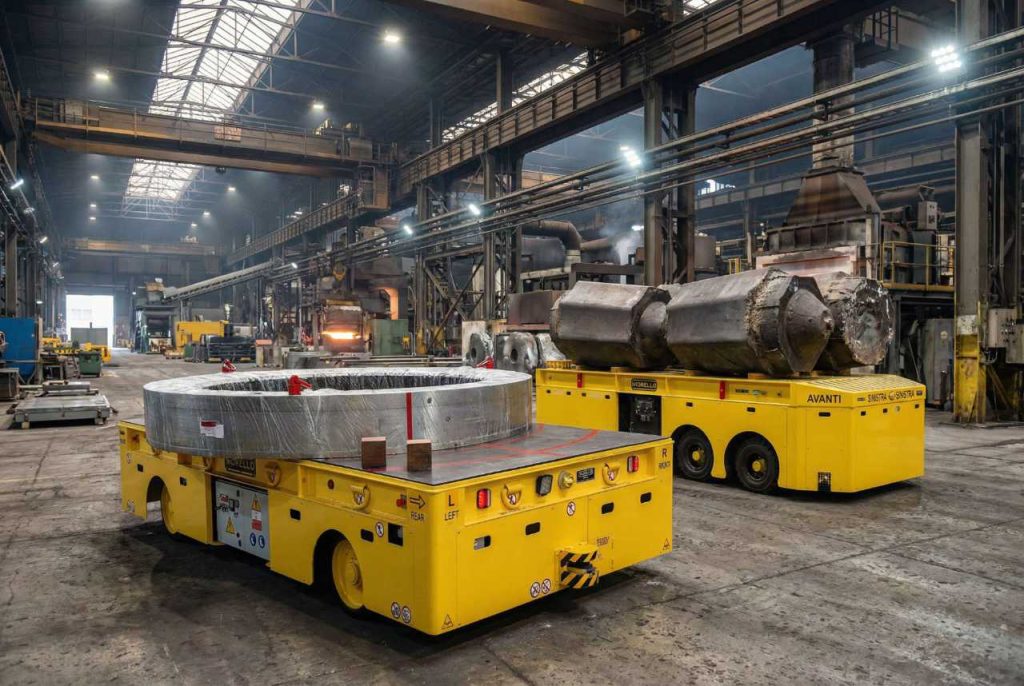
Selecting the right heavy-duty material handling cart requires careful evaluation of multiple technical and operational factors. When loads exceed several tons and operations span critical sectors like aerospace, military, and wind energy, the decision becomes even more significant. Transfer cart selection criteria include evaluating load capacity requirements, power systems, operating conditions, and long-term reliability. Understanding these parameters helps prevent costly mistakes and ensures seamless integration into existing workflows.
Industrial facilities moving components weighing dozens of tons cannot afford equipment failures or inefficient solutions. The right transfer cart optimizes material flow, reduces operational costs, and enhances workplace safety. From battery-powered systems to rail-guided platforms, each configuration offers distinct advantages depending on your specific application. Evaluating factors such as terrain conditions, frequency of use, maintenance requirements, and customization options will guide you toward the most effective solution for your heavy-duty material handling needs.
Load capacity and structural requirements for industrial operations
How much weight do your operations actually need to move? This question forms the foundation of any transfer cart selection process. Heavy-duty material handling carts are engineered to transport loads ranging from a few tons to several hundred tons, making capacity evaluation critical. Aerospace manufacturers moving fuselage sections, military facilities transporting armored vehicles, and wind energy plants handling turbine blades each face unique load challenges that demand precise engineering solutions.
The structural integrity of a transfer cart depends on more than just maximum weight capacity. Distribution of load across the platform, center of gravity considerations, and dynamic forces during acceleration and deceleration all impact performance. A cart rated for fifty tons might fail prematurely if the load concentrates on a small area rather than spreading evenly across the deck. Consider whether your materials require flat platforms, custom fixtures, or specialized cradles to maintain stability during transport.
Frame construction materials directly influence durability and longevity. Heavy-gauge steel frames with reinforced cross-members provide superior strength for extreme applications, while lighter aluminum alloys may suffice for moderate loads in controlled environments. Wheel configuration also matters significantly—four-wheel designs offer maneuverability, while multi-axle configurations distribute weight more effectively for heavier loads. The deck height affects loading efficiency, particularly when interfacing with existing conveyors, cranes, or production equipment. Understanding these structural elements ensures your investment delivers reliable performance throughout demanding operational cycles.
Power systems and energy efficiency in transfer cart selection
What drives your material handling operations—batteries, cables, or diesel engines? The power system you select fundamentally shapes operational flexibility, maintenance requirements, and long-term costs. Battery-powered transfer carts have become increasingly popular for their clean operation, reduced noise levels, and elimination of trailing cables that can create workplace hazards. Modern lithium-ion battery technology provides extended runtime and faster charging cycles compared to traditional lead-acid solutions, though initial investment costs remain higher.
Cable-powered systems deliver continuous operation without recharging downtime, making them ideal for high-frequency applications where carts run constantly throughout shifts. However, cable management systems add complexity and limit operational range. Rail-based electrification offers another continuous power option, with conductor rails supplying electricity as the cart moves along fixed pathways. This configuration works exceptionally well for repetitive point-to-point transfers in manufacturing environments.
Diesel or combustion-powered carts provide maximum flexibility for outdoor applications or facilities lacking electrical infrastructure. They excel in harsh environments where extreme temperatures might compromise battery performance. However, exhaust emissions restrict their use in enclosed spaces, and fuel costs add ongoing operational expenses. Energy efficiency varies dramatically between power systems—electric models typically convert seventy to ninety percent of input energy into useful work, while combustion engines operate at thirty to forty percent efficiency. Calculate your duty cycle, available charging or refueling infrastructure, and environmental constraints to determine which power system aligns with your operational profile and sustainability goals.
Automation features and control technologies for heavy-duty material handling carts
Could your material handling operations benefit from autonomous navigation? Advanced control technologies are transforming how heavy-duty material handling carts operate within industrial facilities. Traditional manual operation via pendant controls or onboard operator stations still serves many applications effectively, but automated systems offer compelling advantages for repetitive transport tasks. Laser-guided navigation systems use reflective targets positioned throughout facilities to create precise travel paths, eliminating human error and improving consistency.
Natural navigation represents the cutting edge of transfer cart automation, utilizing environmental scanning rather than fixed infrastructure. These systems map facility layouts using lidar sensors and cameras, calculating optimal routes in real-time while avoiding obstacles. The technology adapts to changing floor plans without reprogramming, providing flexibility as production layouts evolve. Magnetic tape guidance offers a middle-ground solution—less expensive than laser systems while maintaining accurate path following for fixed routes.
Remote control capabilities extend operational possibilities beyond line-of-sight operation. Radio frequency controls allow operators to position carts precisely from safe distances, particularly valuable when handling hazardous materials or working in confined spaces. Integrated safety systems including emergency stop functions, collision avoidance sensors, and audible warnings protect both personnel and equipment. Some advanced platforms incorporate predictive maintenance monitoring, tracking motor performance, battery health, and mechanical wear to schedule service before failures occur. When evaluating automation features within your transfer cart selection criteria, consider not just current needs but future scalability—can the system expand as your facility grows or production demands increase?
Customization options and after-sales support considerations
Does your operation require standard equipment or specialized solutions? Off-the-shelf transfer carts serve general material handling needs adequately, but complex industrial applications often demand customized designs. Custom deck dimensions accommodate oversized components, while specialized fixtures secure irregularly shaped loads during transport. Explosion-proof configurations enable safe operation in hazardous environments where flammable materials or dust create risks. Temperature-resistant components extend functionality into foundries, coating operations, or refrigerated storage facilities where standard equipment would fail.
The relationship with your equipment supplier extends far beyond the initial purchase. Comprehensive after-sales support distinguishes manufacturers who view customers as long-term partners from those focused solely on transactions. Field testing and commissioning services ensure proper integration with existing systems before full deployment. Operator training programs reduce accidents and maximize equipment capabilities, while rapid response maintenance agreements minimize costly downtime when issues arise. Annual preventive maintenance contracts identify potential problems before they escalate into failures that halt production.
Spare parts availability critically impacts long-term operational continuity. Manufacturers maintaining substantial parts inventories restore equipment to service quickly, while those requiring extended lead times for components leave operations vulnerable. Rental options provide flexibility for testing configurations before committing to purchase, or for handling temporary capacity increases without permanent investment. For operations moving materials weighing multiple tons across critical production processes, choosing a manufacturer committed to ongoing support proves as important as the technical specifications of the equipment itself. Evaluate warranty terms, service network coverage, and customer references to assess the true value proposition beyond initial acquisition costs.
Investing in reliable heavy-duty material handling solutions
Evaluating transfer cart selection criteria requires balancing technical specifications with real-world operational demands. Load capacity, power systems, automation capabilities, and customization options all contribute to finding equipment that enhances productivity rather than creating bottlenecks. The right heavy-duty material handling carts transform logistics from a challenge into a competitive advantage, enabling efficient movement of components weighing multiple tons across demanding industrial environments.
Morello specializes in engineering battery-powered carts and customized material handling solutions for the world’s most demanding applications. From aerospace manufacturing to military installations and wind energy facilities, our transfer carts handle loads exceeding hundreds of tons with precision and reliability.
Our engineering team designs equipment specifically for your operational requirements, supported by comprehensive training, maintenance services, and rapid technical assistance. Whether you need standard configurations or fully customized platforms, Morello delivers solutions backed by decades of heavy industrial experience. Contact us to discuss your material handling challenges and discover how our transfer carts can optimize your operations.