
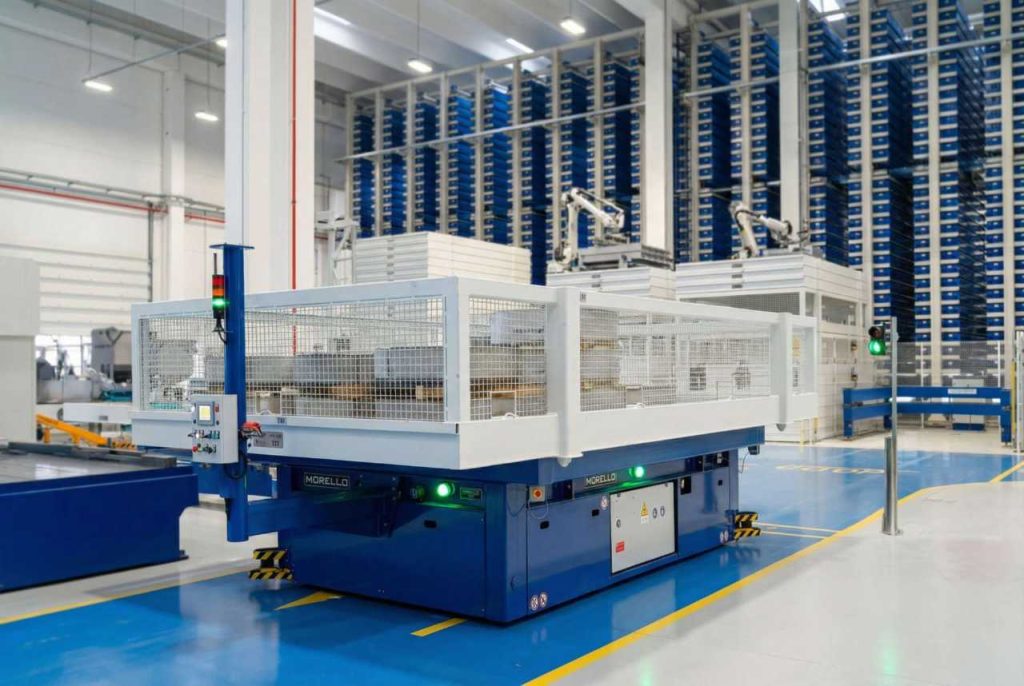
Moving heavy loads across industrial facilities requires more than robust equipment—it demands a thorough understanding of safety-compliant transfer carts and material handling standards. When you’re transporting materials weighing several tons through aerospace hangars, military installations, or wind energy production plants, compliance with safety regulations isn’t optional; it’s fundamental to protecting your workforce, preserving your valuable loads, and maintaining operational continuity.
Transfer carts compliant with material handling safety standards incorporate multiple layers of protection designed to minimize risk at every stage of operation. These standards address operator safety, protect nearby personnel from potential hazards, ensure load stability during transport, and safeguard your facility infrastructure from damage. Understanding which safety features matter most for your specific application helps you select equipment that not only meets regulatory requirements but also delivers the reliability and peace of mind your operations demand. The right transfer cart solution balances power, precision, and protection in ways that transform how you approach heavy-duty material handling challenges.
Understanding safety requirements for heavy-duty transfer equipment
What makes a transfer cart truly safe for industrial environments? The answer lies in understanding the comprehensive framework that governs safety-compliant transfer carts and material handling standards. These regulations aren’t arbitrary bureaucratic requirements—they represent decades of industrial experience and accident prevention research distilled into practical guidelines that protect lives and assets.
Heavy-duty transfer equipment operates in demanding environments where the consequences of failure can be catastrophic. When you’re moving loads measured in tons rather than pounds, every design decision carries weight. Safety standards address fundamental aspects like structural integrity, ensuring your cart can handle rated capacities without deformation or failure. They mandate proper braking systems that can stop fully loaded carts within safe distances, even on inclined surfaces.
Electrical safety standards govern power systems, requiring proper insulation, grounding, and protection against overload conditions. For battery-powered systems, this includes safeguards against thermal runaway and proper ventilation to prevent gas accumulation. Diesel-powered units must meet emission standards while incorporating fire suppression capabilities. These requirements aren’t suggestions—they’re essential elements that determine whether your equipment can operate legally and safely within your facility. Understanding these baseline requirements helps you evaluate manufacturers’ claims and ensures you’re investing in equipment that meets genuine compliance standards rather than marketing promises.
Four critical protection layers in compliant transfer systems
Transfer carts compliant with material handling safety standards incorporate multiple layers of protection, each designed to address specific risk categories. Think of these layers as concentric circles of defense, where each level provides backup if another fails.
Operator protection forms the innermost circle. Your operators face direct exposure to moving machinery, electrical systems, and potential pinch points. Compliant carts feature ergonomic control stations positioned to provide clear sightlines while keeping operators away from crush zones. Emergency stop buttons must be within immediate reach, and dead-man switches ensure the cart stops if the operator loses control. Enclosed operator cabins on larger units provide protection from weather, falling objects, and collision impacts.
Personnel protection extends safety to workers sharing the facility. Does your current system create tripping hazards with floor-mounted tracks or towing chains? Compliant transfer carts minimize these risks through self-contained design. Warning systems—audible alarms, flashing lights, and proximity sensors—alert nearby workers to cart movement. Advanced systems incorporate automatic slowdown or stopping when personnel enter defined safety zones.
Load security prevents the cargo itself from becoming a hazard. Proper deck design with adequate tie-down points, raised edges, or custom fixtures keeps loads stable during acceleration, deceleration, and turning. Load sensing systems can detect shifting cargo and alert operators before situations become dangerous.
Facility protection completes the safety framework. Precision steering systems and speed governors reduce collision risks with building structures, storage racks, and other equipment. Bumpers and impact-absorbing materials minimize damage when contact does occur, protecting both the cart and your facility infrastructure.
Identifying and mitigating operational hazards
Beyond standard safety features, specific operational environments introduce unique hazards that require specialized solutions. Have you assessed the particular risks present in your facility? This assessment determines which additional safety measures must be incorporated into your transfer carts to ensure compliance with material handling safety standards.
Explosive atmosphere risks demand special attention in facilities handling flammable materials, combustible dusts, or volatile chemicals. Standard electrical equipment can generate sparks that ignite these atmospheres with devastating results. Explosion-proof transfer carts feature sealed electrical components, non-sparking materials, and intrinsically safe circuits that cannot release sufficient energy to cause ignition. These specialized units carry ATEX or similar certifications verifying their suitability for hazardous locations.
Confined space operations present challenges for both equipment and operators. When transfer carts must navigate through doorways, between close-spaced machinery, or within limited-clearance areas, precision control becomes critical. Reduced speed settings, enhanced maneuverability through articulated steering, and obstacle detection systems help prevent accidents in tight quarters. Some applications benefit from remote control operation, allowing operators to position themselves outside confined areas while maintaining full control.
Incline and decline movements multiply the forces involved in material handling. A fully loaded cart on a slope experiences gravitational forces that can overwhelm inadequate braking systems. Compliant carts designed for incline work feature enhanced braking capacity, anti-rollback mechanisms, and speed governors that automatically limit velocity on grades. Load sensors may prevent operation if the cart is overloaded for the intended slope angle.
Environmental extremes affect both equipment performance and safety. High-temperature environments require special materials and cooling systems. Cold storage operations demand components rated for sub-zero performance. Outdoor applications need weather protection and corrosion-resistant construction. Matching your cart specifications to environmental conditions ensures reliable safety system operation when you need it most.
Choosing transfer carts that prioritize safety and compliance
How do you distinguish genuinely safe equipment from systems that merely claim compliance? The selection process requires looking beyond specifications to understand real-world performance and manufacturer commitment to safety standards.
Start by verifying certification documentation. Reputable manufacturers provide detailed compliance certificates from recognized testing organizations. These documents specify which standards the equipment meets and under what conditions. Don’t accept vague claims of “meeting industry standards”—demand specific standard numbers and certification body verification.
Examine the manufacturer’s safety track record. How long have they been producing material handling equipment? Do they serve industries with stringent safety requirements like aerospace, military, or energy sectors? Companies supplying these demanding markets have proven their ability to meet rigorous safety standards because their clients accept nothing less. Ask for reference installations in applications similar to yours and follow up with those customers about their safety experience.
Evaluate customization capabilities for addressing your specific hazards. Off-the-shelf solutions work for standard applications, but unique operational challenges may require tailored safety features. Can the manufacturer modify standard designs to incorporate additional protection? Will they work with your safety team to address identified risks? This flexibility often separates equipment suppliers from true solution providers.
Consider the total safety system, not just the cart itself. Does the manufacturer provide operator training? Are maintenance procedures clearly documented with safety implications highlighted? Can they supply spare parts promptly to prevent extended downtime that might tempt shortcuts? Long-term safety depends on supporting the equipment throughout its operational life, making manufacturer support capabilities as important as initial design quality.
Integrating safety-compliant transfer carts into your material handling operations
Selecting compliant equipment represents just the first step—successful integration requires systematic implementation that maintains safety standards throughout the cart’s operational life. Your facility’s safety culture ultimately determines whether compliant equipment delivers its full protective potential.
Comprehensive operator training ensures your team understands both how to use the equipment and why safety features matter. Training should cover normal operations, emergency procedures, and the reasoning behind specific safety protocols. When operators understand that speed limiters and proximity sensors protect them rather than simply restricting their efficiency, compliance becomes natural rather than burdensome. Refresher training maintains skills and reinforces safety awareness as personnel become comfortable with equipment.
Preventive maintenance programs keep safety systems functioning as designed. Brakes, emergency stops, warning devices, and sensors require regular inspection and testing. Establish maintenance schedules based on manufacturer recommendations and your actual usage patterns. Document all maintenance activities to track system condition and identify developing issues before they compromise safety. Remember that deferred maintenance on safety systems creates hidden risks that may not become apparent until an emergency occurs.
Operational procedures should formalize safe practices into standard workflows. Define traffic patterns, establish right-of-way rules, and create protocols for sharing space between transfer carts and other facility activities. Clear procedures reduce reliance on individual judgment in routine situations, while training operators to recognize and respond appropriately to non-routine scenarios. Regular safety audits verify that established procedures remain effective as operations evolve.
Partnering with manufacturers who understand these operational realities makes integration smoother and more successful. Companies with global experience across diverse industries bring insights from multiple applications to your specific situation. They’ve seen what works and what doesn’t, helping you avoid common pitfalls while implementing proven practices. Whether you need battery-powered carts for clean-room environments, heavy-duty diesel units for outdoor operations, or automated guided vehicles for lights-out manufacturing, choosing partners with demonstrated expertise in material handling safety standards compliant transfer carts ensures your operation benefits from accumulated knowledge rather than learning through costly experience.
Building safer material handling operations with proven expertise
Safety compliance in heavy-duty material handling isn’t achieved through equipment selection alone—it requires partnering with manufacturers who demonstrate genuine commitment to protecting your workforce, loads, and facilities. The complexity of modern industrial environments demands transfer carts engineered to meet rigorous standards while delivering the reliability your operations depend on daily.
Morello brings decades of specialized experience designing and manufacturing material handling solutions for the world’s most demanding industries. From aerospace facilities to military installations and wind energy operations, our transfer carts move multi-ton loads safely across diverse environments and challenging conditions. Our engineering team works directly with your safety personnel to identify specific hazards and implement appropriate protective measures, ensuring every system meets both regulatory requirements and your operational realities.
Whether you need immediate equipment through our rental program or custom-engineered solutions for unique applications, our global support network ensures you receive expert guidance throughout your equipment’s operational life. Contact our team to discuss how material handling safety standards compliant transfer carts can enhance both safety and efficiency in your facility.